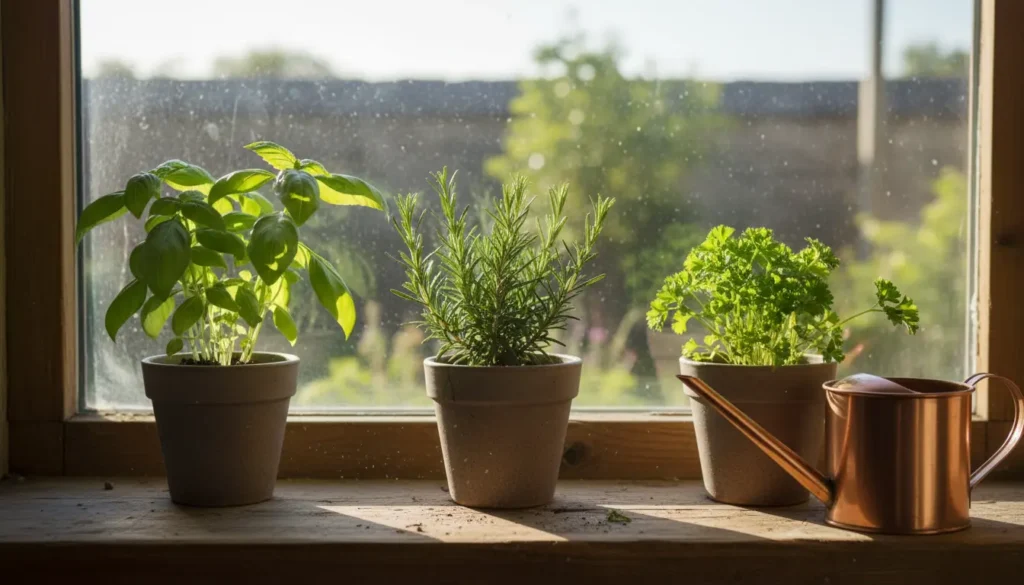
Growing herbs indoors is a simple way to add fresh flavor to meals year-round. This guide gives clear, practical steps to set up, maintain, and troubleshoot a small indoor herb garden.
Basic setup for growing herbs indoors
Choose a bright location before you start. Most culinary herbs need at least 4–6 hours of direct or bright indirect light daily.

Pick containers with drainage and use a light potting mix formulated for herbs or vegetables. Good drainage prevents root rot, a common problem with indoor pots.
Essential supplies for growing herbs indoors
- Pots with drainage holes (6–8 inches for most herbs)
- Quality potting mix (well-draining, with some organic matter)
- Grow light if natural light is limited (LED full spectrum)
- Small hand trowel and watering can
- Labels and small pruning shears
Light and placement advice for growing herbs indoors
South- or west-facing windows are ideal in most climates. If you have only north-facing windows, supplement with a grow light to reach the needed light levels.
Place heat-sensitive herbs away from radiators and cold drafts. Rotate pots weekly so plants grow evenly and do not lean toward the light source.
Using grow lights for growing herbs indoors

Select a full-spectrum LED light designed for seedlings or herbs. Position the light about 6–12 inches above the plants and run it 12–14 hours per day for most herbs.
Use a timer to keep light consistent. Overhead light prevents leggy growth and produces stronger stems and better flavor.
Watering, soil, and fertilizing when growing herbs indoors
Watering is the most common mistake for indoor herb gardeners. Water when the top 1 inch of soil feels dry to the touch, then water thoroughly until excess drains out.

Feed herbs lightly with a balanced liquid fertilizer every 4–6 weeks during active growth. Herbs prefer moderate soil fertility; too much fertilizer can reduce essential oil concentration and flavor.
Soil tips and potting mix
Use a potting mix that drains well but retains some moisture. Avoid garden soil, which compacts in pots and limits root oxygen.
Consider mixes labeled for vegetables, herbs, or containers. Adding a small amount of perlite or coarse sand improves drainage for heavier mixes.
Which herbs are easiest for growing herbs indoors
Begin with forgiving herbs that perform well in containers and moderate light. These give quick wins and steady yields.
- Basil — fast-growing and flavorful but prefers warm, bright spots
- Chives — tolerant of cooler light and easy to harvest
- Mint — vigorous and invasive, best kept in its own pot
- Parsley — slower to establish but steady once grown
- Thyme and rosemary — like drier soil and bright light
Troubleshooting common issues when growing herbs indoors
Yellowing leaves often point to overwatering or poor drainage. Move the pot to a brighter spot and check roots for rot.
Leggy growth indicates insufficient light. Raise the light level or add supplemental lighting and pinch back stems to encourage bushier growth.
Pests and diseases
Indoors you may see aphids, spider mites, or whiteflies. Inspect new plants before bringing them inside and treat infestations early with insecticidal soap.
Prevent disease by keeping good air circulation and avoiding water on leaves at night. Remove diseased foliage promptly to stop spread.
Some herbs like basil concentrate more aromatic oils when lightly stressed by slightly drier soil between waterings. That can boost flavor in cooking.
Harvesting and maintaining plants when growing herbs indoors
Harvest regularly to keep plants productive. For leafy herbs like basil and parsley, pinch or cut stems just above a node to encourage branching.
Do not remove more than one-third of the plant at a time. For woody herbs such as rosemary, harvest sprigs as needed and avoid severe pruning in winter months.
Propagation and renewing plants
Many herbs are easy to propagate from cuttings. Basil, mint, and rosemary root quickly in water, then move to a potting mix once roots form.
Replace annual herbs or pots showing declining growth after two seasons. Refreshing soil and pots helps reduce disease build-up and keeps yields high.
Case study: Small apartment herb success
Case: Sarah, a one-bedroom apartment resident, started with three 6-inch pots of basil, chives, and mint on a south-facing windowsill. She used a small LED grow light on a timer for three winter months.
Key actions: Good drainage, weekly feeding with diluted fertilizer, and harvesting twice a week. Outcome: Continuous fresh herbs for six months, reduced grocery herb purchases, and more flavorful meals.
Quick checklist for starting growing herbs indoors
- Pick a bright spot or use a grow light
- Use pots with drainage and a light potting mix
- Water when top inch of soil is dry
- Feed lightly during growing season
- Harvest regularly and propagate cuttings
Growing herbs indoors is low-cost and rewarding. Start small, learn from each pot, and expand as you gain confidence. With the right light, soil, and routine, most beginners can enjoy a steady supply of fresh herbs year-round.



