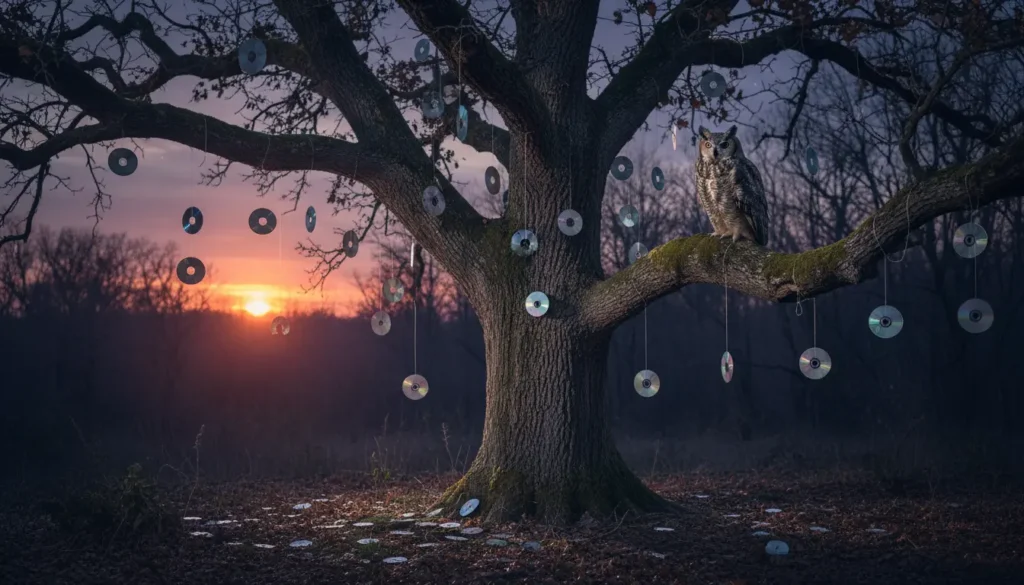
Using old CDs as a simple reflective device in trees is an inexpensive, low-tech measure that can help reduce accidental harm to nocturnal wildlife. When used thoughtfully, CDs increase visibility and can change how predators, vehicles, and people interact with roosting areas for owls and bats.
Why hanging old CDs in trees can protect owls and bats
Old CDs reflect light and move in the wind. That motion and glare make branches and nearby obstacles more noticeable at dawn and dusk. Increased visibility reduces collision risks from cars and can discourage disturbance close to roosts.

This is an indirect protection strategy: the CDs do not physically shield animals but help people and machines see areas where nocturnal species rest or hunt. When combined with other measures, this practice supports safer habitat use during sensitive times of the year.
How reflection and motion reduce risks
Reflective surfaces create visual contrast against foliage. At road edges, this contrast draws drivers’ attention to tree lines and roadside perches. For owls that hunt near roads and for bats that fly low while crossing open spaces, fewer vehicle strikes can mean fewer injuries and fatalities.
Similarly, moving reflections can alert walkers and cyclists to sensitive zones so they avoid startling or crowding roosting birds and bat boxes.
Practical materials and safety first

Before you start, gather basic materials and choose safe attachment methods. Use soft, non-abrasive ties and avoid permanent alterations to trees.
- Materials: old CDs or DVDs, biodegradable twine or natural fiber string, soft plastic or fabric washers (optional), scissors, a step stool if needed.
- Safety tips: never nail or screw into living branches. Keep reflective side away from heavy sunlight that could cause glare into drivers’ eyes. Check local wildlife rules before placing items near active nests or roosts.
Where to hang CDs to protect owls and bats
Placement matters. Choose locations that reduce hazards without disturbing wildlife directly.
- Roadside tree lines where owls hunt at dusk — hang CDs 6–10 feet high and set them back from the road so glare does not blind drivers.
- Near bat flight corridors — place CDs a little above typical flight height so they mark crossing paths.
- Around public walking paths near roosts — use them to remind people to slow down and keep distance.
Do not hang reflective items right on or inside nest boxes, cavities, or direct roost entrances. Avoid placing them within 2–3 meters of known nest sites to prevent disturbance.
Step-by-step: How to hang old CDs in trees

Follow this quick method to install CDs safely and effectively.
- Clean the CD surface if needed to remove dirt. Keep the reflective face intact.
- Thread biodegradable twine through the CD center hole. Add a soft washer or fabric piece to cushion the CD and reduce rattling against bark.
- Tie a secure loop and adjust length so the CD hangs freely and can rotate in light breeze.
- Choose a branch that lets the CD move but does not obligate you to trim or damage the tree. Loop the twine over the branch instead of tying directly around delicate bark.
- Space CDs 3–5 feet apart where multiple are needed. Step back and view from the road or path to check for distracting glare.
Maintenance and seasonal considerations
Check installations monthly, especially after storms. Replace frayed cord to avoid leaving plastic debris and remove CDs after the high-risk season if they are no longer needed.
Consider timing: many owls and bats are most vulnerable during fall migration and spring nesting. Focus installations around those peak periods, and remove items outside those windows to minimize long-term visual clutter.
Limitations and ethical considerations
This is not a substitute for habitat protection or road-calming measures. Reflective objects are one small part of a broader conservation approach.
Be mindful that some species of wildlife are sensitive to human disturbance. If animals show signs of stress or altered behavior, remove nearby CDs and consult local wildlife experts.
When not to use reflective devices
- Directly over or inside active nests, roost cavities, or maternity sites.
- Where reflections could blind motorists or create safety hazards.
- In areas with laws or protected sites that forbid attaching objects to trees.
Many owl species are crepuscular, active at dawn and dusk. Bats often fly low when commuting between roosts and feeding sites, which can increase collision risk near road edges and open spaces.
Real-world example: Community reuse project
In a small riverside town, a neighborhood group repurposed discarded CDs to mark a mile-long stretch of trees beside a busy bridge. Volunteers hung sets of CDs at regular intervals to catch early evening light and visually mark the corridor.
Over two seasons the volunteers recorded fewer reported owl collisions on that stretch and received positive feedback from drivers who said the reflective markers made the tree line easier to notice at dawn and dusk. The group emphasized that the project was community-led and observational, and they combined the CDs with lower-speed signage and public awareness campaigns for best results.
Final checklist: Responsible hanging to protect owls and bats
- Use biodegradable twine and avoid damaging bark.
- Place CDs at safe heights and distances from nests.
- Avoid creating glare that could blind drivers.
- Monitor for disturbance and remove if wildlife is stressed.
- Combine with other measures like signage and reduced speed zones.
Hanging old CDs in trees is a low-cost, community-friendly option that can help reduce incidental harm to nocturnal wildlife when used responsibly. With careful placement and regular checks, it’s an easy step anyone can take this season to support owls and bats while reusing items that might otherwise become waste.



