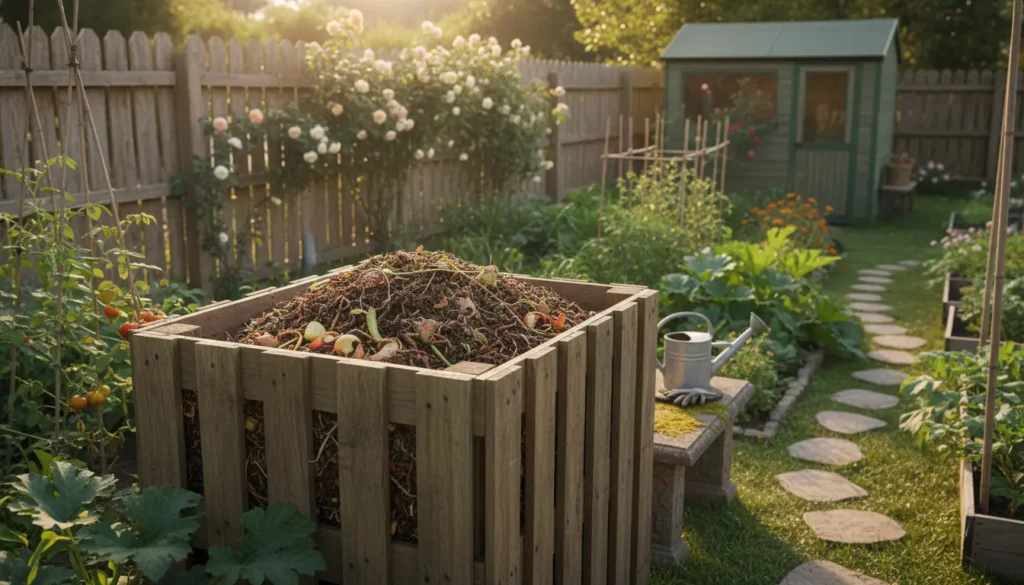
Composting turns kitchen scraps and yard waste into nutrient-rich soil. This guide on home composting for beginners gives clear, step-by-step instructions you can use today.
Why Home Composting for Beginners Matters
Composting reduces household waste and improves garden soil. It also cuts methane emissions from landfills and saves money on fertilizers and soil amendments.

For beginners, composting is a practical project that scales from a small countertop bin to a backyard pile.
Essential Tools and Materials for Home Composting
You do not need fancy equipment. Start with a bin or a simple pile, a pitchfork or garden fork, and a way to measure moisture (your hand works).
- Compost bin or tumbler (or designated pile)
- Greens (vegetable scraps, coffee grounds, fresh grass clippings)
- Browns (dried leaves, cardboard, shredded paper)
- Water source and a garden fork for turning
Choosing a Compost Bin
Choose a size that fits your yard and waste volume. Tumblers speed up decomposition, while static bins are low cost.

Ensure the bin has airflow and drainage to prevent anaerobic smells.
Step-by-Step Process to Start Home Composting
Follow these steps to build a healthy compost that breaks down materials efficiently.
1. Build the Base Layer
Start with a 4–6 inch layer of coarse browns like twigs or straw. This encourages airflow at the bottom and helps drainage.
2. Add Greens and Browns in Layers

Alternate thin layers of greens and thicker layers of browns. Aim for roughly a 1:3 ratio of greens to browns by volume.
- Greens: fruit and vegetable scraps, coffee grounds
- Browns: dried leaves, shredded cardboard, paper
3. Monitor Moisture and Aeration
Compost should feel like a wrung-out sponge. Add water if dry, add dry browns if too wet. Turn the pile every 1–2 weeks to add oxygen.
4. Temperature and Time
A hot compost (120–160°F / 50–70°C) breaks down faster and kills seeds. Cold compost takes longer but still produces quality soil over months.
Most home compost systems produce finished compost in 2–6 months depending on management.
Common Problems and How to Fix Them
Even beginners run into issues. Use these quick fixes to keep your compost on track.
- Bad smell: Turn the pile and add dry browns to restore air and balance moisture.
- Pests: Avoid meat, dairy, and oily foods. Use a covered bin and bury scraps in the center.
- Slow breakdown: Chop materials smaller, increase turning, or boost greens for nitrogen.
Maintaining Your Compost
Regular attention makes composting easy. Turning, monitoring moisture, and adding the right materials are the main tasks.
- Turn every 1–2 weeks for faster results
- Keep a balance of greens and browns
- Protect from heavy rain or severe dryness
Household food waste makes up about 20 to 30 percent of what we throw away. Composting just a portion of that can cut your trash output and create usable soil.
Small Real-World Example: A Simple Backyard Bin Case Study
Maria, a homeowner with a small garden, started a 3×3 foot compost bin. She collected kitchen scraps and dried leaves for six months.
By turning the pile every two weeks and keeping the material balanced, Maria produced dark, crumbly compost in about four months. She used it to topdress her vegetable beds and saw improved soil moisture retention and healthier plants the next season.
How to Use Finished Compost
Finished compost looks dark and earthy and no longer resembles original materials. Use it as a soil amendment, mulch, or potting mix component.
- Mix 2–3 inches into garden beds before planting
- Topdress lawns with a thin layer in spring or fall
- Blend with potting soil for container plants
Quick Tips for Success with Home Composting for Beginners
- Chop or shred large items to speed decomposition
- Keep a small countertop container for daily scraps
- Rotate materials so greens and browns stay balanced
- If space is limited, try worm composting (vermicomposting)
Composting is a low-cost, high-impact action you can take to reduce waste and improve your garden. Start small, follow these steps, and adapt as you learn what works in your climate and for your household.



