What is home composting and why start
Home composting is the process of turning kitchen scraps and yard waste into nutrient-rich soil amendment. It reduces household waste and improves garden soil without chemicals.
Beginners can start with a small bin or simple pile. The goal is to manage carbon, nitrogen, moisture, and air so organic matter breaks down efficiently.
Basic equipment for home composting
You do not need fancy tools to begin. A few basic items will make the process cleaner and faster.
- Compost bin or tumbler (or a simple wire cage)
- Kitchen container for scraps (with a lid)
- Pitchfork or garden fork for turning
- Optional: thermometer to check pile temperature
Choosing the right composting method
Picking a method depends on space, time, and how quickly you want finished compost. Common options are backyard bin, tumbler, and vermicomposting.
Backyard bin
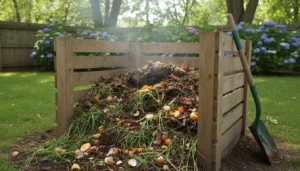
Good for yards and moderate amounts of waste. It relies on aerobic decomposition and occasional turning.
Tumbler
Tumblers make turning easier and are cleaner for small yards or patios. They can heat up faster with balanced materials.
Vermicomposting
Uses worms to break down food scraps indoors or on small balconies. Ideal for apartment dwellers but needs consistent care.
What to compost: materials to use and avoid
Successful home composting uses a mix of carbon-rich (browns) and nitrogen-rich (greens) materials. Balance matters for odor control and breakdown speed.
- Greens (nitrogen): fruit and vegetable scraps, coffee grounds, fresh grass clippings
- Browns (carbon): dry leaves, shredded paper, cardboard, straw
- Avoid: meat, dairy, oily foods, diseased plants, and pet waste
Step-by-step: Start your first compost pile
Follow these simple steps to build an effective compost pile at home. Each step keeps the process balanced and manageable.
- Place the bin on bare soil to allow worms and microbes to access the pile.
- Add a 2–4 inch base layer of coarse browns for drainage.
- Alternate layers of greens and browns, aiming for a 2:1 or 3:1 browns to greens volume ratio.
- Keep the pile moist like a wrung-out sponge. Add water if dry, or more browns if too wet.
- Turn the pile every 1–2 weeks to add oxygen and speed decomposition.
Troubleshooting common home composting problems
Small problems are easy to fix if you know what to look for. Most issues relate to moisture, air, or material mix.
- Bad smells: add more dry browns and turn the pile.
- Too dry and slow: add water and some greens to increase activity.
- Pests like rodents: avoid meat and oily foods, use a secured bin or tumbler.
Compost can reduce household waste by up to 30 percent. It also improves soil structure, water retention, and plant health.
How long does home composting take
Time depends on method, materials, and management. A well-managed hot pile can produce finished compost in 2–4 months.
Slower, cold composting with minimal turning may take 6–12 months. Vermicompost systems can produce usable material in a few months with consistent feeding.
Using finished compost
Compost is ready when it is dark, crumbly, and smells earthy. It can be used as a top dressing, mixed into potting soil, or added to garden beds.
Use compost to improve seed beds, enrich container mixes, or create a slow-release nutrient boost before planting.
Real-world example: Small urban compost setup
Case study: A two-person apartment reduced their kitchen waste by composting with a 10-liter indoor worm bin and a small outdoor tumbler. Within six months, they produced two 10-liter batches of compost.
They kept a sealed counter caddy for scraps, fed the worm bin 3–4 times per week, and transferred finished vermicompost to the tumbler to cure. The result was less trash, healthier balcony plants, and a 20 percent reduction in weekly waste bags.
Quick checklist to start home composting
Use this checklist to begin composting today with minimal fuss.
- Choose a bin type: backyard, tumbler, or worm bin
- Collect kitchen scraps in a sealed container
- Create a mix of browns and greens
- Keep the pile moist and turn regularly
- Monitor for pests and odors, adjust as needed
Final tips for success with home composting
Start small and learn by doing. Keep notes on what you add and how the pile behaves so you can adjust the mix and schedule.
Patience and consistent management lead to steady results. Composting at home is a practical step toward lower waste and healthier soil.