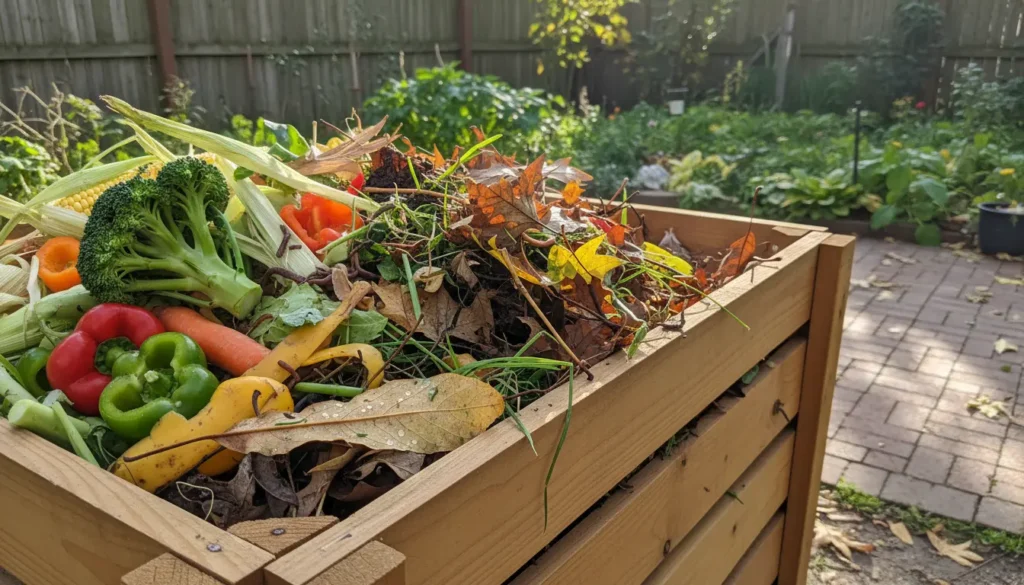
Home Composting Basics
Home composting turns kitchen and yard waste into nutrient-rich soil. It reduces landfill waste and improves garden health.
Beginners can start with a small bin or pile and learn by doing. This guide covers the materials, simple methods, maintenance, and common problems.
Why Choose Home Composting

Composting lowers household waste volume and returns nutrients to soil. It helps retain moisture and reduces the need for chemical fertilizers.
Home composting is low cost and works at any scale, from apartment vermicomposting to backyard piles.
How to Start Home Composting
Starting composting means choosing a method, collecting materials, and maintaining the right balance. Follow these simple steps to begin.
Step 1: Choose a Composting Method

Select a method that matches your space and time. Common options are:
- Compost bin or tumbler for small yards and neatness.
- Open pile for larger yards and larger volumes.
- Vermicomposting using worms for apartments or fast breakdown.
- Bokashi for fermented kitchen waste when anaerobic processing is preferred.
Step 2: Gather Materials
Compost relies on a mix of ‘greens’ and ‘browns.’ Greens are high in nitrogen, browns supply carbon.
- Greens: vegetable scraps, fruit peels, coffee grounds, fresh grass clippings.
- Browns: dry leaves, shredded paper, straw, cardboard, wood chips.
A good rule is roughly 2–3 parts browns to 1 part greens by volume.
Step 3: Layer and Maintain

Add materials in layers, chop larger pieces, and keep the pile moist like a wrung-out sponge. Turn or aerate once a week if possible.
Turning speeds up decomposition by adding oxygen. If using a tumbler, rotate it every few days.
Home Composting for Beginners: Common Problems and Fixes
New composters often encounter odors, slow breakdown, or pests. Each issue has an easy fix.
Smelly Compost
Cause: Too many greens or anaerobic conditions. Fix: Add more browns, turn the pile, and ensure airflow.
Slow Decomposition
Cause: Too dry, too cold, or lacking surface area. Fix: Moisten the pile, add smaller pieces, and insulate in cold weather.
Pests and Flies
Cause: Exposed food scraps attract animals. Fix: Bury food scraps in the pile, use a closed bin, or try bokashi pre-treatment.
Practical Tips for Effective Home Composting
- Chop or shred materials to speed decomposition.
- Keep a small countertop container to collect kitchen scraps for easy transfer.
- Use finished compost in garden beds, potted plants, or as a top dressing.
- Monitor moisture and temperature; active piles heat to 120–160°F (50–70°C).
- Rotate or turn compost to maintain oxygen and uniform breakdown.
Composting can reduce household waste by up to 30 percent. Finished compost also improves soil structure and water retention.
What You Can and Cannot Compost
Knowing acceptable materials helps keep your compost healthy. Use this quick checklist for everyday decisions.
- Acceptable: fruit and vegetable scraps, coffee grounds, eggshells, yard trimmings, paper, cardboard.
- Avoid: meat, dairy, oils, diseased plants, and pet waste from carnivores unless using specialized systems.
Small Real-World Example
Case Study: A four-person family started a 60-gallon tumbler and a small worm bin in spring. They collected kitchen scraps for the tumbler and placed coffee grounds and soft greens in the worm bin.
After six months they produced about 30 liters of compost and reduced weekly trash by one bag. Their garden spring-planted tomatoes showed stronger growth and fewer watering needs.
Home Composting for Beginners: Seasonal and Space Considerations
Composting works year-round with small adjustments. In winter, insulate outdoor bins or move tumblers to sunnier spots. Indoor vermicomposting is ideal for cold climates.
Apartment dwellers can compost with worm bins or bokashi buckets, which require minimal outdoor space.
Final Checklist to Start Home Composting Today
- Choose a composting method that fits your space.
- Collect greens and browns and maintain a 2:1 or 3:1 brown-to-green ratio.
- Keep the pile moist, aerated, and monitored for pests.
- Use finished compost in your garden and continue learning.
Home composting is a practical and rewarding way to reduce waste and nourish your soil. Start small, observe changes, and adjust as you learn.



