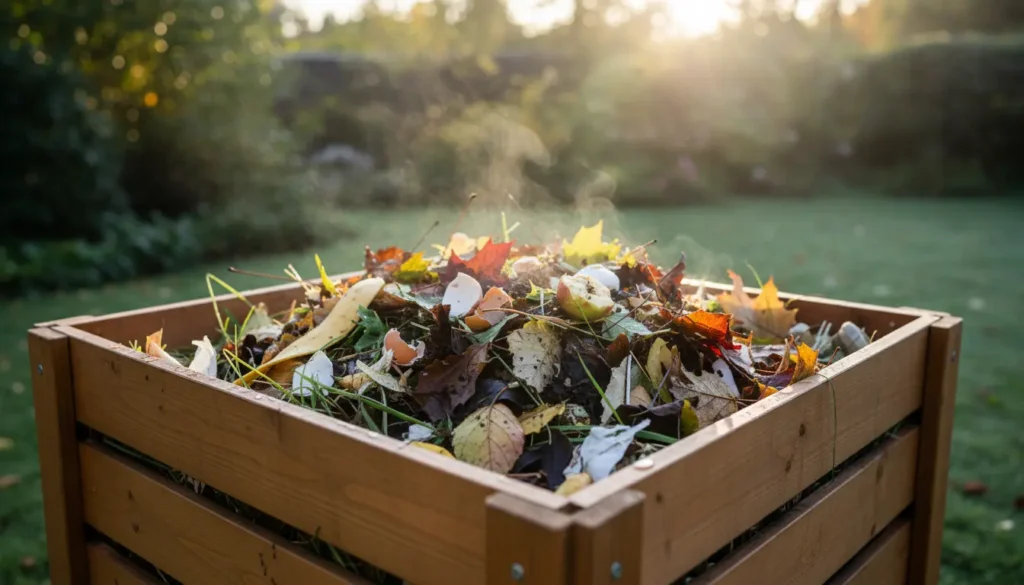
Composting at home turns kitchen scraps and yard waste into rich soil that improves plant health and reduces trash. This guide gives practical, step-by-step instructions for home composting for beginners.
What Is Home Composting?
Home composting is the controlled breakdown of organic material into humus using oxygen, moisture, and microbes. The result is nutrient-rich compost that you can add to garden beds, potted plants, or lawn areas.
Key Benefits of Home Composting
- Reduces household waste and trash costs.
- Improves soil structure and water retention.
- Recycles nutrients back into plants, reducing the need for synthetic fertilizers.
Types of Home Composting Methods

There are several ways to compost at home; choose one that fits your space, time, and output needs. Each method balances convenience and maintenance.
Popular Methods
- Backyard pile — Simple pile on the ground. Works well where space and privacy are available.
- Compost bin — Contained system that looks neater and keeps pests out. Good for small yards.
- Tumbler — Enclosed rotating bin that speeds up decomposition with easy turning.
- Bokashi — Anaerobic fermentation in a sealed bucket; accepts meat and dairy but requires a finishing step in soil.
How to Start Home Composting for Beginners
Starting is straightforward. Follow these core steps to set up a reliable home composting system that produces quality compost.
Step-by-Step Setup
- Pick a location: a level, well-drained spot with partial shade.
- Choose a container: open pile, bin, or tumbler depending on space and preferences.
- Collect materials: separate greens and browns in two small kitchen containers for ease.
- Build the pile: start with coarse browns, then add alternate layers of greens and browns.
- Maintain moisture: keep the pile as damp as a wrung-out sponge.
- Turn or aerate: every 1–2 weeks for faster compost; less often if you’re patient.
What to Put in a Home Compost
Knowing what to add ensures a balanced pile and avoids bad smells or pests. Aim for a balanced carbon-to-nitrogen mix.
Good Materials (Greens and Browns)
- Greens (nitrogen): vegetable scraps, fruit peels, coffee grounds, grass clippings.
- Browns (carbon): dry leaves, straw, shredded paper, cardboard, small wood chips.
Materials to Avoid
- Meat, bones, fatty foods (unless using Bokashi).
- Diseased plant material and persistent weeds with seeds.
- Pet waste from carnivores.
Maintaining Your Home Compost

Regular, simple maintenance produces better compost faster. You don’t need to check it every day, but consistent small actions help.
Routine Care
- Turn the pile to add oxygen and mix materials.
- Monitor moisture and add water or dry browns as needed.
- Chop large items to speed decomposition.
Troubleshooting Common Problems
- Bad odor: add more browns and aerate the pile.
- Slow breakdown: increase surface area of materials and keep the pile warmer by adding more greens.
- Pests: use a closed bin, bury food scraps in the pile, or switch to a tumbler.
Microbes in a healthy compost pile can reach temperatures above 130°F (54°C), which helps kill many weed seeds and plant pathogens.
Using Finished Compost
Finished compost looks dark, crumbly, and earthy-smelling. It should no longer resemble the original materials.
Ways to Use Finished Compost
- Mix 1 part compost to 3 parts soil for planting beds and containers.
- Top-dress lawns with a thin layer to improve soil health.
- Work compost into vegetable garden rows before planting.
Real-World Example: A Small Urban Family

A family of four in a city apartment started a small compost bin on their balcony using a sealed compost tumbler. They collected kitchen scraps in a counter caddy and emptied it into the tumbler twice a week.
After six months of regular turning and alternating greens and browns, the family produced enough compost to refresh two large balcony planters and several potted herbs. Their weekly trash volume decreased noticeably, and plants showed better growth and fewer waterings.
Practical Tips for Home Composting Success
- Keep a small kitchen caddy with a lid to make collecting scraps easier.
- Balance greens and browns roughly 1:2 by volume for steady decomposition.
- Chop or shred materials to speed the process and reduce odors.
- Label bins and keep a simple log to track turning schedules and temperatures.
Home composting for beginners is a low-cost, high-impact habit you can start today. With the right materials, a bit of routine, and patience, you’ll turn waste into a valuable soil amendment that benefits plants and the environment.



