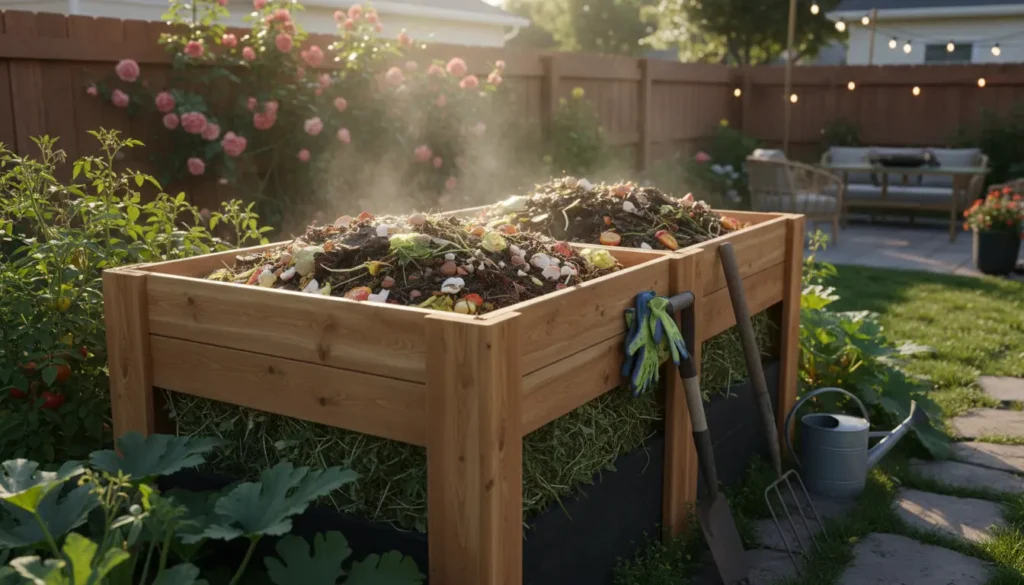
Home composting is a practical way to turn kitchen scraps and yard waste into nutrient-rich soil. This guide explains how to start a compost bin, maintain it, and use finished compost in your garden.
Why Home Composting for Beginners Matters
Composting reduces household waste and supplies free soil amendment for lawns and gardens. Beginners can set up a low-effort system that fits small yards or balconies.
Choose a Compost Bin for Home Composting

Picking the right bin affects how easy the process will be. Options include tumblers, stationary bins, and simple compost piles.
Bin types and pros
- Tumbler: Easier to turn; good for quicker composting.
- Closed bin: Neat and pest-resistant; works well for suburban yards.
- Open pile: Low cost; needs more space and attention.
- Bokashi or worm bin: Ideal for apartment composting and kitchen-only waste.
Placement
Place your bin on soil or a well-drained surface. Partial shade keeps the pile from drying out too fast. Ensure easy access for adding materials and turning.
How to Start Home Composting
Begin with the right mix of materials and a simple routine. A balanced compost works faster and avoids odors.
Materials to add
- Greens (nitrogen): Fruit and vegetable scraps, coffee grounds, fresh grass clippings.
- Browns (carbon): Dry leaves, shredded paper, cardboard, straw.
Basic steps to start
- Place a layer of coarse browns (twigs or straw) at the base for aeration.
- Add alternating layers of greens and browns to maintain balance.
- Keep the pile moist like a wrung-out sponge.
- Turn or mix the pile every 1–2 weeks for aerobic composting.
Maintain Your Compost Bin

Regular care keeps the process moving. Monitoring moisture, airflow, and balance is key.
Monitoring tips
- Smell: A healthy pile smells earthy. Bad odors indicate too much wet material or poor airflow.
- Temperature: Active compost heats up. You can use a thermometer or feel the center.
- Moisture: Add water if dry; add browns if too wet.
Turning and timing
Turning introduces oxygen and speeds decomposition. Tumblers simplify turning. Expect compost to be ready in 2–6 months depending on materials and care.
Composting can divert up to 30% of household waste from the trash. Small changes, like saving coffee grounds and eggshells, add up quickly.
Troubleshooting Compost Problems

Common issues are easy to fix with small adjustments.
Common problems and fixes
- Bad smell: Add browns and turn the pile to introduce air.
- Slow decomposition: Chop materials into smaller pieces and keep the pile moist.
- Pests: Use a closed bin, bury food scraps, or avoid meat and oily foods.
- Dry pile: Water lightly and add greens to increase moisture.
Using Finished Compost
Finished compost looks dark and crumbly with an earthy smell. It’s ready to use in several ways around the home.
- Top-dress lawns to improve soil structure and water retention.
- Mix into garden beds at a ratio of about 1 part compost to 3 parts soil.
- Use as potting mix ingredient for container plants.
Case Study: Small Family Compost Setup
Jane and Mark live in a small suburban home and started a 60-gallon tumbler in spring. They saved kitchen scraps in a counter bucket and added dry leaves from their yard.
Within three months, regular turning and a balanced green-to-brown ratio produced usable compost. They report reducing weekly trash by about half and improved tomato yields using compost mixed into planting holes.
Quick Checklist for Home Composting for Beginners
- Choose a bin that fits your space and routine.
- Balance greens and browns—aim for roughly 2:1 brown to green by volume if unsure.
- Keep the pile moist and turn regularly.
- Monitor smells and adjust materials as needed.
- Harvest finished compost and use it in the garden.
Home composting is low-cost, scalable, and effective for beginners willing to follow a few simple rules. Start with a small bin, keep the mix balanced, and adjust based on how your pile responds. With patience, you’ll turn waste into a valuable resource for your garden.



