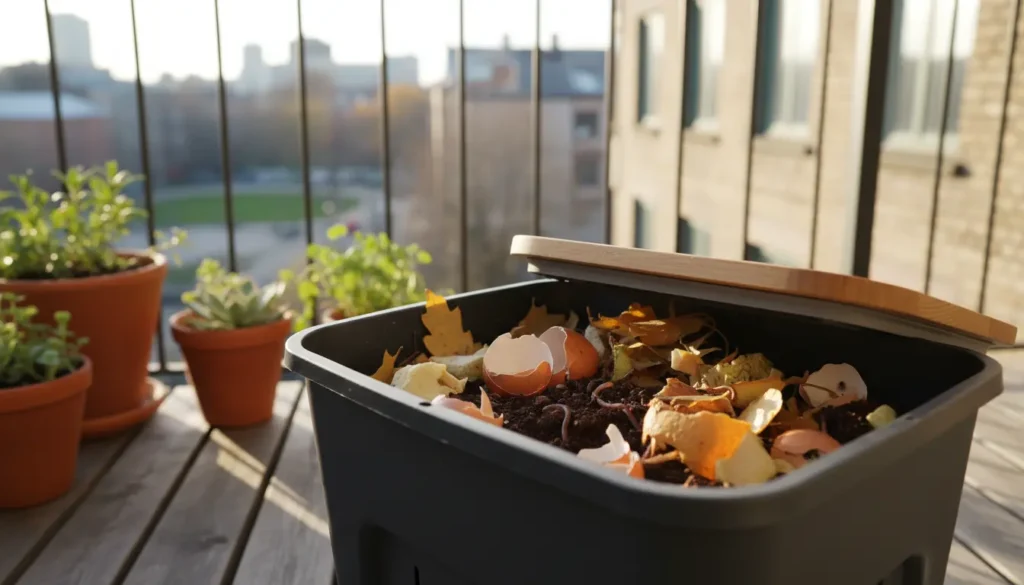
Home composting is a simple, low-cost way to convert kitchen scraps and yard waste into nutrient-rich soil. This guide walks beginners through the workflow, materials, and common problems you may encounter.
Why Home Composting Matters
Home composting reduces household waste and returns organic matter to your garden. It also lowers disposal costs and cuts methane emissions from landfills.

Small changes at home can create valuable soil for potted plants, garden beds, and seedlings.
How Home Composting Works
Composting is a biological process where microorganisms break down organic materials. The two key elements are carbon (browns) and nitrogen (greens).
Balance, oxygen, moisture, and particle size affect decomposition speed and odor control.
Home Composting Materials
- Greens (nitrogen): fruit and vegetable scraps, coffee grounds, fresh grass clippings
- Browns (carbon): dry leaves, shredded paper, straw, cardboard
- Optional: small amounts of garden soil or finished compost to introduce microbes
Step by Step: Start Home Composting

Follow these steps to set up a reliable home composting system. Each step is short and practical.
1. Choose a Container
Pick a bin that fits your space: a countertop compost pail for scraps and a larger outdoor bin or tumbler for full composting. Bins help retain heat and keep pests out.
2. Layer Materials
Start with a layer of coarse browns for drainage. Alternate layers of greens and browns about 2–4 inches thick to maintain balance.
3. Maintain Moisture and Air
Keep the pile damp like a wrung-out sponge. Turn the pile once every 1–2 weeks to add oxygen and speed decomposition.
4. Monitor Temperature
A hot pile (120–160°F or 50–71°C) breaks down material faster and kills weed seeds. If the pile cools, turn and add greens to raise temperature.
5. Harvest Finished Compost
After several weeks to months, compost will be dark, crumbly, and smell earthy. Sift if you need fine texture, then mix into soil or use as mulch.
Troubleshooting Common Issues in Home Composting
Problems are usually easy to fix once you identify the cause. Here are common issues and solutions.
- Bad odor: Add more browns and turn the pile to increase air flow.
- Pests or flies: Bury food scraps deeper and keep a lid on the bin. Avoid meat, dairy, and oily foods.
- Too dry: Add water and more greens, then turn the pile to distribute moisture.
- Too wet and compacted: Add dry browns and mix to restore airflow.
Home Composting Tips for Small Spaces
Even apartments can compost effectively. Use a small worm bin (vermicompost) or bokashi system for odor-controlled fermentation.
Collect scraps in a sealed container in the fridge if you worry about odor, and empty regularly into an outdoor bin or vermicomposter.
Composting can divert up to 30% of household waste from landfills. A single household can produce several cubic feet of finished compost each year depending on waste and system used.
Small Case Study: Balcony Composting Success
Maria, a city renter, used a 5-gallon lidded bucket with a charcoal filter to collect kitchen scraps indoors. She transferred them weekly into a tumbling bin on her balcony.
By balancing coffee grounds and vegetable peels with shredded paper, and turning the tumbler twice a week, Maria produced usable compost in about four months. She mixed it into potting soil for tomatoes and saw improved plant growth the next season.
Checklist: Quick Home Composting Setup
- Choose the right bin: indoor pail, outdoor tumbler, or worm bin
- Collect greens and browns separately at first
- Layer materials and maintain moisture like a sponge
- Turn pile regularly to add oxygen
- Harvest when dark and crumbly, then use in your garden
Final Notes on Home Composting
Start small and learn by doing. Composting improves with observation and small adjustments to balance, moisture, and aeration.
With basic care, home composting becomes an easy routine that benefits your plants and reduces household waste.



