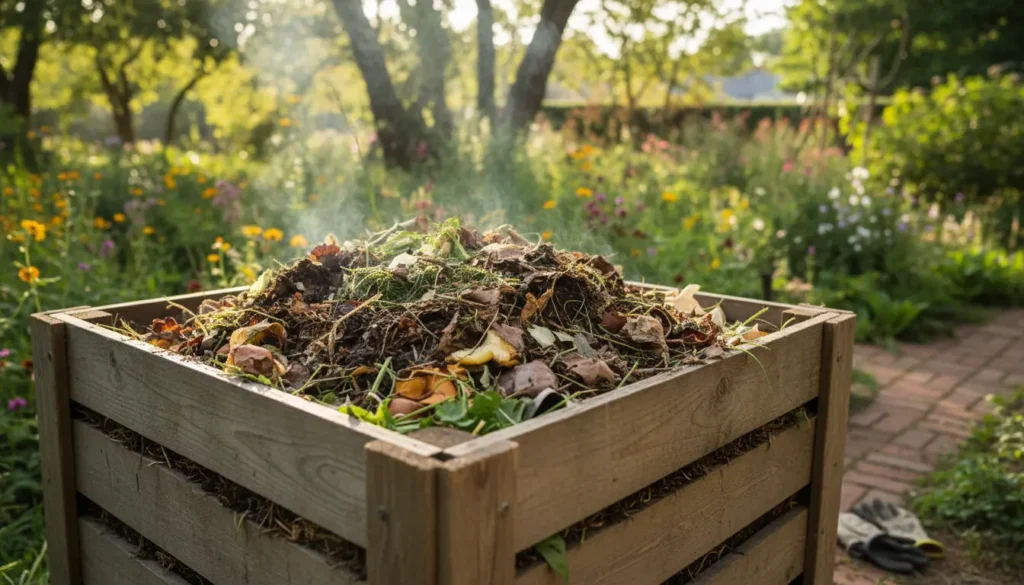
Why Home Composting for Beginners Is Worth Doing
Composting at home reduces kitchen and yard waste while creating a useful soil amendment. It lowers trash volume and improves garden health with minimal ongoing effort.
This guide gives practical steps you can follow, whether you have a balcony or a backyard. Each section explains tools, materials, and simple routines to get reliable results.
Home Composting for Beginners: Choosing the Right System

Selecting a compost system depends on space, time, and how much waste you produce. Options range from simple tumblers to stationary bins or worm (vermicompost) systems for small kitchens.
- Tumbler: Faster turning, contained, works well for small yards.
- Open bin: Low-cost and simple, needs occasional turning and more space.
- Vermicompost: Ideal for apartments and kitchens, produces rich humus but requires more temperature control.
Pick a system you will use consistently. Convenience matters more than speed for beginners.
Home Composting for Beginners: What You Need to Start
Start with a basic kit: a bin or container, a garden fork or compost turner, and a small supply of brown materials. You don’t need fancy equipment to succeed.
- Bin or tumbler sized to your household.
- Kitchen pail with a tight lid for collecting scraps.
- Garden fork or aerator for turning if using an open bin.
Materials to Use and Avoid

Compost works by mixing carbon-rich (brown) and nitrogen-rich (green) materials. A balanced mix helps microbes break materials down quickly without odors.
Follow a basic ratio: about 3 parts brown to 1 part green by volume. Adjust based on smell and moisture.
Good Materials
- Browns: Dry leaves, straw, shredded cardboard, paper, wood chips.
- Greens: Fruit and vegetable scraps, coffee grounds, fresh grass clippings.
Materials to Avoid
- Meat, dairy, and oily foods that attract pests and cause odors.
- Diseased plants, persistent weeds with seeds, and treated wood.
Step-by-Step: How to Build and Maintain Compost
Use these practical steps to start a compost pile you can maintain easily. Small regular actions prevent common problems.
- Place the bin on soil for drainage and access to microbes. Avoid concrete bases if possible.
- Start with a 2–4 inch layer of twiggy material for airflow. Add alternating layers of greens and browns.
- Keep the pile moist like a wrung-out sponge. Add water during dry spells and cover in heavy rain.
- Turn the pile every 1–2 weeks for faster decomposition. Tumblers simplfy this step.

Expect compost to take from 2 months (hot, active pile) to a year (slow, cool pile) to become finished. Patience and consistent maintenance matter more than perfect ratios.
Troubleshooting for Home Composting for Beginners
Common issues can be fixed quickly with simple adjustments. Troubleshooting keeps the process productive and odor-free.
- Bad smell: Add dry brown material and turn to add air. Avoid adding more food scraps until it stabilizes.
- Pests: Bury food scraps under browns, secure the lid, or switch to a sealed tumbler.
- Too dry: Add water while turning or include more greens.
- Composting slows: Add nitrogen sources like fresh greens or a small amount of manure and turn the pile.
Composting can divert up to 30% of household waste from landfills and reduce methane production from trash. Even small composters can make a measurable difference.
Using Finished Compost
Finished compost is dark, crumbly, and earthy-smelling. Use it to improve garden beds, potting mixes, and lawn topdressing.
Apply a 1–3 inch layer to garden beds and mix into the topsoil. For container plants, blend 10–30% compost into the potting medium.
Case Study: Small Urban Family Success
The Garcia family in a two-bedroom apartment started vermicomposting with a 10-liter worm bin. They collected kitchen scraps in a pail and fed worms every 3–4 days.
Within four months they produced enough castings to refresh two balcony planters and cut their food waste by half. Their keys to success were routine feeding, keeping the bin shaded, and balancing bedding with greens.
Quick Checklist for Home Composting for Beginners
- Choose a system that fits your space.
- Collect scraps daily and keep a mix of browns on hand.
- Monitor moisture and air — think sponge-like moisture and regular turning.
- Troubleshoot odors and pests quickly by adding browns or securing the bin.
- Use finished compost to improve soil structure and plant health.
Home composting is a low-cost, practical way to reduce waste and improve your garden. Start small, keep a simple routine, and adjust as you learn what works in your space.



