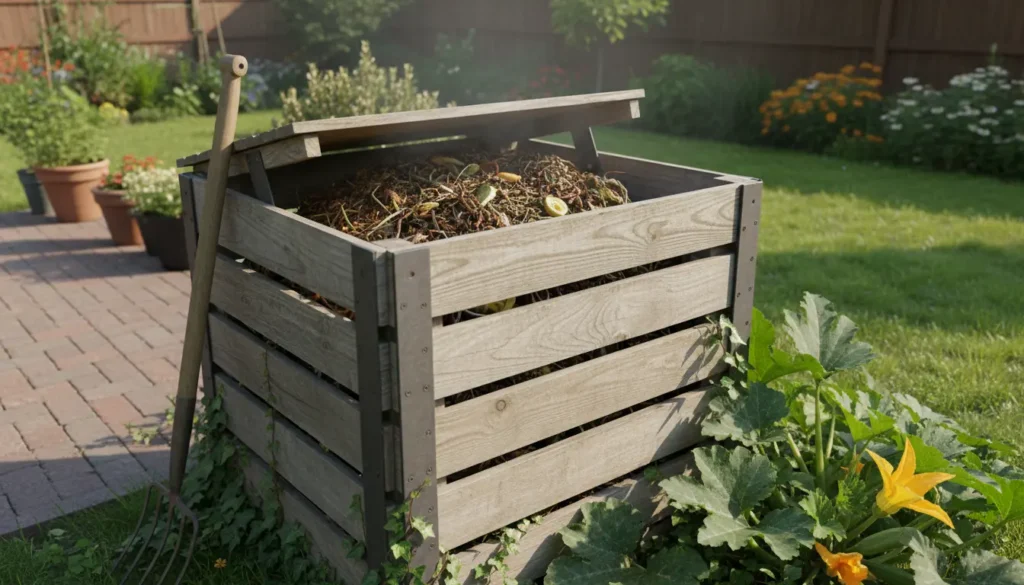
Why Home Composting for Beginners Works
Home composting is an easy way to turn kitchen and yard waste into rich soil. It reduces garbage, cuts methane from landfills, and adds nutrients back to plants.
For beginners the key is a simple system that matches your space and the amount of organic waste you produce. Small, steady steps lead to a useful finished compost within months.
Choose a Method for Home Composting

Select a method that fits your living situation. Outdoor bins work for yards, while worm bins or bokashi systems suit apartments and small spaces.
- Standard outdoor bin: Good for lawns and gardens.
- Compost tumbler: Easier turning, faster composting.
- Vermicompost (worms): Works indoors and for food scraps.
- Bokashi fermentation: Fast for all food waste, requires a separate maturation step.
How to Start Home Composting: The First Steps
Place the bin on soil or a stable surface to allow drainage and access to beneficial organisms. Start with a base layer of coarse carbon material like small twigs to promote airflow.
Add materials in layers using a balance of green and brown inputs. Aim for regular additions rather than dumping a lot at once.
Materials and Ratios for Home Composting

Compost works best with a mix of nitrogen rich greens and carbon rich browns. A common practical approach is roughly a 1 part green to 2 to 3 parts brown volume ratio.
- Greens: vegetable scraps, coffee grounds, fresh grass clippings.
- Browns: dry leaves, shredded paper, cardboard, straw.
- Do not add: meat, dairy, oils, diseased plants, or pet waste.
Maintaining Your Home Composting System
Maintenance is simple and predictable. Focus on aeration, moisture, and balance to keep the process active.
- Turn or mix every 1 to 2 weeks for aerobic systems to supply oxygen.
- Keep moisture like a damp sponge. Add water if dry and add browns if too wet.
- Chop or shred large pieces to speed decomposition.
Monitoring Progress
Temperature, smell, and appearance are your main indicators. A warm center and earthy smell mean the pile is working.

If it smells sour or ammonia like, add more brown material and turn more often. If it stays cold, add greens and ensure it is moist enough.
Troubleshooting Common Problems in Home Composting
Beginners often face a few common issues that are easy to fix. Treat problems early and keep steps simple.
- Bad odor: add dry browns, mix, and reduce wet food amounts in one go.
- Pests: use enclosed bins, bury fresh scraps, or try a worm bin if pests persist.
- Slow breakdown: increase surface area of materials, keep moisture steady, and ensure a proper green to brown mix.
Using Finished Compost
Finished compost is dark, crumbly, and smells earthy. It can be used as a soil amendment, mulch, or in potting mixes.
- Garden beds: mix 2 to 4 inches into topsoil for vegetables and flowers.
- Potted plants: blend one part compost to three parts potting mix for improved nutrition.
- Lawn top dressing: apply a thin layer to add organic matter and improve soil structure.
One household can divert up to 30 percent of its waste from the trash by composting food scraps and yard waste.
Small Real World Example: Apartment Worm Bin Case Study
Case study: A two person apartment used a 20 liter worm bin under the kitchen counter for 18 months. They fed the bin typical kitchen scraps and shredded cardboard.
After three months the worm bin produced a steady supply of rich castings. Weekly maintenance was limited to adding scraps and ensuring moisture. The finished castings were mixed into potted herbs and houseplants, resulting in healthier growth and reduced plant watering needs.
Quick Start Checklist for Home Composting for Beginners
- Choose a method that fits your space and waste volume.
- Collect greens and browns separately to keep balance simple.
- Chop materials and maintain moisture like a wrung out sponge.
- Turn regularly if using an aerobic system to speed composting.
- Use finished compost in gardens and containers after 2 to 6 months depending on method.
Final Tips for Home Composting Success
Start small and learn as you go. Consistent, small additions beat sporadic large inputs when building a reliable compost system.
With modest effort anyone can create nutrient rich compost at home and reduce household waste. Try one system for a season and adjust based on results.



