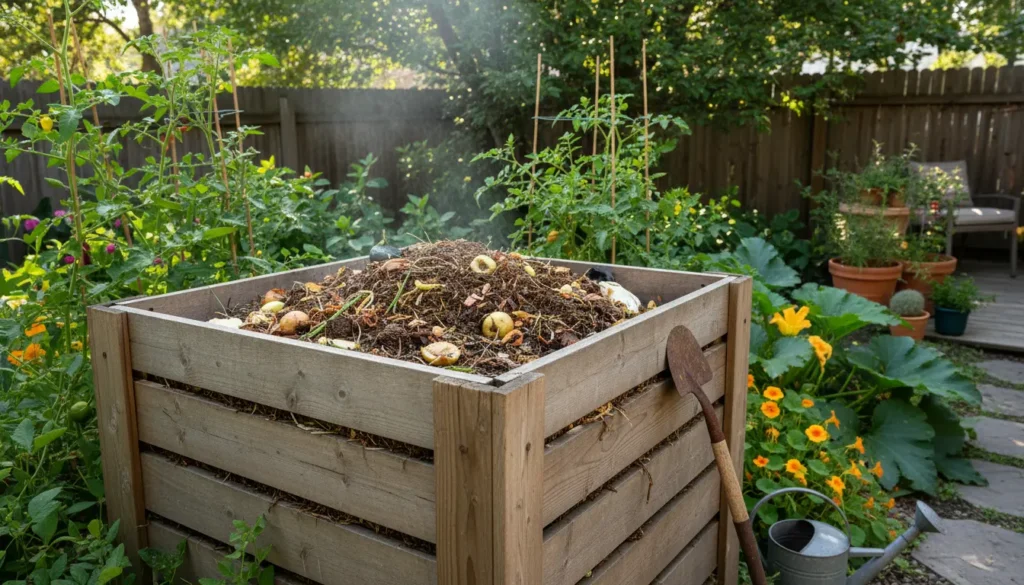
Why Home Composting Matters
Home composting turns kitchen and yard waste into a useful soil amendment. It reduces landfill waste and brings nutrients back to your garden.
Compost improves soil structure, water retention, and plant health. This guide shows practical steps to start and maintain a simple home compost system.
Choose a System for Home Composting

Select a composting system that fits your space and schedule. Options include a simple pile, a tumbling bin, or an indoor worm (vermicompost) setup.
Tumbling bins are low maintenance and fast to turn, while piles and bins work well for yards. Vermicomposting is ideal for apartments and small kitchens.
Quick comparison of common systems
- Compost pile: Cheap, flexible, needs space and turning.
- Tumbler: Faster breakdown, easier turning, moderate cost.
- Worm bin (vermicompost): Small footprint, great for kitchen scraps, requires temperature control.
Materials to Use and Avoid
Good compost needs a balance of greens (nitrogen) and browns (carbon). Aim for roughly 2–3 parts brown to 1 part green by volume.

Examples of greens: fruit and vegetable scraps, coffee grounds, fresh grass clippings. Examples of browns: dry leaves, shredded paper, straw, cardboard.
Materials to avoid
- Meat, dairy, and oily foods (attract pests and create odors).
- Diseased plants or weeds with mature seeds (risk spreading problems).
- Pet waste from carnivores (can contain harmful pathogens).
How to Start Your Compost
Pick a spot with good drainage and partial shade if possible. Start with a layer of coarse material like twigs to help airflow at the base.
Alternate layers of greens and browns, keeping the pile moist like a wrung-out sponge. Turn or mix the pile every 1–2 weeks to add oxygen and speed decomposition.
Step-by-step starter checklist
- Choose container or location and prepare a base layer for airflow.
- Add alternating layers: brown, green, brown, green.
- Moisten as needed and monitor temperature and odor.
- Turn pile regularly or use a tumbler for easy mixing.
- Harvest finished compost when dark, crumbly, and earthy-smelling.
Monitoring and Troubleshooting Home Composting

Temperature is a key sign of progress: an active pile will warm to 40–60°C (104–140°F). If the pile is cool and inactive, add more greens and turn to introduce oxygen.
Common problems have straightforward fixes. Bad smells usually mean too many greens or poor airflow, so add browns and turn the pile.
Troubleshooting quick guide
- Smelly or slimy: Add dry browns, increase turning, and check moisture.
- Pile too dry: Add water and more greens to heat it up.
- Slow decomposition: Chop materials smaller, add nitrogen, and monitor temperature.
Using Finished Compost
Finished compost is dark, crumbly, and has an earthy smell. Use it to top-dress beds, mix into potting soil, or improve lawn soil.
Apply a thin layer of compost around plants, or mix 1 part compost to 3 parts soil for planting mixes. Compost improves long-term soil health rather than acting as a fast fertilizer.
Small Real-World Example: Urban Apartment Composting
Maria lives in a third-floor apartment with limited balcony space and started vermicomposting in a small bin. She collected about 3 liters of kitchen scraps weekly and fed them to a 30-cm worm bin.
After three months she harvested dark, crumbly compost and used it to pot herbs and tomatoes. The result: healthier plants and 60% less kitchen waste sent to the trash.
Practical Tips for Ongoing Success with Home Composting
Keep a small countertop container for scraps and empty it daily to the main bin. Chop larger scraps to speed breakdown and balance your browns and greens.
Record simple notes: when you turned the pile, what materials you added, and how the pile smelled. This habit makes troubleshooting easier and improves results over time.
Composting reduces methane emissions from landfills and returns carbon to the soil. Even small-scale home composting contributes to lower household waste and healthier gardens.
Summary: Start Simple and Learn by Doing
Home composting is scalable and forgiving; start with a simple system and improve it as you learn. Focus on balance, moisture, and airflow to keep the process active and odor-free.
With a little routine and occasional troubleshooting, most households can turn food and yard waste into valuable compost within a few months.



