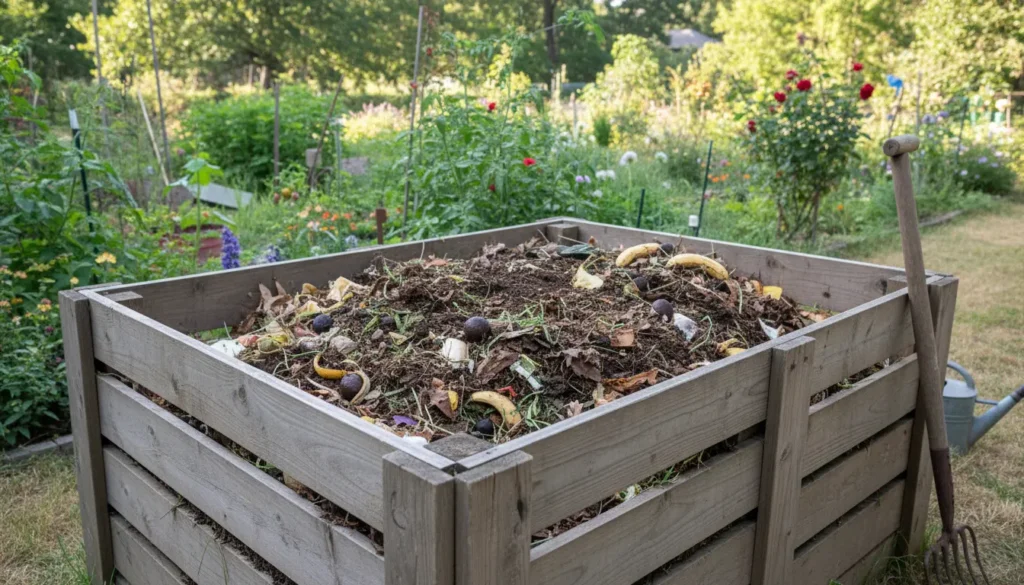
Composting at home turns kitchen scraps and yard waste into rich soil amendment. It reduces landfill waste while improving garden health and water retention.
Why home composting matters
Home composting cuts organic waste and lowers household trash volume. It returns nutrients to soil, supporting plants without chemical fertilizers.

Compost improves soil structure and helps retain moisture, which can reduce watering needs in summers. It also supports beneficial soil organisms that keep plants healthy.
How to start home composting
Starting is simple: pick a method, collect materials, and manage moisture and airflow. You don’t need a large yard or fancy equipment.
Choose a compost system
Select a system that fits your space and routine. Options include backyard piles, tumblers, and countertop collection with periodic transfer to an outdoor bin.
- Backyard pile: Low cost, needs space and turning.
- Tumbler: Easier to turn, faster results for small yards.
- Bokashi or worm bin (vermicompost): Good for apartments and kitchens.
Balance greens and browns

Compost needs a mix: greens provide nitrogen, browns provide carbon. A rough target is 2 to 3 parts browns to 1 part greens by volume.
- Greens: vegetable scraps, coffee grounds, grass clippings.
- Browns: dry leaves, shredded paper, straw, cardboard.
Maintain moisture and aeration
Good compost is moist like a wrung-out sponge. Too dry and decomposition slows; too wet and odors appear.
Turn or aerate the pile every 1–2 weeks to introduce oxygen and speed breakdown. For tumblers, rotate a few times weekly.
What to add and avoid

What you add affects smell, pests, and final compost quality. Follow simple rules to avoid problems.
- Safe to add: fruit and vegetable scraps, coffee filters, tea bags, eggshells, leaves, small amounts of shredded paper.
- Avoid: meat, dairy, oily foods, diseased plants, pet waste, large bones.
Troubleshooting common home composting problems
Problems are usually fixable with small changes. Check balance, moisture, and particle size first.
- Smelly compost: Add more browns and turn more often to increase airflow.
- Slow breakdown: Chop materials smaller and ensure adequate moisture and nitrogen (add greens).
- Pests: Bury kitchen scraps under browns and avoid meat or dairy in outdoor bins.
- Too wet: Add dry browns and aerate; consider a raised bed or better drainage.
Simple weekly routine for home composting
A minimal routine keeps compost active without extra work. Consistency beats perfection.
- Daily: Collect kitchen scraps in a small covered container.
- Weekly: Transfer scraps to the outdoor bin and cover with browns.
- Every 1–2 weeks: Turn the pile or rotate the tumbler.
- Monthly: Inspect moisture and add water or dry browns as needed.
Case study: Small urban household success
María and James live in a row house with a small patio. They started with a 60-liter tumbler and a kitchen compost caddy.
After three months, they reduced their trash by nearly one-third. They used finished compost in pots and raised beds, and noticed better tomato growth and fewer irrigation sessions.
Compost can increase soil water retention by up to 20 percent, helping gardens survive dry spells with less watering.
Tips to speed up home composting
Want finished compost sooner? Follow these practical tips that work in most home setups.
- Shred or chop materials before adding them.
- Keep the pile at least 3 feet wide for better heat retention, if space allows.
- Layer greens and browns instead of mixing in large clumps.
- Use a compost thermometer or touch test; 120–140°F indicates active decomposition in hot piles.
Using finished compost
Finished compost is dark, crumbly, and smells earthy. Use it as a soil top dressing, mix it into potting mixes, or add it to garden beds in spring and fall.
Apply a 1–2 inch layer around plants or mix 10–30 percent compost into garden soil when planting.
Final notes on home composting
Home composting is flexible. Start small, learn from the pile, and adjust your approach to fit your space and goals.
With simple routines and attention to balance and airflow, anyone can produce nutrient-rich compost for healthier plants and a smaller household footprint.



