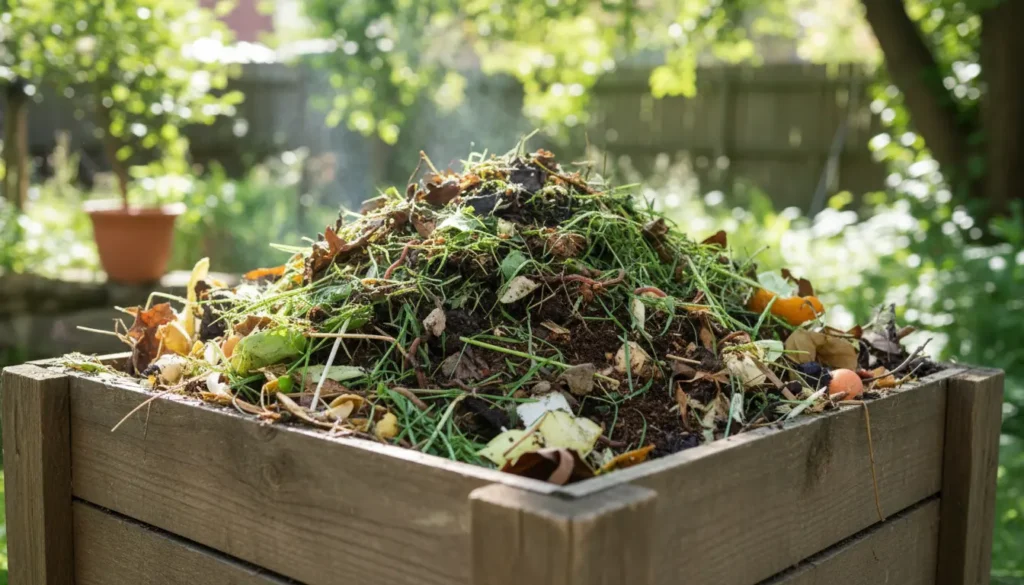
Home Composting Basics
Home composting turns kitchen and yard waste into nutrient-rich soil. It reduces garbage, improves garden soil, and saves money on fertilizers.
This guide shows practical steps and troubleshooting tips you can use in any small yard or apartment with a balcony.
Why Home Composting Matters

Composting reduces landfill waste and lowers methane emissions from organic materials. Finished compost improves soil structure and water retention for healthier plants.
Even small-scale composting can make a measurable environmental and gardening difference.
Materials for Home Composting
Compost needs a balance of carbon-rich and nitrogen-rich materials. Carbon gives structure and energy; nitrogen feeds the microbes that break materials down.
Carbon Rich (Browns)
- Dry leaves, straw, shredded paper, cardboard
- Wood chips and sawdust in small amounts
Nitrogen Rich (Greens)
- Vegetable peels, fruit scraps, coffee grounds
- Fresh grass clippings and green plant trimmings

Avoid meat, dairy, diseased plants, and pet waste. These items attract pests or introduce pathogens.
How to Start Home Composting
Choose a container: a commercial tumbler, a simple bin, or a DIY pile will work. In small spaces, a closed bin or a Bokashi system is best for odor control.
Place the bin in a partly shaded spot for steady moisture and temperature. Good airflow and drainage are important for aerobic decomposition.
Step-by-Step Setup
- Layer a base of coarse browns (twigs or straw) for airflow.
- Add alternating layers of greens and browns, keeping a 2:1 or 3:1 brown-to-green ratio by volume.
- Moisten each layer so it feels like a wrung-out sponge.
- Turn or mix the pile every 1–2 weeks to add oxygen and speed up decomposition.
- Monitor temperature; a healthy pile warms to 104–140°F (40–60°C) if active.
Troubleshooting Home Composting Problems

Knowing common problems helps you keep the composting process efficient. Most issues are fixed by adjusting moisture, aeration, or material mix.
Common Problems and Fixes
- Bad odor: Add more browns, mix the pile, and check drainage.
- Too dry: Add water and more greens or moistened browns.
- Too wet and slimy: Add dry browns and increase turning to aerate.
- Slow decomposition: Chop materials smaller and maintain a balanced mix.
- Pests: Avoid meat/dairy, secure the bin, or use a closed tumbler.
How to Use Finished Compost
Finished compost looks dark, crumbly, and smells earthy. It usually takes 2–12 months depending on method, materials, and how often you turn it.
Use compost as a top dressing, mix it into potting soil, or incorporate it into planting beds to improve soil health and plant growth.
Composting one household can divert up to several hundred pounds of organic waste per year from the landfill. Small changes add up quickly.
Tips for Small Space Home Composting
Apartment dwellers can compost with a small bin, worm composting (vermicompost), or Bokashi fermentation. These methods control odors and fit limited spaces.
Keep a small sealed container under the sink for daily scraps and empty it into the outdoor bin or indoor system twice a week.
Easy Maintenance Checklist
- Chop or shred large items
- Keep mix moist but not waterlogged
- Turn or aerate regularly
- Keep out meat, dairy, and pet waste
Short Case Study: Neighborhood Compost Project
In one small neighborhood, ten households started a shared compost bin in a community garden. They collected kitchen scraps and yard waste weekly.
After six months they produced about 120 liters of compost. Gardens reported improved plant vigor, and participants reduced their household waste by roughly 40%.
The group scheduled one volunteer day a month to turn the pile and shared finished compost equally among members.
Final Checklist to Start Home Composting
- Choose a container suited to your space and local climate.
- Collect greens and browns and keep the 2:1–3:1 ratio.
- Maintain moisture, aeration, and regular mixing.
- Monitor for pests and odors and make simple adjustments.
- Use finished compost to enrich soil and reduce fertilizer use.
Home composting is practical and adaptable. Start small, keep it balanced, and you will have rich compost to improve your soil and reduce waste.



