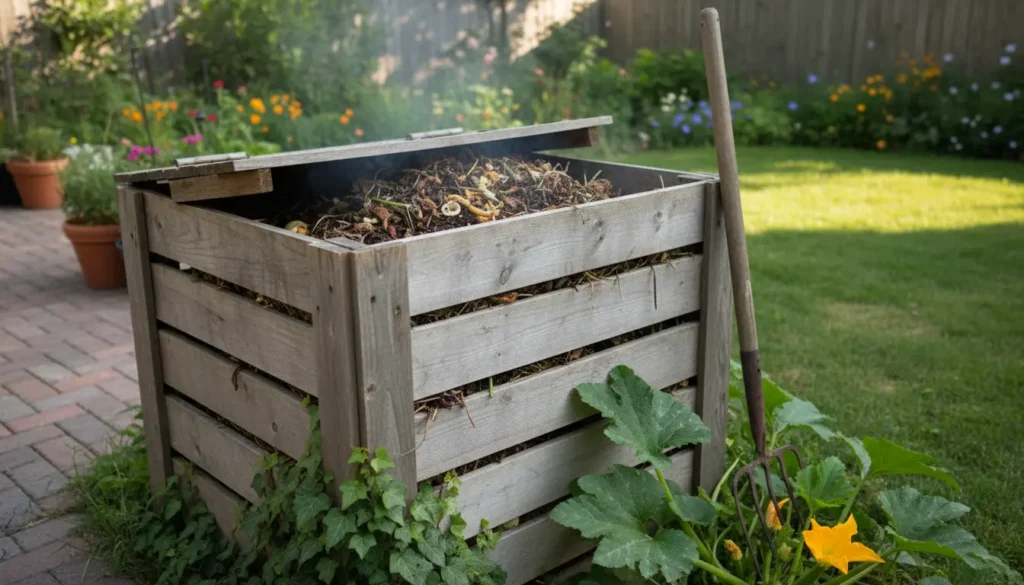
Home Composting Basics
Home composting converts kitchen and yard waste into nutrient-rich soil amendment. It reduces household waste, lowers landfill contributions, and supports healthy plants.
This guide focuses on straightforward, practical steps you can follow today to begin composting at home.
How Home Composting Works
Compost is created by the natural decomposition of organic materials. Microbes, fungi, worms, and insects break down greens and browns into stable humus.
Balance of moisture, air, and the right mix of materials speeds the process and prevents odors.
Choose a Composting Method
Your available space, climate, and patience determine the best composting method. Choose what fits your lifestyle.
- Hot composting: Faster breakdown but requires turning and monitoring temperature.
- Cold composting: Low maintenance, slower; good for beginners.
- Tumbler composting: Enclosed drum that you turn to aerate; tidy and quicker than cold piles.
- Bokashi or anaerobic systems: Fermentation-based; good for small spaces and food scraps, later buried or added to compost.
Selecting a Compost Bin
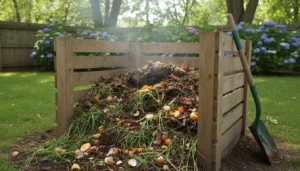
Bins keep compost contained and look neater in yards. Choose a bin sized to your waste output and space.
Options include commercial plastic bins, wooden pallets, wire mesh, or simple piles.
Feed Your Compost: Greens and Browns
Successful home composting depends on mixing nitrogen-rich “greens” and carbon-rich “browns.”
- Greens: vegetable scraps, fruit peels, coffee grounds, fresh grass clippings.
- Browns: dried leaves, straw, shredded paper, cardboard, small wood chips.
A basic rule is roughly 2–3 parts browns to 1 part greens by volume. Adjust as needed based on moisture and smell.
Do Not Compost
Some items cause pests, odors, or pathogens. Avoid meat, dairy, oils, diseased plants, and pet waste from carnivores.
Check local rules for accepted materials if you use municipal or community composting services.
Practical Steps to Start Composting at Home
Follow these steps to build and maintain an effective home compost system.
- Pick a shady, well-drained location near your kitchen or garden.
- Place a layer of coarse browns such as twigs to promote airflow at the bottom.
- Add alternating layers of greens and browns, chopping large pieces to speed decomposition.
- Keep the pile as moist as a wrung-out sponge; water if it’s dry and add browns if too wet.
- Aerate by turning the pile every 1–2 weeks for hot composting; less often for cold piles.
- Harvest finished compost when it is dark, crumbly, and smells earthy—typically 3–12 months depending on method.
Compost can increase soil water retention by up to 30%, helping plants survive dry periods and reducing the need for frequent watering.
Troubleshooting Common Problems
Even simple systems can develop issues. Identifying symptoms helps you correct them quickly.
- Bad smell: Add more browns and turn the pile to increase airflow.
- Slow breakdown: Chop materials smaller, add nitrogen-rich greens, and maintain moisture.
- Pests: Avoid adding meat or oily foods, use a closed bin or bury fresh scraps in the center of the pile.
- Too dry: Sprinkle water and mix to distribute moisture evenly.
When to Use Finished Compost
Apply finished compost as a soil amendment, top dressing, or potting mix ingredient. It improves structure, nutrients, and microbial activity.
Use 1–3 inches as a top dressing for beds or mix 10–30% into potting soil for containers.
Small Case Study: A Suburban Family Reduces Waste
Jane and Marco started a 3-bin cold compost system in a suburban backyard. They collected kitchen scraps in a small counter caddy and emptied it weekly.
After six months they had rich compost used to top up their vegetable beds. Their household waste to landfill dropped by nearly 40% that year.
Key wins: consistent separation of scraps, sizing the bins to their output, and using finished compost in summer vegetables.
Quick Tips for Composting Success
- Keep a small indoor container for scraps and empty it often to avoid odors.
- Shred or chop materials to speed decomposition.
- Rotate between two or three bins to always have active and curing piles.
- Use a soil thermometer for hot composting to monitor progress: 130–150°F indicates active decomposition.
Final Thoughts on Home Composting
Home composting is a low-cost, high-impact habit you can adopt with minimal tools. Start small, learn from the pile, and adjust your routine as you go.
With consistent effort you will reduce waste, improve soil, and enjoy better results in your garden.