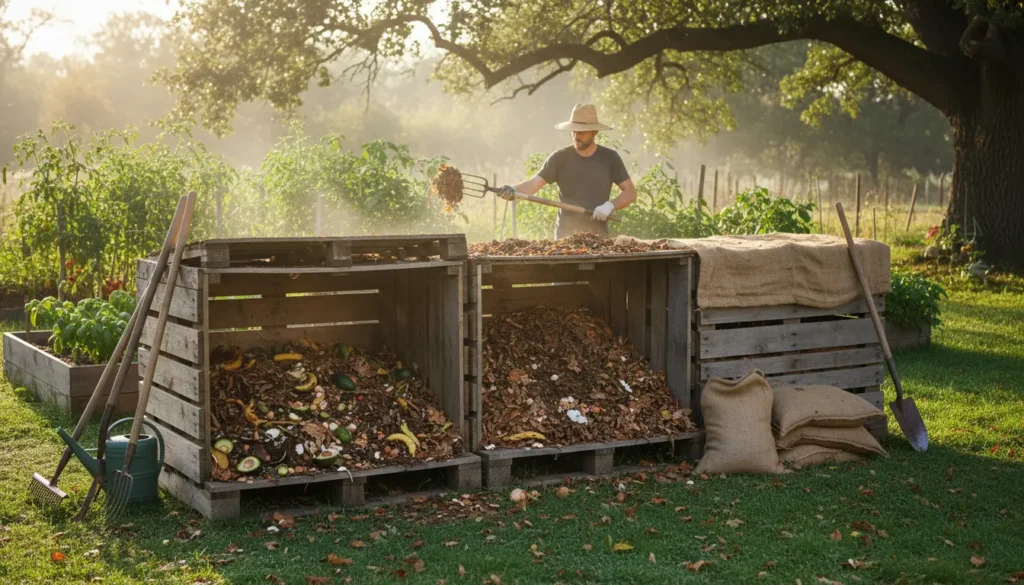
Why Home Composting Matters
Home composting turns kitchen scraps and yard waste into nutrient-rich soil. It reduces landfill waste, lowers methane production, and improves garden health.
For beginners, composting is a low-cost way to recycle organic material and build soil structure naturally. You do not need special skills to start.
Getting Started with Home Composting

Choose the right system for your space and needs. Small balconies, medium yards, and larger properties each work with different compost methods.
Choose a Compost System
Common home composting systems include bins, tumblers, and vermicomposting. Each has trade-offs in time, odor control, and maintenance.
- Bins: Good for backyard use, inexpensive, scalable.
- Tumblers: Faster mixing, cleaner, requires turning mechanism.
- Vermicomposting: Uses worms, ideal for apartments and small-scale indoor composting.
Pick a Location
Place your compost in a well-drained, partially shaded spot. Close access to your kitchen makes adding scraps easier and increases consistency.

Keep the pile on soil or a permeable surface to allow beneficial organisms to move in and help with decomposition.
What to Compost: Greens and Browns
Successful home composting depends on balancing green and brown materials. Greens provide nitrogen; browns provide carbon.
- Greens: Fruit and vegetable scraps, coffee grounds, fresh grass clippings.
- Browns: Dry leaves, shredded paper, straw, cardboard.
Aim for an approximate carbon to nitrogen (C:N) ratio near 25–30:1. Practically, layer more browns than greens and add a handful of soil or finished compost.
Managing Your Compost

Basic maintenance keeps the compost active and odor-free. Regular attention speeds decomposition and prevents pests.
Turn and Aerate
Turning adds oxygen, which supports aerobic microbes and reduces odor. For bins, turn every 1–2 weeks; tumblers can be rotated a few times per week for faster results.
If you use a static pile, insert a garden fork to aerate every few weeks.
Moisture and Temperature
Compost should be as damp as a wrung-out sponge. Too dry slows decomposition; too wet creates anaerobic conditions and smell.
Temperature indicates activity: a warm pile (90–140°F or 32–60°C) breaks down material faster. Monitor and adjust moisture, turning, or material mix if temperatures drop.
Common Problems and Fixes
Beginners face predictable issues. Quick fixes usually restore balance without removing the pile.
- Bad smell: Add browns and turn to aerate.
- Slow decomposition: Chop materials smaller, increase greens, or check moisture.
- Pests: Avoid meat, dairy, and oily foods. Use a closed bin or bury scraps in the pile.
Small Real-World Case Study
Sarah, a homeowner in Portland, began home composting with a three-bin system in spring. She separated kitchen scraps into a countertop pail and added them daily to the active bin.
After six months she reduced household food waste by about 60 percent and produced enough finished compost to top-dress her raised beds. Her garden showed improved plant vigor and fewer watering needs.
A well-managed compost pile can reach temperatures high enough to kill many weed seeds and pathogens, helping create safer garden amendments.
Simple Weekly Routine for Home Composting
Keep a consistent schedule to make composting part of your routine. Small, regular tasks prevent major problems.
- Collect scraps in a covered kitchen pail each day.
- Add scraps and a layer of browns to the compost bin every 2–3 days.
- Turn the pile weekly or spin the tumbler regularly.
- Monitor moisture and adjust with water or dry material as needed.
Tips for Faster Home Composting
If you want quicker results, use these practical steps. They are effective without extra cost.
- Shred or chop kitchen scraps to increase surface area.
- Use a compost thermometer to monitor activity and heat up the pile when needed.
- Layer materials rather than dumping large amounts of one type at once.
Final Thoughts on Home Composting
Home composting is accessible, practical, and rewarding for beginners. It reduces waste, improves soil, and connects you to natural cycles.
Start small, keep a simple routine, and adjust as you learn. Over time the process becomes second nature and provides ongoing benefits to your garden and the environment.



