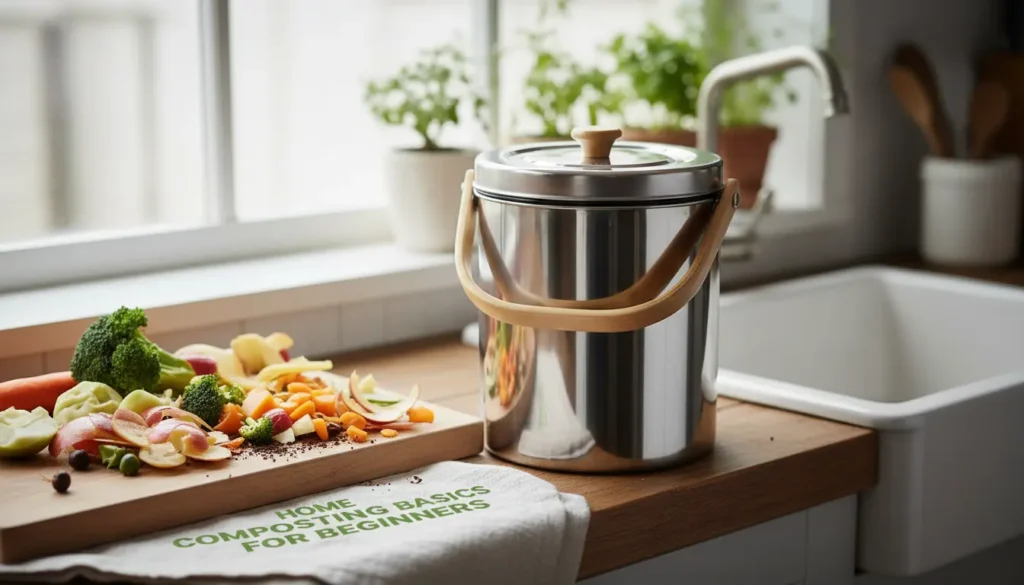
Why Start Composting at Home
Composting at home reduces landfill waste and creates nutrient-rich soil for gardens. It is a low-cost, low-effort way to improve soil health and lower your household carbon footprint.
This guide explains how to start, maintain, and troubleshoot a home compost system in simple steps. Follow practical tips for both outdoor and apartment composting.
Choose a Compost Method for Your Home

Selecting the right compost method depends on space, time, and local rules. Common methods include backyard bins, tumblers, and indoor composting for small spaces.
- Backyard bin: Good for yards and larger volumes of yard waste.
- Compost tumbler: Faster turnover and easier to mix.
- Bokashi or indoor worm composting (vermiculture): Ideal for apartments and kitchens.
How to Start Composting at Home: Step-by-Step
Starting is straightforward. You only need the right balance of materials, moisture, and air.
- Pick a bin or location: Place a bin on soil for drainage or use a container suitable for indoors.
- Layer materials: Start with twigs or coarse material for airflow, then alternate green and brown layers.
- Maintain moisture: Keep the pile as damp as a wrung-out sponge. Add water if dry and dry materials if soggy.
- Turn or aerate: Mix the pile every 1–2 weeks for faster decomposition or use a tumbler for easy mixing.
- Harvest finished compost: When dark and crumbly, screen and use it in pots, beds, or lawn top-dressing.
Key Materials for Composting at Home
Understanding what to feed your compost keeps the process healthy and odor-free. Aim for a balance of carbon-rich (browns) and nitrogen-rich (greens) items.
- Greens (nitrogen): fruit and vegetable scraps, coffee grounds, fresh grass clippings.
- Browns (carbon): dry leaves, straw, shredded paper, cardboard, small branches.
- Avoid: meat, dairy, oils, diseased plants, and pet waste unless using a specially managed system.
Tips to Speed Up Composting at Home

Faster results are possible with simple adjustments. These tips work for most small-scale systems.
- Shred or chop materials to increase surface area.
- Maintain a 2:1 or 3:1 ratio of browns to greens by volume for odor control.
- Turn the pile regularly to add oxygen and speed microbial action.
- Keep the pile warm by insulating or locating it in a sunny spot.
Composting can reduce household waste volume by up to 30 percent and cut methane emissions from landfills. Even small kitchen bins can make a measurable impact.
Composting at Home Troubleshooting
Common problems are odors, slow decomposition, or pests. Most issues have simple fixes that restore balance quickly.
- Bad smell: Add more browns and aerate the pile.
- Slow breakdown: Chop materials smaller and ensure moisture and aeration are adequate.
- Pests: Avoid putting meat or oily food in the pile and bury food scraps under a brown layer.
How to Use Finished Compost

Finished compost is dark, crumbly, and has an earthy smell. Use it to improve soil structure, water retention, and nutrient content.
- Mix into potting soil at 10–30 percent by volume for containers.
- Top-dress garden beds with a 1–2 inch layer and work it lightly into the topsoil.
- Make compost tea by steeping compost in water and use as a diluted liquid fertilizer.
Small Real-World Example: Apartment Composting Case Study
In a two-year trial, a three-person apartment in a mid-sized city switched to an indoor compost bin plus a weekly drop-off. They reduced trash volume by 40 percent.
They used a small Bokashi bucket for kitchen scraps and a communal compost drop-off for finished material. Within six months they produced enough compost to feed window-box herbs and tomato plants.
Key takeaways:
- Indoor systems handle food waste without odor when managed correctly.
- Community drop-off points or municipal programs can supplement limited private space.
Local Rules and Safety for Composting at Home
Check local regulations before starting, especially for large outdoor piles. Some neighborhoods or homeowner associations have rules about visible bins or composting methods.
For safety, avoid raw meat and pet waste unless using hot composting methods that reach pathogen-killing temperatures.
Quick Checklist Before You Start Composting at Home
- Choose a bin type suitable for your space.
- Gather a mix of greens and browns.
- Decide how often you will turn or aerate.
- Locate a harvest spot for finished compost.
Composting at home is practical and scalable. Start small, learn by doing, and adapt the system to your household’s needs. With basic care, your compost will enrich plants and reduce waste consistently.



