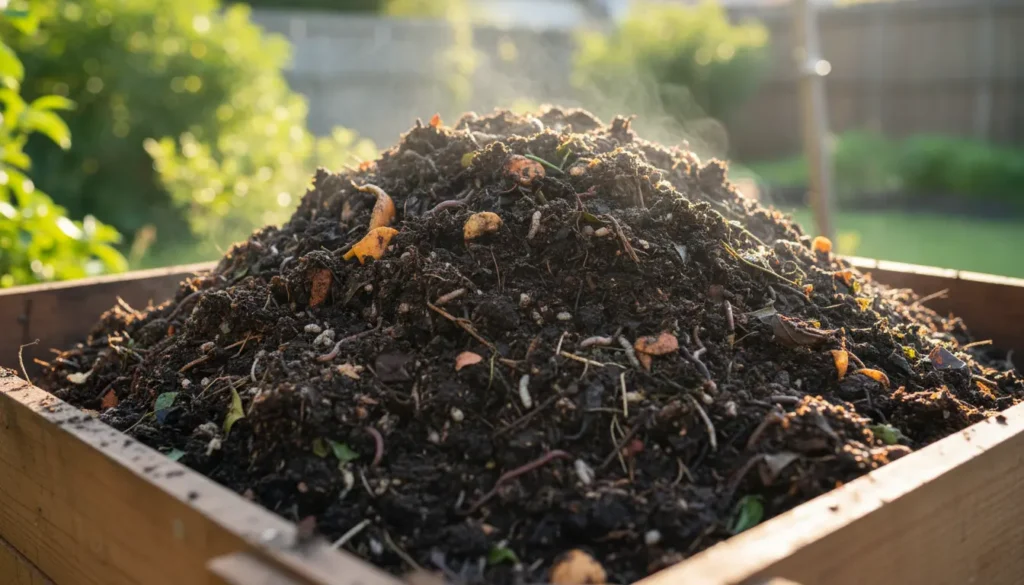
Composting at home turns kitchen scraps and yard waste into valuable soil material. This guide explains clear steps you can follow to start and maintain a healthy compost pile.
Why Home Composting Matters
Home composting reduces household waste and improves garden soil. It lowers methane emissions from landfills and returns nutrients to the soil.

For gardeners and homeowners, compost improves soil structure, water retention, and plant health. It is a low-cost way to recycle organic matter at home.
How to Start Home Composting
Choose a location with good drainage and partial shade. A level area near the garden or garage is usually ideal.
Select a container or build a simple bin. Options include tumblers, wire cages, or wooden bins depending on space and budget.
Choosing a Compost Bin

Match the bin type to your needs and how much waste you produce. Tumblers speed up turning; open piles are cheaper and larger.
- Plastic Tumbler: Easy to turn, tidy, good for small yards.
- Wire Cage: Cheap, allows airflow, works well for larger volumes.
- Wooden Bin: Durable and blends with garden, needs construction.
Where to Place Your Bin
Place the bin on soil rather than concrete if possible. Direct contact with soil lets beneficial organisms move in and helps drainage.
Keep the bin within easy reach of the kitchen to encourage frequent use. Avoid low-lying areas that stay waterlogged.
What to Compost

Balance ‘greens’ (nitrogen-rich) and ‘browns’ (carbon-rich) for efficient decomposition. A good ratio is about 2 parts browns to 1 part greens by volume.
- Greens: fruit and vegetable scraps, coffee grounds, fresh grass clippings.
- Browns: dry leaves, straw, cardboard, shredded paper, small wood chips.
- Avoid: meat, dairy, oil, diseased plants, and pet waste.
Maintaining Your Home Composting System
Regular maintenance keeps the pile active and prevents odors. Turn or aerate the pile every 1–2 weeks to add oxygen.
Monitor moisture: the compost should feel like a wrung-out sponge. Add water if dry or more browns if too wet.
Turning and Mixing
Turning the pile mixes microbes and improves airflow. Use a garden fork or rotate a tumbler several times each session.
If you can’t turn weekly, add coarse materials like small branches to maintain air channels.
Speeding Up Composting
Chop materials small, maintain the 2:1 brown-to-green ratio, and keep the pile warm. These steps speed microbial activity and decomposition.
- Use a compost starter or finished compost to seed new piles.
- Cover the pile with a tarp during heavy rain to prevent waterlogging.
Troubleshooting Common Problems in Home Composting
Odor is the most common issue and usually means too much moisture or too many greens. Add browns and turn the pile to fix it.
Slow decomposition can be caused by low temperatures, compacting, or incorrect balance. Add greens, chop materials, and aerate to restart activity.
Pests and Rodents
Keeping out meat and dairy reduces pests. Use a closed bin or fine mesh at the base to prevent rodents from digging in.
If pests persist, move the bin and clean the area. Avoid feeding wildlife directly from the compost bin.
A well-managed compost pile can reach 130°F (54°C) during active phases, killing many weed seeds and plant pathogens. Regular turning keeps temperatures steady and speeds composting.
How to Tell When Compost Is Ready
Finished compost looks dark, crumbly, and earthy. Most materials are unrecognizable and the pile no longer heats up after turning.
Screen the compost if you need a fine texture. Coarser pieces can go back into a new pile for further breakdown.
Small Real-World Example
Case Study: A two-person household in Austin started a 3×3 ft wooden bin in spring. They collected kitchen scraps and yard trimmings and kept a 2:1 browns-to-greens ratio.
After six months of weekly turning and occasional watering, they produced about 0.6 cubic feet of finished compost. They used it as a top dressing for raised beds, which improved tomato yields the next season.
Practical Tips and Examples
- Kitchen caddies with a tight lid make it easy to collect scraps without odors.
- Shredded newspaper and cardboard are cheap, effective browns for balancing greens.
- Compost tea: steep a bucket of finished compost in water for a light fertilizer for potted plants.
Home composting is an easy, effective way to reduce waste and improve garden soil. Start small, watch the balance of materials, and adjust with turning and moisture control. With a little attention, you can convert household organic waste into a valuable resource for your garden.



