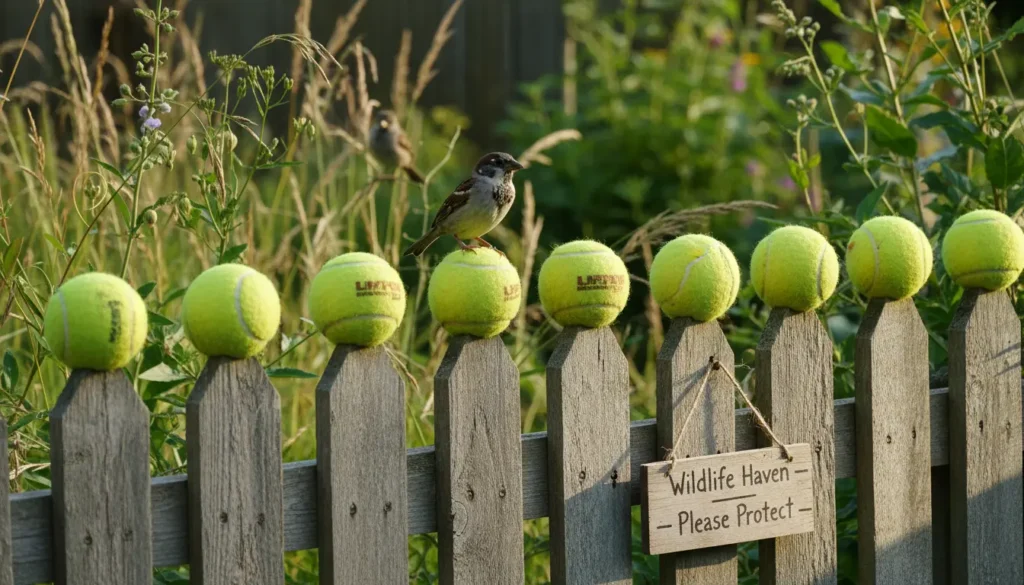
Winter brings extra risks for small wildlife. Tangled netting, sharp fence posts, and cold shelters can harm birds and hedgehogs as they forage or hibernate.
How tennis balls protect birds and hedgehogs this winter
Tennis balls are inexpensive, widely available, and easy to adapt for simple wildlife protection tasks. When used correctly they can increase visibility, soften sharp edges, and reduce accidental entanglement around gardens and allotments.

This article explains safe, practical uses, step-by-step installation tips, and maintenance advice so tennis balls help — not harm — wildlife during the colder months.
Common winter hazards for birds and hedgehogs
- Narrow holes in fences or shed gaps where hedgehogs become stuck.
- Garden netting and protective covers that trap birds and small mammals.
- Sharp or pointed posts and wire that can injure animals moving at night.
Three safe uses for tennis balls to protect birds and hedgehogs
1. Cap and cushion fence posts with tennis balls
Cut a small X into an old tennis ball and push it onto pointed wooden or metal posts. The ball creates a soft cap that reduces injury risk when animals brush past or climb.
Materials and steps:
- Used tennis balls (cleaned) or low-cost replacements.
- Knife or sharp scissors to cut a small X in each ball.
- Push the ball onto the post end; trim if needed for a snug fit.

Benefits: caps are visible at night and cut the risk of puncture wounds for hedgehogs and birds that contact fence tops.
2. Make garden netting and mesh more visible
Thin netting is a major cause of entanglement. Attaching tennis balls at intervals along the lower edge makes netting more obvious and raises the first visible line above typical hedgehog height.
How to attach:
- Thread garden twine through a tennis ball or tie a loop around it.
- Attach balls every 30–50 cm along net edges or drooping sections.
- Ensure the net is taut and that balls do not create new tangles.

This increases visibility for foraging birds and migrating hedgehogs and reduces accidental snaring.
3. Cushion shelters and feeding areas (with caution)
Inside a purpose-built hedgehog box or under a sheltered feeding station you can use halved or flattened tennis balls as extra padding on hard edges. Only use this method if the balls are clean, dry, and fixed securely so animals cannot chew or ingest pieces.
Key precautions:
- Do not use loose tennis ball pieces where animals could swallow them.
- Ensure ventilation and drainage in any shelter are not blocked.
- Replace balls that become waterlogged, moldy, or chewed.
Step-by-step: install tennis ball fence caps
This quick guide shows a safe installation for common garden posts and stakes.
- Collect and clean old tennis balls in warm soapy water; rinse and dry thoroughly.
- Using a sharp knife, cut an X or a small circular hole slightly smaller than post diameter.
- Test fit a ball on the post. Trim edges if it’s too tight, or use a spacer if it’s loose.
- Secure with a short screw or cable tie through the ball if high winds or animals dislodge it.
- Check monthly through winter and replace any damaged balls.
Safety, maintenance, and alternatives
Tennis balls are not perfect for every situation. Use them only where they cannot be chewed into pieces or obstruct drainage and ventilation.
Maintenance checklist:
- Clean balls before first use to remove dust, oils, and chemicals.
- Inspect monthly for cracks, mold, or small animals nesting inside.
- Replace balls at the first sign of deterioration.
Alternatives to consider:
- Commercial plastic post caps for long-term protection and weather resistance.
- Reflective tape and wildlife-friendly netting to reduce entanglement risk without loose attachments.
- Building dedicated hedgehog highways — small gaps in fences — to reduce the need for risky crossings.
Hedgehogs often travel up to 1 km a night when foraging, so even small changes in garden layout can strongly affect their safety in winter.
Real-world example
A local allotment group trialed tennis ball fence caps and visible net markers after several reported entanglements. Within two months they recorded fewer net-related incidents and more safe nocturnal passages by hedgehogs, according to volunteer logs.
The group emphasized regular checks and replacing balls after rain as key to success. They also combined caps with small fence gaps to create continuous safe routes for animals.
Final tips for winter protection
- Think visibility first: make hazards easy to see in low light.
- Use tennis balls where they add cushioning and do not create new risks.
- Combine DIY fixes with proven wildlife measures like hedgehog highways and wildlife-friendly netting.
When used sensibly, tennis balls are a low-cost addition to a winter wildlife safety toolkit. They are not a complete solution but, with careful installation and maintenance, they can reduce harm and make gardens safer for birds and hedgehogs.



