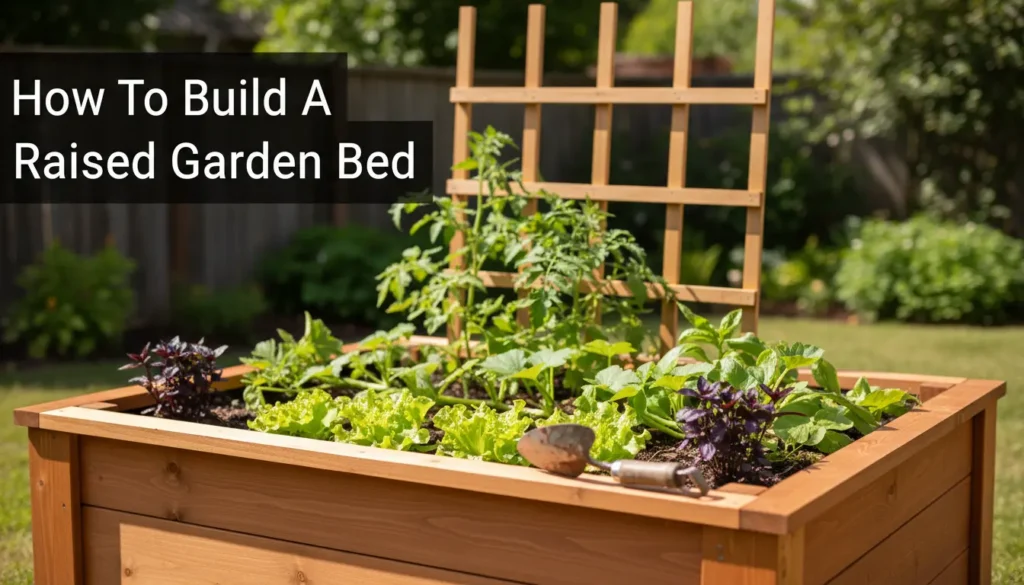
Raised garden beds are a practical way to grow vegetables, herbs, and flowers in small or poor-quality yards. They improve drainage, reduce soil compaction, and make planting and harvesting easier. This guide shows a simple, step-by-step process to build and maintain a raised garden bed.
Why choose a raised garden bed
Raised garden beds warm faster in spring and provide better root aeration. They also let you control soil quality and reduce weeds and pests.

For small spaces or heavy clay soils, a raised garden bed gives immediate usable planting area without large excavations.
Materials and tools for a raised garden bed
Basic materials for a raised garden bed
- Untreated cedar, redwood, or composite boards (2×6 or 2×8 work well)
- Galvanized screws or deck screws
- Corner brackets or simple 4×4 posts for support
- Landscape fabric (optional) to suppress weeds
- Quality soil mix: topsoil, compost, and coarse sand or perlite
Tools you’ll need
- Measuring tape and pencil
- Saw (circular or handsaw) and drill/driver
- Level and square
- Wheelbarrow and shovel
- Work gloves and safety glasses
Step-by-step: Build a raised garden bed
Below is a clear sequence to build a standard 4 x 8 foot raised garden bed. Adjust dimensions to suit your space.
- Plan and measure. Mark a flat spot that gets 6–8 hours of sun. A 4 x 8 bed is easy to reach from both sides and fits most yards.
- Cut and prepare boards. Cut four long boards and four short boards to form the rectangle. Sand any rough edges to prevent splinters.
- Assemble corners. Use corner brackets or 4×4 posts to secure corners. Pre-drill holes and drive galvanized screws to prevent wood splitting.
- Position the bed. Place the assembled frame on the prepared site. Use a level and adjust with shims or soil so the frame sits flat.
- Optional: add weed barrier. Lay landscape fabric on the ground inside the frame to reduce weeds while allowing drainage.
- Fill with soil mix. Use a layered approach: 40% topsoil, 40% compost, 20% coarse sand or perlite for drainage. Mix well as you fill.
- Tamp and water. Lightly tamp the soil to settle it, then water to remove large air pockets. Add more soil if it settles too much.
- Plant and mulch. Arrange crops based on spacing needs. Add a 1–2 inch layer of organic mulch to conserve moisture and reduce weeds.
Soil mix and planting in a raised garden bed
Success in raised beds depends on a good soil mix. A balanced mix retains moisture but drains well enough to avoid root rot.

For most vegetables and herbs, use a blend of quality screened topsoil, well-rotted compost, and a drainage amendment like coarse sand or perlite. Avoid heavy garden soil that was not screened.
Planting layout tips
- Use row planting for larger vegetables and square-foot planting for intensive use.
- Group plants by water needs to simplify irrigation.
- Consider trellises at one end for vining crops like beans or cucumbers.
Maintenance tips for raised garden beds
Maintenance is straightforward but regular. Watering, feeding, and simple pest checks keep plants productive.
- Water deeply 1–2 times per week, more in heat waves.
- Add compost or organic fertilizer at the start of each season.
- Rotate crops yearly to reduce disease build-up.
- Top up soil and mulch each year to maintain depth and structure.
Raised garden beds can extend your growing season. Soil in raised beds warms faster in spring, allowing earlier planting by up to two weeks compared with in-ground gardens.
Real-world example: Small community garden case study

A neighborhood community center built six 4 x 8 raised garden beds using cedar boards and donated compost. Volunteers assembled each bed in one afternoon and filled them with a 50/40/10 soil mix (topsoil/compost/sand).
Within the first season, beds produced tomatoes, lettuce, and herbs. The organizers reported fewer weeds and easier access for elders helping in the garden. Year two saw improved yields after they added extra compost in spring.
Common mistakes to avoid with raised garden beds
- Using treated wood that may leach chemicals into the soil — choose untreated or naturally rot-resistant wood.
- Filling with poor-quality soil — start with good ingredients to avoid compaction and nutrient issues.
- Making beds too wide — keep widths under 4 feet for easy reach from both sides.
Building a raised garden bed is a low-cost, high-impact way to improve growing conditions and make gardening more accessible. With proper materials, a balanced soil mix, and seasonal care, you can create a productive garden that fits your space and goals.



