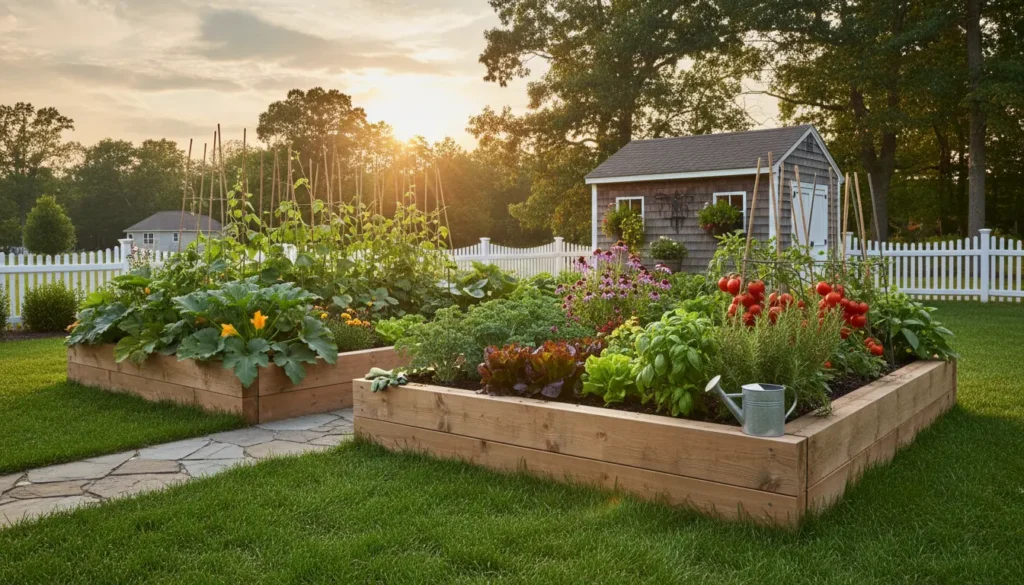
Building a raised garden bed is a practical way to grow vegetables, herbs, and flowers in limited space. This guide explains materials, measurements, soil mixes, and step-by-step instructions so you can start a productive raised garden bed quickly.
Why Choose a Raised Garden Bed
A raised garden bed improves drainage, warms earlier in spring, and reduces soil compaction. It also makes planting and maintenance easier because beds sit above ground level.

Raised beds are ideal for small yards, patios, and locations with poor native soil. They let you control soil quality and layout for efficient planting.
Materials You Need to Build a Raised Garden Bed
Gathering the right materials before you begin saves time and ensures durability. Choose rot-resistant wood, galvanized screws, and quality soil for best results.
- Rot-resistant lumber (cedar or redwood) or untreated pine for a budget option
- Galvanized or stainless steel screws and corner brackets
- Landscape fabric or cardboard to suppress weeds
- High-quality garden soil and compost
- Gravel or coarse sand for basic drainage (optional)
Recommended Dimensions for a Raised Garden Bed
Common raised garden bed dimensions are 4 feet wide by 8 feet long and 12–18 inches deep. A 4-foot width lets you reach the center from either side without stepping into the bed.

For deep-rooted vegetables, choose at least 18 inches depth. For herbs and salad greens, 12 inches is usually sufficient.
Step-by-Step: How to Build a Raised Garden Bed
This step-by-step sequence covers building a basic wooden raised garden bed. Adjust sizes to fit your space and needs.
-
Choose and prepare the site.
Pick a level spot with 6–8 hours of sun for most vegetables. Clear grass and debris. Mark the bed perimeter with string or stakes.
-
Cut and assemble the frame.
Cut boards to size. For a 4×8 bed use two 8-foot boards and two 4-foot boards. Join corners with brackets or by screwing through the ends.
-
Prepare the base.
Lay landscape fabric or a layer of cardboard to suppress weeds. If drainage is a concern, add a 1–2 inch layer of gravel.
-
Fill with soil mix.
Use a mix of quality topsoil, compost, and coarse sand or perlite. A good ratio is 50% topsoil, 30% compost, 20% coarse material for drainage.
-
Plant and mulch.
Arrange plants based on height and spacing. Add 2–3 inches of organic mulch to retain moisture and limit weeds.

Soil Mix and Fertility for a Raised Garden Bed
Soil quality determines long-term success. A light, well-draining mix encourages root growth and consistent moisture retention.
- Topsoil: forms the bulk and structure
- Compost: supplies nutrients and improves texture
- Coarse material: sand, perlite, or small gravel for drainage
- Optional: slow-release organic fertilizer at planting time
How to Amend Soil Over Time
Add 2–3 inches of compost each season to replenish nutrients. Test pH every 1–2 years and amend with lime or sulfur if necessary.
Rotate crops and plant cover crops in winter to reduce nutrient depletion and pest buildup.
Planting and Maintenance in a Raised Garden Bed
Raised garden beds can be intensively planted using square-foot or row methods. Regular maintenance keeps beds productive year after year.
- Water deeply and infrequently to encourage deep roots.
- Mulch to conserve moisture and reduce weeds.
- Monitor for pests and treat early with organic methods.
- Replace or top up soil every 2–3 years with compost and fresh topsoil.
Raised garden beds can warm up 7–14 days earlier in spring compared with in-ground beds, allowing earlier planting and longer harvest windows.
Small Real-World Example
Case study: A family in a small urban lot built two 4×4 raised garden beds from cedar. They filled them with a 50/30/20 soil mix and planted tomatoes, basil, and lettuce.
In the first season they reported higher yields than their previous in-ground attempts and found weeding time reduced by half. They top-dressed with compost each fall to maintain fertility.
Common Mistakes to Avoid with Raised Garden Beds
Avoid treating raised beds like pots; roots can still reach below. Don’t use treated lumber with harmful chemicals in vegetable beds.
Do not overfill with poor-quality soil—good structure and organic matter are more valuable than volume alone.
Quick Checklist Before You Start Your Raised Garden Bed
- Choose a sunny, level site
- Select durable materials and non-treated wood for edibles
- Decide on bed dimensions for easy access
- Prepare a balanced soil mix with compost
- Plan crop placement and rotation
Following these steps will help you build a functional and productive raised garden bed that suits your space and crops. Start small, learn from one season, and expand as you gain confidence.



