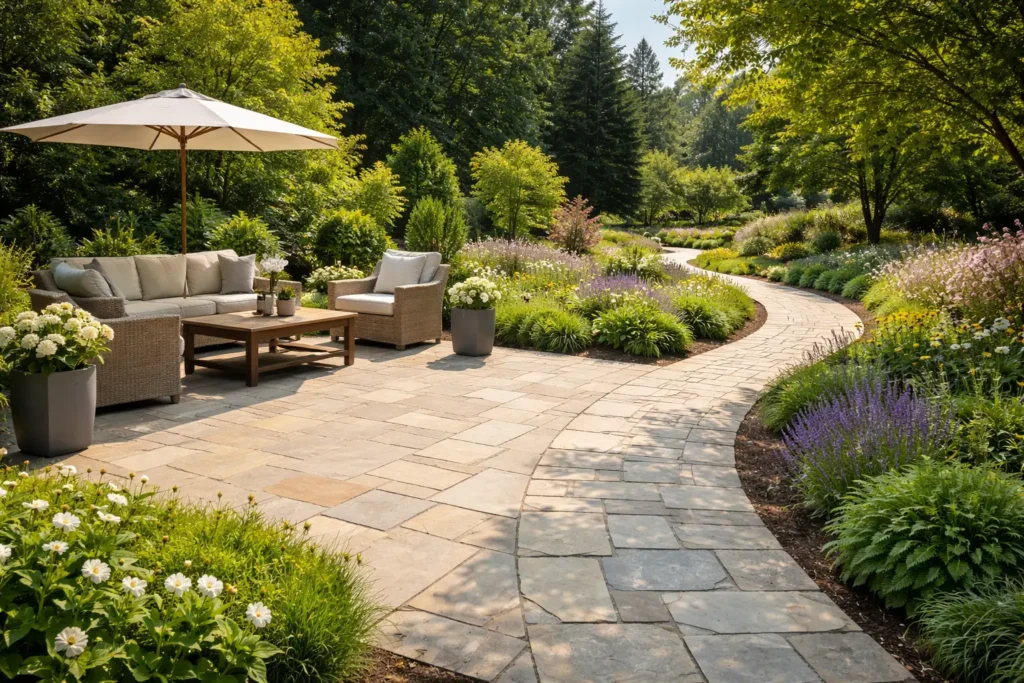
Blackened patios and garden paths are usually caused by algae, moss, dirt and pollution. You do not always need harsh chemicals or hours of scrubbing to restore them.
How to clean a blackened patio and garden paths: quick overview
Start by identifying the surface type — concrete, natural stone, paving slabs or resin. Different surfaces respond better to different treatments.

Choose one of three low-effort approaches: a hot water and detergent rinse, an oxygen bleach soak, or a controlled pressure wash. Each method reduces effort while giving reliable results.
Tools and supplies you will need
- Stiff broom or push brush
- Bucket and kettle or hose
- Washing-up liquid or mild detergent
- Oxygen bleach powder (sodium percarbonate) or household bleach
- Garden sprayer (optional) or watering can
- Pressure washer (optional for fastest results)
- Protective gloves and eye protection
Method 1: Hot water and washing-up liquid (very low effort)
This is the gentlest, easiest option and works well on light blackening and oily stains.
Steps:
- Clear loose debris with a broom or leaf blower.
- Heat a kettle or small pan of water until very hot but not boiling.
- Mix a bucket of hot water with a generous squirt of washing-up liquid.
- Pour over the blackened area and let sit for 5–10 minutes to soften grime.
- Use a stiff broom to sweep the area; rinse with a hose.

Why it works: Hot soapy water lifts grease and soft biofilm so you can simply rinse it away. Minimal scrubbing required.
Method 2: Oxygen bleach soak for stubborn blackening
Oxygen bleach (sodium percarbonate) is a safe, plant-friendly option that breaks down organic stains with little rubbing.
Steps:
- Mix oxygen bleach with warm water according to the product label in a large bucket.
- Apply with a watering can or garden sprayer to the affected paving. Work in sections.
- Allow to soak for 15–30 minutes; you will see the stain lift.
- Stubborn spots can be brushed lightly with a push brush then rinsed.

Safety notes: Wear gloves and avoid contact with metal surfaces. Rinse nearby plants after treatment to reduce any residue on leaves.
Method 3: Pressure washer for fastest, lowest-effort cleaning
A pressure washer removes heavy blackening almost instantly, with minimal elbow grease. Use the right pressure and nozzle to avoid damage.
Steps and tips:
- Set the washer to a moderate pressure (1000–1500 psi) for paving; higher pressure can etch softer stone.
- Keep the nozzle 20–30 cm from the surface and work in sweeping motions.
- Use a fan nozzle, not a pencil nozzle, to avoid concentrated damage.
- Finish with a rinse and allow to dry.
Caution: Test an inconspicuous area first and avoid direct spraying at joints that could dislodge sand.
Quick comparison: which low-effort method to choose
- Light blackening: Hot water + detergent.
- Moderate staining: Oxygen bleach soak.
- Heavy blackening or large areas: Pressure washer.
Aftercare and prevention for patios and garden paths
Cleaning is easier if you prevent re-growth. Regular light maintenance keeps surfaces bright without major effort.
- Sweep weekly or use a leaf blower to remove organic debris.
- Re-sand joints after pressure washing to lock paving in place.
- Apply a breathable stone or paving sealer to slow algae return (test first).
- Trim overhanging plants to increase sunlight and airflow.
Protecting plants and surfaces when cleaning a blackened patio and garden paths
Rinse nearby soil after chemical treatments and use oxygen bleach when possible; it breaks down into oxygen and soda ash and is less harmful than chlorine bleach.
Cover delicate plants during pressure washing and avoid runoff into storm drains if using bleach.
Small case study: Quick patio revival in under an hour
Mrs. Patel had a 10m2 blackened flagstone patio that looked dull and slippery. She tried hot water and detergent on a corner and saw the grime lift fast.
She then mixed oxygen bleach in a watering can, soaked the whole patio for 20 minutes and rinsed with a garden hose. The surface came up bright, with just a short brush over a few stubborn patches.
Total time was about 50 minutes and required no heavy machinery. She followed up by sweeping weekly and trimming shade to keep the surface cleaner longer.
Final checklist before you start
- Identify surface type and test a small area.
- Choose the gentlest method that will do the job.
- Wear gloves and eye protection.
- Protect nearby plants and avoid drains when using chemicals.
- Plan for a short follow-up sweep or re-sanding if needed.
With the right method, cleaning a blackened patio and garden paths can be quick and largely effort-free. Pick the approach that fits the stain level and your tools, and you can restore outdoor paving without long, hard work.



