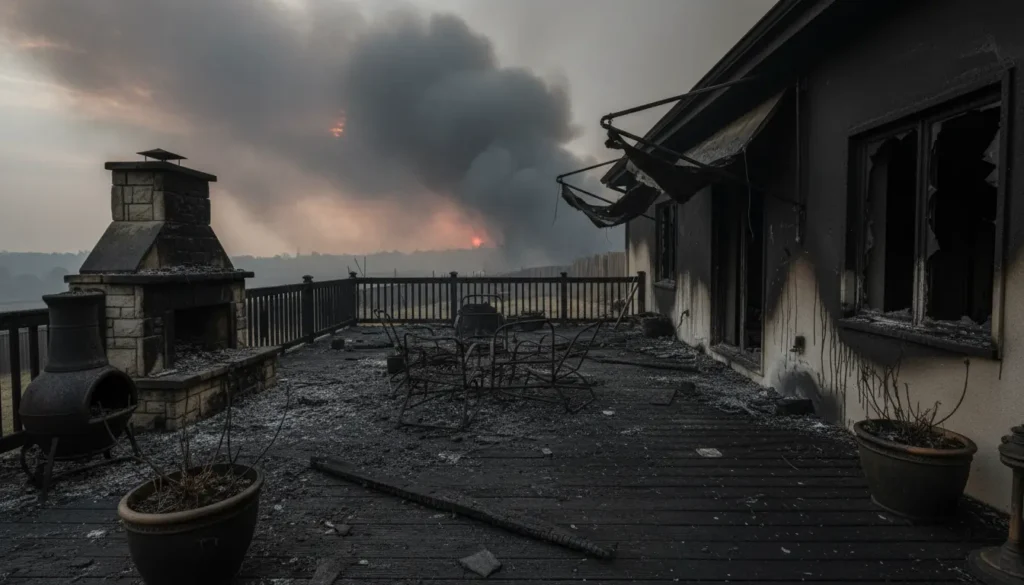
Why the patio and garden paths go black
Paving and paths blacken from algae, mildew, moss, and settled dirt. Shaded, damp areas or organic debris speed the process and make surfaces slippery.
Before you pick a method, identify the surface material and the type of blackening. That determines the safest and most effective cleaning option.
Options to clean a blackened patio and garden paths
Homeowners and professionals disagree about the “easiest” way because each method trades effort, cost, and risk. Four practical options are pressure washing, chemical cleaners, hot water and brush, and a hybrid approach.
Pressure washing to clean a blackened patio and garden paths
Pressure washing is fast and uses no harsh chemistry. It is often recommended when grime is thick and old.
Key points:
- Use a pressure washer with a fan nozzle and keep it at least 30 cm from the surface.
- Test a small inconspicuous patch to check for damage to joints or soft stone.
- Avoid high-pressure narrow nozzles on old mortar; they can erode joints and chip paving.
Chemical cleaning to clean a blackened patio and garden paths
Chemicals can remove deep stains and kill moss and algae that keep returning. Options include oxygen bleach (sodium percarbonate), diluted laundry bleach, or specially formulated patio cleaners.
Guidance:
- Follow manufacturer mixing instructions. Oxygen bleach is friendlier to plants than chlorine bleach.
- Protect nearby plants and rinse thoroughly after treatment.
- Always test on a small area to ensure colorfastness on natural stone or coloured concrete.
Manual scrubbing with hot water
This low-cost method uses a stiff brush, hot water, and elbow grease. It avoids chemicals and reduces the risk of damage from high pressure.
When to choose it:
- Small areas or light blackening.
- If you have delicate stone or old mortar to protect.
- Combine with oxygen bleach for better results with less scrubbing.
Step-by-step plan to clean a blackened patio and garden paths without breaking your back
- Clear debris and sweep the area to expose the worst blackening.
- Test your chosen method on a 30 cm square patch and wait 24 hours to evaluate.
- If using chemicals, apply according to directions and let sit. Rinse with low-pressure water.
- If pressure washing, work in even passes from high to low spots and keep a safe distance.
- Finish with a light rinse and sweep to remove loosened dirt. Repeat only if needed.
Safety and surface protection
Protect plants by wetting the soil and covering pots. Divert rinse water away from sensitive beds. Use PPE: gloves, eye protection, and a mask if using strong chemicals.
For older paving, avoid long exposure to strong acids or very high pressure. Those cause flaking, colour loss, and joint erosion.
When opinions differ: quick guide to choose a method
- Choose pressure washing for broad, thick accumulation on hard concrete or new slabs.
- Choose oxygen bleach or a patio cleaner for coloured concrete, natural stone, or plant-friendly cleaning.
- Choose manual scrubbing when joints are weak, or you must protect stone finishes.
- Combine methods: chemical loosening followed by a gentle pressure rinse often gives the best balance.
Tools and supplies checklist
- Pressure washer (if used) with fan nozzle and adjustable PSI.
- Stiff push brush or deck brush.
- Oxygen bleach (sodium percarbonate) or recommended patio cleaner.
- Bucket, gloves, protective eyewear, and hose for rinsing.
Small case study: Mrs Patel’s shaded flagstone path
Problem: A north-facing garden with flagstones blackened by 3 years of moss and leaf debris. Mrs Patel wanted a low-risk method to protect the stones.
Approach: She tried a 30 cm test patch using oxygen bleach mixed per instructions. After 30 minutes she scrubbed lightly with a stiff brush and rinsed gently with a hose.
Result: The test patch improved dramatically. She treated the whole path in two passes and avoided pressure washing to protect mortar joints. The task took one afternoon and required minimal heavy lifting.
Maintenance tips to keep blackening away
- Sweep regularly and remove leaves and debris to reduce organic buildup.
- Improve sunlight and airflow by trimming overhanging branches if possible.
- Consider a breathable sealant for paving that resists staining but allows moisture to escape.
- Plan an annual light clean rather than infrequent deep cleans; smaller jobs are easier on your back and the surface.
Final decision checklist
Ask yourself: How big is the area? What is the surface material? Are there plants to protect? Do you want speed or low risk?
Answering these will point you to pressure washing, chemical cleaning, manual scrubbing, or a mix. Start small, test, and work methodically to clean a blackened patio and garden paths without breaking your back.