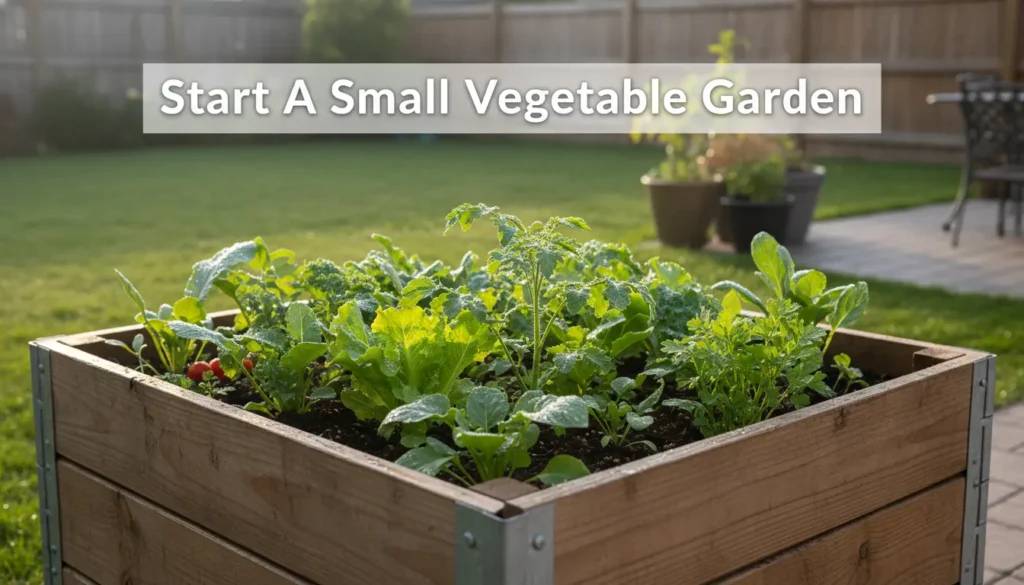
Why start a small vegetable garden
A small vegetable garden is practical for beginners and busy households. It provides fresh produce, lowers grocery costs, and improves well-being.
This guide walks you through planning, soil prep, planting, care, and troubleshooting. Use the steps to create a productive space whether you have a balcony, patio, or small backyard.
Planning your small vegetable garden
Choosing a location for a small vegetable garden

Pick a spot with at least 6 hours of direct sunlight for most vegetables. If sunlight is limited, focus on leafy greens and herbs that tolerate partial shade.
Consider water access and proximity to your kitchen for easy harvesting. Good drainage and protection from strong winds are also important.
Decide on size and layout
Start small: 25–100 square feet is manageable for new gardeners. Use raised beds, containers, or in-ground rows depending on space and soil quality.

Allow paths for access and plan bed sizes no wider than 4 feet so you can reach the center without stepping on soil.
Preparing soil and beds for a small vegetable garden
Test and improve the soil
Perform a simple soil test for pH and basic nutrients. Most vegetables prefer a pH between 6.0 and 7.0.
Aim for loamy soil rich in organic matter. Add compost and a balanced organic fertilizer to improve structure and fertility.
Building raised beds and containers

Raised beds warm faster in spring and reduce compaction. Use untreated wood, stone, or metal for frames. Fill beds with a mix of topsoil, compost, and coarse sand if needed.
Containers must have drainage holes and be at least 12 inches deep for root crops. Use high-quality potting mix to ensure consistent moisture retention.
Planting and crop choices for a small vegetable garden
Choose easy vegetables for small spaces
- Leafy greens: lettuce, spinach, Swiss chard
- Fast growers: radishes, baby carrots, bush beans
- Compact varieties: patio tomatoes, dwarf peppers, determinate cucumbers
- Herbs: basil, parsley, chives
Pick varieties labeled compact, bush, or patio for limited space. Stagger plantings (succession sowing) to maintain continuous harvests.
Planting schedule and spacing
Follow seed packet or plant tag spacing to avoid overcrowding and disease. Use square-foot gardening or intensive spacing methods to maximize yield in small areas.
Start seeds indoors for long-season crops or sow directly for quick crops like radishes. Transplant seedlings when they have true leaves and weather is suitable.
Watering, fertilizing, and care for a small vegetable garden
Efficient watering practices
Water deeply and less often to encourage deep root growth. Early morning watering reduces evaporation and disease risk.
Use drip irrigation or soaker hoses to deliver water at the soil level and conserve water. Mulch around plants to retain moisture and suppress weeds.
Feeding and maintenance
Apply compost or an all-purpose organic fertilizer every 4–6 weeks during the growing season. Monitor plants for signs of nutrient deficiency such as yellowing leaves.
Regularly remove spent plants, thin seedlings, and harvest promptly to encourage production. Keep a simple journal to note planting dates and yields.
Pest control and common problems in a small vegetable garden
Natural pest control methods
Use row covers for seedlings, hand-pick large pests, and introduce beneficial insects like ladybugs and lacewings. Rotate crops yearly to reduce pest and disease buildup.
Companion planting can help deter pests; for example, marigolds near tomatoes can reduce nematodes and some insects.
Common issues and quick fixes
- Yellow leaves: check water and soil nutrients.
- Wilting: inspect roots for rot and adjust watering.
- Holes in leaves: look for caterpillars or slugs and remove by hand.
Small real-world example: a compact backyard conversion
Case study: A homeowner converted a 10 x 10 foot unused lawn corner into a small vegetable garden using two 4 x 4 foot raised beds and containers on the patio.
They improved soil with compost and planted tomatoes, bush beans, lettuce, and herbs. With drip irrigation and a weekly check, they harvested produce from late spring to first frost and reduced weekly grocery salads by half.
Lessons learned: start with fewer crops, use mulch, and keep notes on planting dates to improve next season’s planning.
Quick checklist to start a small vegetable garden
- Choose a sunny location with good drainage.
- Decide bed type: raised bed, containers, or in-ground.
- Test and amend soil; add compost.
- Select compact vegetable varieties and plan spacing.
- Install simple irrigation or plan a watering routine.
- Mulch, monitor pests, and keep a garden journal.
Final tips for success with a small vegetable garden
Begin with a simple plan and expand each season. Regular maintenance beats last-minute fixes, so set a short weekly time slot for garden tasks.
Experiment with varieties and techniques, and remember that small, consistent efforts produce the best long-term results.



