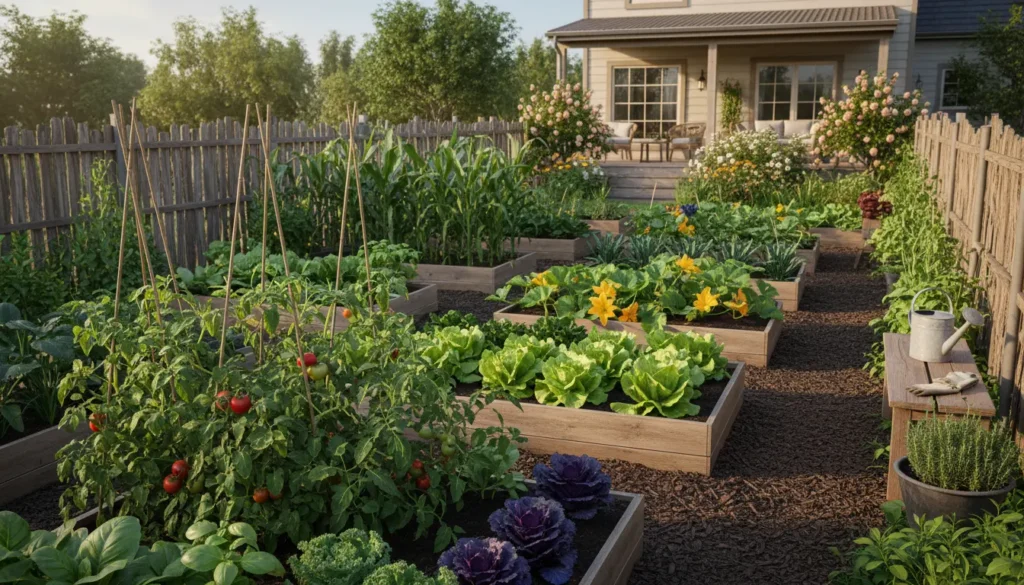
How to Start a Vegetable Garden: Practical First Steps
Starting a vegetable garden is a hands-on way to grow fresh food and learn basic gardening skills. This guide breaks the process into clear, practical steps so beginners can plan, prepare, and maintain a productive garden.
Choose Where to Start a Vegetable Garden
Location is the most important decision when you start a vegetable garden. Pick a spot with at least six hours of direct sunlight and good air circulation.

Consider convenience: choose a site close to water and a path you will use often. Raised beds and containers are good alternatives for small or shaded yards.
Sunlight and Site Checklist
- Full sun: 6–8 hours daily for most vegetables.
- Near a water source for easy irrigation.
- Level ground or well-built raised beds to prevent erosion.
- Good drainage: avoid areas that stay soggy after rain.
Plan What to Plant in Your Vegetable Garden
Start with a short list of easy, high-yield vegetables. Choose varieties suited to your climate and season. If you are new to gardening, prioritize crops that tolerate some mistakes.
Good starter crops include:
- Leafy greens: lettuce, spinach
- Root vegetables: radishes, carrots
- Quick plants: bush beans, cherry tomatoes
Design a Simple Layout

Sketch a small layout before you plant. Group plants by water needs and height. Use companion planting to make the most of space and reduce pests.
Prepare Soil Before You Plant
Healthy soil is the foundation of a productive vegetable garden. Test your soil if possible to check pH and nutrient levels.
If starting in raised beds or containers, use a blend of topsoil, compost, and a light potting mix. For in-ground beds, add 2–4 inches of compost and work it into the top 8–12 inches of soil.
Soil Preparation Steps
- Remove weeds and debris from the site.
- Loosen soil with a fork or tiller to improve root penetration.
- Add compost and a balanced slow-release organic fertilizer if needed.
- Level the bed and water to settle the soil before planting.
Planting and Early Care for Your Vegetable Garden

Follow seed packet instructions or transplant guidelines for spacing and depth. Water newly planted seeds or transplants gently to avoid displacing soil.
Mulch around plants to conserve moisture, suppress weeds, and moderate soil temperature.
Watering and Fertilizing Tips
- Water deeply once or twice a week rather than light daily watering.
- Keep soil consistently moist during germination and early growth.
- Fertilize with a balanced organic fertilizer according to crop needs.
Common Problems and Solutions in a Vegetable Garden
Pests, disease, and nutrient issues are common but manageable. Inspect plants regularly for early signs of trouble.
Use integrated pest management: hand-pick pests, use row covers, and encourage beneficial insects with flowering plants.
Quick Troubleshooting Guide
- Yellow leaves: check for overwatering or nutrient deficiency.
- Wilting: check soil moisture and root health.
- Holes in leaves: look for caterpillars, slugs, or beetles.
- Stunted growth: test soil pH and fertilize if needed.
Seasonal Care and Succession Planting
Plan for multiple harvests by using succession planting. After harvesting spring crops, plant a quick summer or fall crop in the same space.
Rotate families of vegetables each year to reduce disease buildup in the soil. Keep a garden journal to track what you planted and when.
Adding just 2 inches of compost to garden beds each year can significantly improve soil structure and yield. Compost adds organic matter and beneficial microorganisms to support plant health.
Real-World Example: Small Urban Vegetable Garden Case Study
Anna, a city renter, started a 6-foot by 4-foot raised bed on her balcony. She chose a mix of cherry tomatoes, basil, lettuce, and radishes for continuous harvest.
She built the bed from cedar, filled it with a pre-mixed garden soil and compost blend, and used a soaker hose for watering. In her first season, she harvested lettuce in six weeks and tomatoes all summer.
Key wins: close water access, regular mulching, and weekly checks for aphids. Her small, well-planned garden produced fresh salads for two people all season.
Simple Maintenance Checklist to Keep Your Vegetable Garden Productive
- Water deeply 1–2 times per week depending on weather.
- Mulch and remove weeds weekly to reduce competition.
- Inspect plants for pests and diseases twice a week.
- Harvest regularly to encourage continued production.
Starting a vegetable garden is a manageable project with clear steps. Choose a sunny spot, prepare healthy soil, plant appropriate crops for your climate, and maintain the bed with consistent care. Small, steady actions lead to reliable harvests.



