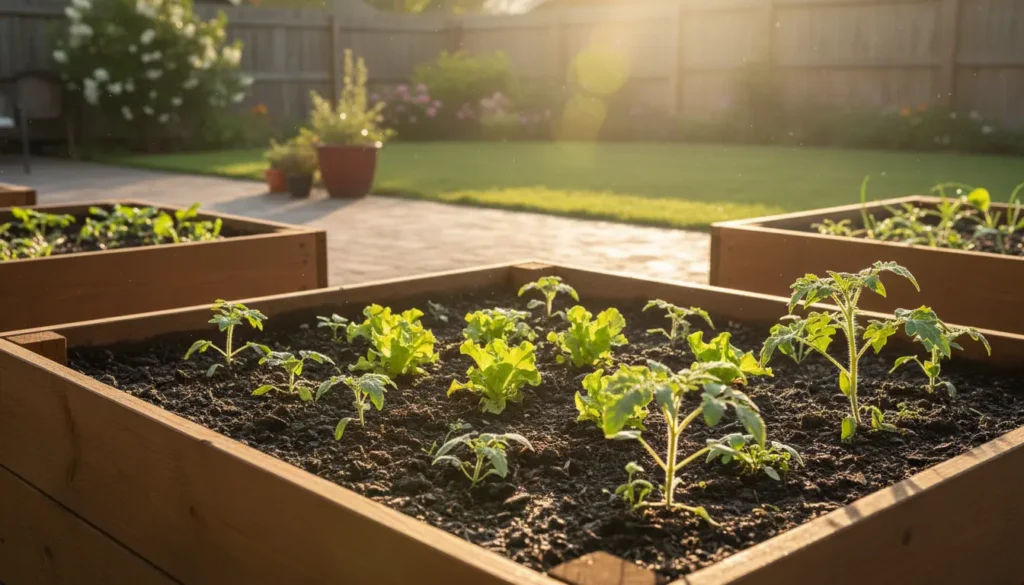
How to Start a Vegetable Garden: First Steps
Starting a vegetable garden is manageable with basic planning and a little effort. This guide shows simple, practical steps to get your garden growing this season.
Choose a Site for Your Vegetable Garden
Select a sunny spot that receives at least six hours of direct sun each day. Avoid low areas that collect water and places under large tree roots.
Consider these site factors
- Sun exposure: 6 to 8 hours of full sun is ideal for most vegetables.
- Soil drainage: Look for well-draining soil; raised beds help if drainage is poor.
- Access to water: Place the garden near a hose or irrigation source for easy watering.
- Convenience: Closer to the house means more likely to maintain it regularly.
Prepare Soil to Start a Vegetable Garden

Good soil is the foundation of a productive vegetable garden. Test and improve your soil before planting to save time and increase yields.
Soil prep steps
- Test soil pH and nutrients using a home kit or local extension service.
- Add organic matter like compost or well-rotted manure to improve texture and fertility.
- Loosen compacted soil to a depth of 8 to 12 inches for root growth.
- Adjust pH if needed; most vegetables prefer a pH between 6.0 and 7.0.
Decide What Vegetables to Plant
Choose vegetables that match your climate, taste, and the season. Start with a few easy crops to build confidence.
- Beginner-friendly options: lettuce, radishes, tomatoes, beans, and zucchini.
- Consider harvest time: plant a mix of early, mid, and late season varieties.
- Companion planting: some plants grow well together and reduce pests.
Planting and Layout Tips
Plan a simple layout with paths for access and enough spacing for mature plants. Use rows, raised beds, or containers, depending on available space.
Planting checklist
- Follow seed packet or transplant spacing recommendations.
- Plant deeper or shallower according to species; most seeds have instructions.
- Stagger plantings for continuous harvest, especially for lettuce and herbs.
- Label rows so you remember varieties and planting dates.
Watering and Fertilizing

Consistent watering and appropriate nutrition are essential. Overwatering can be as harmful as underwatering.
- Water deeply once or twice a week rather than frequent shallow watering.
- Mulch around plants to retain moisture and suppress weeds.
- Use balanced organic fertilizers or compost tea according to plant needs.
Pests, Diseases, and Maintenance
Regular observation prevents small problems from becoming major ones. Early intervention saves time and crop loss.
- Inspect leaves for holes, discoloration, or pests weekly.
- Use row covers, hand-picking, or organic controls when necessary.
- Rotate crops each year to reduce disease and pest buildup in soil.
Harvesting Your Vegetables
Harvest at peak ripeness for best flavor and to encourage continuous production. Different crops have different signals when ready.
- Leafy greens: pick outer leaves regularly to allow regrowth.
- Fruiting vegetables: tomatoes, peppers, and squash are best picked when fully colored.
- Root crops: check size by gently digging a sample.
Simple Tools and Supplies to Start a Vegetable Garden
You do not need many items to begin. A small set of tools keeps work efficient and enjoyable.
- Hand trowel and garden fork
- Watering hose or a drip irrigation kit
- Row markers or stakes
- Compost or bagged organic matter
Case Study: Small Backyard Garden Success
Sarah, a beginner gardener, converted a 10 by 10 foot unused lawn patch into three raised beds. She followed simple steps for site choice, soil amendment with compost, and planted tomatoes, lettuce, and beans.
By mid-summer, Sarah harvested salad greens weekly and container tomatoes that produced for two months. Spending 20 minutes every other day on watering and weeding kept maintenance low. Her initial investment in compost and seeds paid off with fresh produce and reduced grocery trips.
Common Mistakes to Avoid When You Start a Vegetable Garden
Awareness of common errors helps you avoid setbacks and improve the first season’s results.
- Planting too many crops at once; start small.
- Ignoring soil health; soil improvement pays long-term dividends.
- Overwatering or underwatering—monitor soil moisture instead of guessing.
- Neglecting spacing, which leads to poor air flow and disease.
Next Steps After Planting
Keep a simple garden journal to note planting dates, varieties, and harvests. Review what worked and adjust next season’s plan accordingly.
Start small, learn as you go, and expand with each successful season. With basic planning and consistent care, anyone can start a vegetable garden and enjoy fresh homegrown food.



