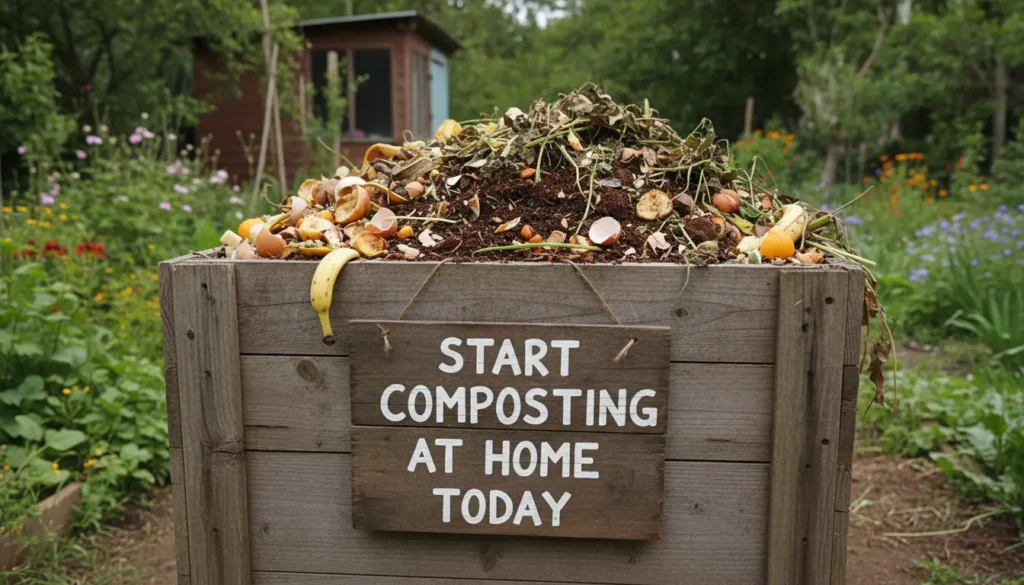
Why composting at home matters
Composting at home turns food scraps and yard waste into a valuable soil amendment. It reduces household trash, lowers methane from landfills, and improves garden soil structure.
This guide gives clear, practical steps for beginners and quick troubleshooting tips for common problems.
How to start composting at home: Overview
Starting is mostly about choosing a system, collecting the right materials, and maintaining the pile. You can begin with a simple bin or a small tumbling composter.
Expect to spend a few minutes weekly managing materials and turning the pile if needed.
Quick list: What you need to begin composting at home
- A container or bin (closed or open)
- Kitchen scraps (greens) and yard waste (browns)
- Water source for occasional moistening
- Pitchfork or turning tool (optional)
Step by step: How to start composting at home
1. Choose a compost system
Options include countertop buckets, open piles, enclosed bins, and tumblers. Pick based on space, budget, and patience for maintenance.
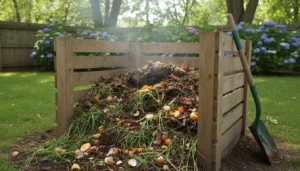
Tumblers speed up the process but cost more. Simple bins work well for most yards and require minimal setup.
2. Select a location
Place your compost bin on soil or grass to allow beneficial organisms to access the pile. Choose a level spot with partial shade to avoid drying out quickly.
Accessibility is important—near the kitchen or garden reduces the effort to deposit scraps.
3. Balance browns and greens
Composting at home works best with a balance of carbon-rich materials (browns) and nitrogen-rich materials (greens).
- Greens: fruit and vegetable scraps, coffee grounds, fresh grass clippings
- Browns: dry leaves, shredded paper, straw, cardboard
Aim for roughly a 3:1 ratio of browns to greens by volume for steady decomposition.
4. Build and maintain the pile
Start with a layer of coarse material to aid airflow, then alternate greens and browns. Keep the pile moist like a wrung-out sponge.
Turn the pile every 1–2 weeks to introduce oxygen. If using a tumbler, rotate it as the manufacturer suggests.
5. Know when compost is ready
Finished compost is dark, crumbly, and smells earthy. This can take 2 months in an active system or up to a year in a passive pile.
Sift out larger pieces and return them to the pile to continue decomposing.
Common problems and solutions for composting at home
Smell or pests
A bad odor usually means too many greens or excess moisture. Add browns and turn the pile to aerate it.
To deter pests, avoid adding meat, dairy, or oily foods, and use a closed bin or bury food scraps under a layer of browns.
Pile is not heating up
Low temperature means the pile is too small, too dry, or lacks nitrogen. Increase size, moisten, and add fresh greens.
Too wet or soggy
Add dry browns and mix to restore airflow. Ensure the pile has drainage and is not compacted.
Examples of materials to compost and avoid
- Compostable: fruit and vegetable scraps, coffee grounds, eggshells, leaves, cardboard.
- Avoid: meat, dairy, pet waste, diseased plants, and oily foods.
Simple schedule for busy households
Follow a weekly routine to keep composting at home manageable. Small habits make a big difference over time.
- Daily: Empty a small kitchen caddy into the outdoor bin.
- Weekly: Add a layer of browns and turn the pile once.
- Monthly: Check moisture and temperature; adjust as needed.
Case study: Small apartment balcony composting
Maria lives in a two-bedroom apartment and started composting at home using a bokashi bucket plus a small worm bin. She collected kitchen scraps in bokashi, fermented them for two weeks, then buried the result in a worm bin to complete decomposition.
After six months, Maria had rich compost for her balcony planter boxes. Her food waste dropped by nearly 60% and her plants grew noticeably stronger.
Final tips for success composting at home
- Start small and scale up as you learn what works in your climate.
- Keep a balance of browns and greens to avoid odors and slow decomposition.
- Use finished compost as a soil amendment rather than straight planting medium for best results.
Composting at home is a low-cost way to reduce waste and improve soil health. With simple systems and a short weekly routine, most households can turn scraps into valuable compost within months.