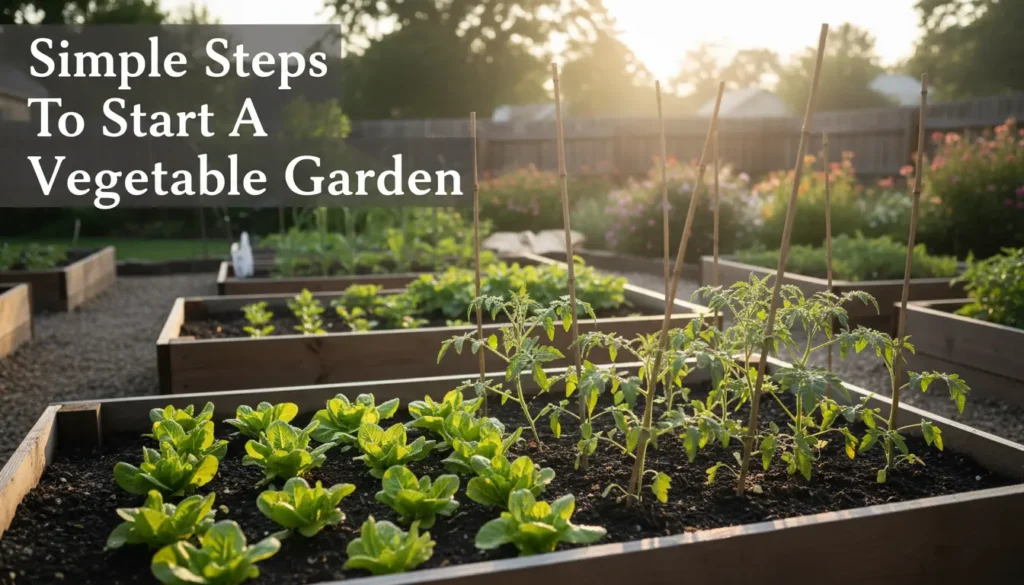
How to Start a Vegetable Garden: First Steps
Starting a vegetable garden is achievable with simple planning and basic tools. This guide gives clear, practical steps so you can begin growing food in a yard, balcony, or community plot.
Choose the Right Location
Pick a spot that gets at least six hours of direct sunlight for most vegetables. Consider proximity to water and ease of access for daily care.

Avoid low spots that collect cold air or standing water. If sunlight is limited, choose shade-tolerant crops like leafy greens and herbs.
How to Start a Vegetable Garden: Decide What to Grow
Choose crops that match your climate, space, and cooking habits. Beginners often start with tomatoes, lettuce, beans, and herbs.
Start small. A 4×4 or 4×8 raised bed or a few large containers is better than a large, unmanageable plot.
Soil, Beds, and Containers

Good soil is the most important factor for healthy plants. Most problems come from poor soil, not pests or weather.
Prepare Soil and Beds
Test your soil pH if possible. Vegetables do well in slightly acidic to neutral soil (pH 6.0–7.0).
Improve heavy or poor soil with compost and well-rotted manure. Aim for a loose, crumbly texture that holds moisture but drains well.
Choosing Between Raised Beds and In-Ground
- Raised beds warm earlier and drain better.
- In-ground plots can be cheaper but may need more amendment.
- Containers suit balconies and patios but dry out faster and need more frequent watering.
Planting and Timing

Timing matters. Plant cool-season crops early in spring and fall. Warm-season crops like tomatoes and peppers wait until after the last frost.
Seed vs. Starter Plants
Seeds are cheaper and offer more variety. Starters (transplants) give faster yields for some crops, like tomatoes and peppers.
Follow seed packet instructions for depth and spacing. Thin seedlings to prevent crowding and promote airflow.
Companion Planting Basics
Companion planting can reduce pests and improve yields. Examples include basil near tomatoes and marigolds to deter nematodes.
Avoid crowding incompatible plants. Keep heavy feeders like corn away from light feeders like lettuce.
Watering, Fertilizing, and Maintenance
Consistent watering is essential for steady growth and quality crops. Deep, infrequent watering encourages strong roots.
Watering Tips
- Water early in the day to reduce disease risk.
- Use drip irrigation or soaker hoses to conserve water.
- Mulch to retain moisture and suppress weeds.
Basic Fertilizer Guidance
Use a balanced organic fertilizer or compost tea during the growing season. Follow package directions to avoid over-fertilizing.
Leafy greens need more nitrogen. Fruit-bearing plants will benefit from a fertilizer higher in phosphorus and potassium when flowering begins.
Pest Control and Common Problems
Observe plants regularly to catch problems early. Many issues can be managed with cultural practices before chemicals are needed.
Natural Pest Management
- Handpick larger pests like slugs and caterpillars.
- Encourage beneficial insects such as ladybugs and lacewings.
- Use row covers early in the season to protect seedlings from insects.
Harvesting and Succession Planting
Harvest regularly to encourage more production. Pick vegetables when they reach the recommended size for best flavor.
Practice succession planting to extend your harvest season. Sow quick crops like radishes and salad greens every few weeks.
Most home vegetable gardens produce the highest yield per square foot when using raised beds and regular compost additions. A single 4×4 bed can supply salad greens for a small family through much of the growing season.
How to Start a Vegetable Garden in Small Spaces
Small spaces can be very productive with vertical supports and container gardening. Use trellises for beans and cucumbers to save ground space.
Choose dwarf or patio varieties for limited areas. Vertical shelving and hanging baskets add growing area without more ground.
Tools and Basic Supplies
- Hand trowel, fork, and hoe
- Watering can or hose with a gentle nozzle
- Quality potting mix for containers
- Organic compost and mulch
Small Real-World Example
Case Study: A city apartment balcony transformed into a productive mini garden. The gardener used three 12-inch containers and a 4×2 raised box.
They planted cherry tomatoes, leaf lettuce, basil, and bush beans. By mid-season they harvested about 30 pounds of produce, enough to reduce grocery buys for a small household.
Key steps that worked: daily checks, drip watering, and weekly compost tea feedings.
Final Checklist Before You Start
- Confirm sunlight hours for your chosen spot.
- Decide on beds or containers and prepare soil or potting mix.
- Choose a short list of easy crops and get seeds or starters.
- Set up watering and mulch, then plant at the right time.
- Monitor, harvest, and adjust as you learn.
Starting a vegetable garden is a learning process. Keep notes on what works, and adjust plant choices and care the next season. With steady care, most beginners see success in their first year.



