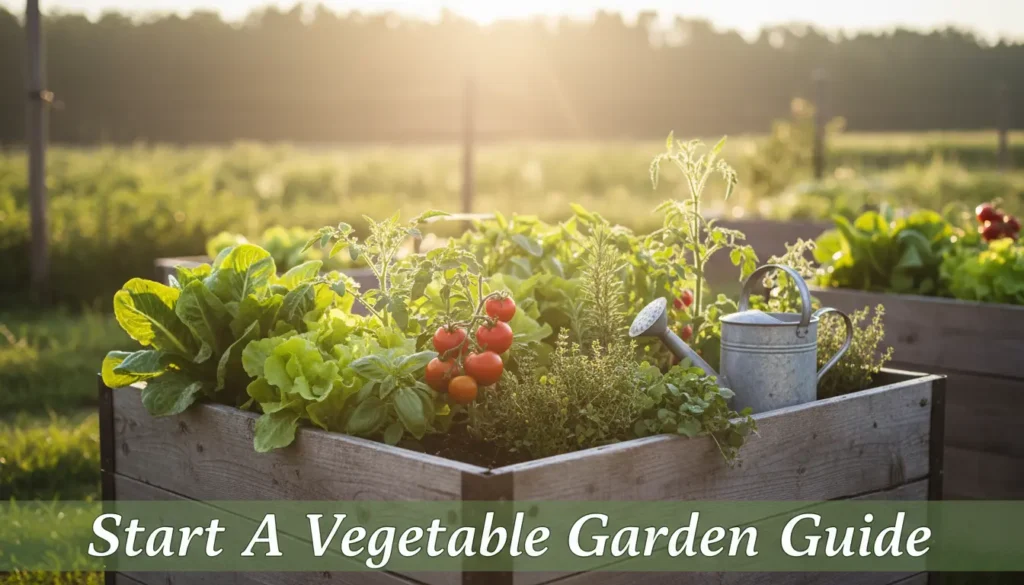
Starting a vegetable garden is a practical way to grow fresh food, save money, and enjoy outdoor time. This guide explains how to start a vegetable garden with clear steps you can follow this season.
Why Start a Vegetable Garden
Growing your own vegetables puts control over food quality back in your hands. You can choose organic methods, avoid long supply chains, and harvest at peak flavor.

Vegetable gardens also improve mental health, provide light exercise, and can be scaled to any space from a balcony to a backyard.
How to Start a Vegetable Garden: Step-by-Step
Follow these steps to create a productive vegetable garden. Each section covers simple actions and examples to keep things manageable.
1. Choose the Right Location
Pick a spot that gets at least 6 hours of direct sun per day for most vegetables. Good drainage is important — avoid low spots that stay wet after rain.

If ground space is limited, consider raised beds or containers. Many vegetables do well in containers on patios or balconies.
2. Test and Prepare the Soil
Healthy soil is the foundation of a productive vegetable garden. Test your soil pH and nutrient levels with a home kit or local extension service.
Amend soil with organic matter like compost or well-rotted manure. This improves structure, drainage, and fertility.
3. Plan What to Plant

Start with easy, reliable vegetables: lettuce, radishes, spinach, cherry tomatoes, beans, and zucchini. Choose varieties suited to your climate and space.
- Short season areas: choose fast-maturing varieties.
- Small spaces: grow dwarf or bush types.
- Children: try sweet cherry tomatoes and snap peas.
4. Planting Basics
Follow seed packet or plant tag instructions for spacing and planting depth. Planting too deep or too close reduces yields and raises disease risk.
Start seeds indoors for long-season crops or sow directly outdoors for quick crops like radishes and lettuce.
5. Watering and Mulching
Water deeply and less often to encourage strong roots. Most vegetables need about 1 inch of water per week, more during hot spells.
Mulch around plants with straw, shredded leaves, or wood chips to retain moisture and suppress weeds.
6. Fertilizing and Feeding
Use a balanced organic fertilizer or compost tea based on soil test results. Avoid over-fertilizing, which can encourage leafy growth instead of fruit.
Side-dress heavy feeders like tomatoes and corn with compost mid-season to replenish nutrients.
7. Pest and Disease Management
Use integrated pest management (IPM): monitor plants often, remove affected leaves, and encourage beneficial insects like ladybugs.
Row covers protect seedlings from insects. Rotate crops each season to reduce disease buildup in soil.
Tools and Supplies to Start a Vegetable Garden
You do not need fancy tools to start. A few essentials will make the work easier and more efficient.
- Hand trowel and hand fork
- Garden hoe and rake
- Watering can or hose with a gentle nozzle
- Wheelbarrow or bucket for compost and debris
- Soil test kit or local extension soil service
Many common vegetables can be harvested multiple times. Leafy greens, herbs, and some beans regrow after cutting, giving several harvests from a single planting.
Quick Companion Planting Tips
Planting certain crops together can reduce pests and improve yields. Here are a few simple combinations:
- Tomatoes with basil to improve flavor and repel pests
- Carrots with onions to deter carrot fly
- Marigolds near beds to reduce nematodes
Small Real-World Example
Case Study: A 10-by-4-foot raised bed in Seattle produced lettuce, radishes, bush beans, and two tomato plants. The gardener added 4 inches of compost before planting and used drip irrigation.
Outcome: Over a 4-month season the bed yielded weekly salads, three harvests of beans, and several pounds of tomatoes. Minimal fertilizer and consistent watering kept inputs low.
Seasonal Care and Harvesting
Keep a simple routine: water in the morning, weed weekly, and check for pests. Harvest regularly — many plants produce more if picked often.
Store or preserve excess produce by freezing, fermenting, or drying to extend the benefits of your harvest.
Simple Troubleshooting
Yellow leaves can mean nutrient deficiency or overwatering. Check soil moisture and add compost if needed.
Slow growth may indicate compacted soil or poor light. Loosen compacted areas and ensure plants receive enough sun.
Starter Checklist: How to Start a Vegetable Garden
- Choose a sunny site or a container location
- Test soil and add compost
- Pick easy vegetables suited to your climate
- Plant with correct spacing and water deeply
- Mulch, monitor pests, and harvest regularly
Starting a vegetable garden is a learning process. Begin with a small, manageable area and expand as you gain confidence. With basic care and regular attention, you can enjoy fresh vegetables all season long.



