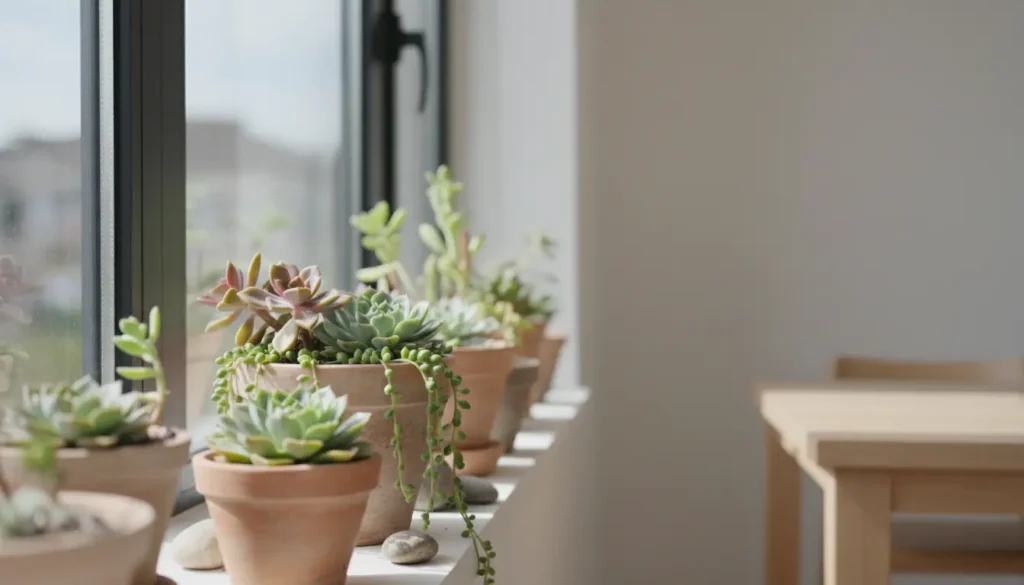
Why Indoor Succulent Care Matters
Succulents are popular because they tolerate low maintenance conditions and add green to small spaces. Good indoor succulent care prevents common problems like rot, leggy growth, and pest outbreaks.
This guide gives clear, practical steps you can follow to keep indoor succulents healthy all year.
Key Elements of Indoor Succulent Care

Three elements are critical: light, water, and soil. Paying attention to these basics reduces stress on plants and supports steady growth.
Light Requirements for Indoor Succulent Care
Most succulents need bright, indirect light. A south- or east-facing window usually works best. Rotate pots every few weeks so all sides get light evenly.
- Bright indirect light: 6–8 hours daily if possible.
- If light is low, use a grow light for 8–10 hours to prevent stretching.
Watering Strategy for Indoor Succulent Care
Watering is the most common source of trouble. Succulents store water in their leaves and stems, so they prefer infrequent, deep watering.
- Water thoroughly until excess drains from the pot.
- Let the soil dry out completely between waterings.
- In winter, reduce frequency to once every 4–8 weeks depending on indoor climate.
Soil and Pot Choices

Use a well-draining mix specifically for succulents or cacti. Standard potting soil retains too much moisture and increases rot risk.
- Mix idea: commercial cactus mix or 2 parts potting soil + 1 part coarse sand + 1 part perlite.
- Choose pots with drainage holes to avoid water accumulation.
Routine Care Tasks
Set a simple care routine to reduce mistakes. Check plants weekly and perform small tasks monthly.
Weekly Checks
- Inspect leaves for discoloration, soft spots, or pests.
- Test soil moisture by finger or moisture meter.
- Rotate pots for even light exposure.
Monthly Tasks
- Remove dead leaves from the pot surface to prevent fungal growth.
- Adjust watering schedule for seasonal changes.
- Repot if roots are crowded or soil is depleted (every 1–2 years).
Propagation and Growth Management
Propagating succulents is easy and economical. You can use leaves, stem cuttings, or offsets depending on the species.
- Leaf propagation: let detached leaf callous for a day, then place on soil surface. Roots appear in weeks.
- Stem cuttings: allow cut end to dry before planting to reduce rot risk.
- Offsets: gently remove baby plants and replant in small pots.
Common Problems and Solutions in Indoor Succulent Care

Knowing signs of stress helps you act quickly. Here are common issues and simple fixes.
Overwatering
Symptoms: soft, translucent leaves; black stems; mushy roots. Fix by cutting off affected parts, repotting into dry, well-draining soil, and reducing water frequency.
Leggy Growth
Symptoms: stretched, thin stems and widely spaced leaves. This indicates insufficient light. Move plants to a brighter location or add supplemental lighting.
Pests
Mealybugs and spider mites are common indoors. Remove pests with rubbing alcohol on a cotton swab or apply insecticidal soap. Isolate affected plants until clear.
Seasonal Adjustments for Indoor Succulent Care
Succulent needs change with the seasons. They generally grow in spring and summer and go semi-dormant in fall and winter.
- Spring/Summer: increase watering and provide more light for active growth.
- Fall/Winter: cut back on water and avoid fertilizing during dormancy.
- Fertilize lightly in spring with a balanced, diluted fertilizer when active growth resumes.
Some succulents like Haworthia and Gasteria tolerate lower light better than Echeveria or Sempervivum, making them ideal for offices or rooms with indirect light.
Small Case Study: Office Succulents That Survived
A small web design firm placed ten mixed succulents on windowsills and desks. They followed a simple routine: bright indirect light, water every 10–14 days in summer, and a month-long reduction in winter.
After a year, eight of ten plants thrived. The failures were due to pots without drainage and overwatering. The team switched to drainage pots and a cactus mix, and the surviving plants recovered.
Quick Checklist for Indoor Succulent Care
- Light: Bright, indirect; supplement if needed.
- Water: Deep and infrequent; allow soil to dry.
- Soil: Well-draining cactus or custom mix.
- Pots: Use ones with drainage holes.
- Monitor: Weekly checks and monthly maintenance.
Closing Tips
Start with hardy varieties if you are new to indoor succulent care. Learn each plant’s specific needs and adjust light, water, and soil accordingly.
With basic routines and attention to common problems, indoor succulents can be low-effort, long-lasting additions to any living or working space.



