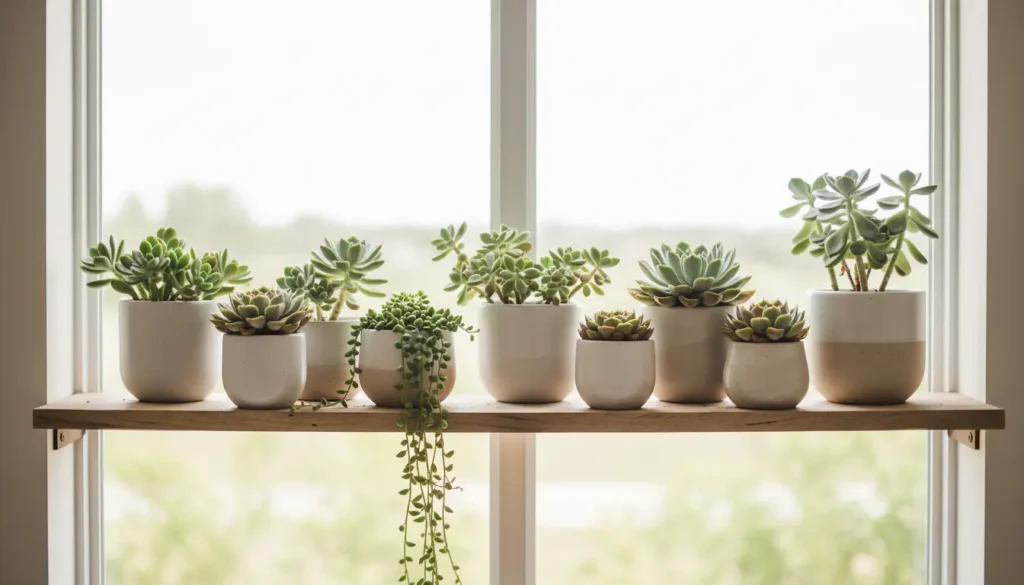
Why Indoor Succulent Care Matters
Succulents are popular for apartment dwellers and busy people because they tolerate low maintenance. Proper indoor succulent care helps prevent common problems like root rot, etiolation, and pest infestations.
This guide explains clear, actionable steps for healthy succulents indoors. Follow these practical tips to reduce stress and get predictable results.
Indoor Succulent Care Basics

Start with the right plant for your light conditions. Some succulents need bright direct light, while others tolerate moderate indirect light.
Good drainage is essential for indoor succulent care. Choose pots with drainage holes and use well-draining soil to avoid waterlogged roots.
Watering in Indoor Succulent Care
Watering is the most common challenge for indoor succulents. Overwatering causes root rot; underwatering causes shriveled leaves.
Follow a soak-and-dry approach: water thoroughly until it exits the drainage hole, then let the soil dry before watering again. Frequency depends on light, temperature, and pot size.
- Bright, warm rooms: water every 1–2 weeks.
- Lower light or cool rooms: water every 3–4 weeks.
- Check soil moisture with a finger or moisture meter before watering.
Light Requirements for Indoor Succulent Care
Light is the second most important factor. Most succulents prefer bright indirect light or several hours of morning sun.
Move plants closer to southern or eastern windows if growth looks stretched. Rotate pots regularly to promote even growth.
Soil and Potting for Indoor Succulent Care

Use a cactus or succulent mix, or make your own with potting soil, coarse sand, and perlite. The goal is fast drainage and aeration.
Choose a pot slightly larger than the root ball. Too-large pots hold excess moisture and increase risk of rot.
Fertilizer, Temperature, and Humidity
Fertilize sparingly during the active growing season (spring and summer). Use a balanced, diluted fertilizer once a month.
Most succulents prefer temperatures between 60–80°F (16–27°C). They tolerate low humidity but avoid very damp rooms like bathrooms.
Common Pests and Problems in Indoor Succulent Care
Pests such as mealybugs, scale, and spider mites can appear indoors. Inspect plants regularly and isolate affected specimens.
Treat infestations with a cotton swab dipped in isopropyl alcohol, or use insecticidal soap for severe cases. Repeat treatment until pests vanish.
Signs of Stress and How to Fix Them
Yellow, mushy leaves usually mean overwatering. Remove affected leaves and reduce watering frequency.
Stretching, or etiolation, indicates insufficient light. Move the plant to brighter light and prune leggy growth.
Repotting and Propagation for Indoor Succulent Care
Repot succulents every 1–2 years to refresh soil and give roots room to grow. Repot during spring for best recovery.
Propagation is simple: use leaf cuttings or offsets. Let cut ends callous for a day or two, then place on well-draining soil until roots form.
Simple Weekly and Monthly Care Checklist
- Weekly: Check light and remove dust from leaves.
- Biweekly: Inspect soil moisture and water only if dry.
- Monthly (growing season): Fertilize lightly and check for pests.
- Annually: Repot if roots are crowded or soil is compacted.
Some succulents like Haworthia and Gasteria thrive in lower indoor light and make excellent beginner plants. They store water in thick leaves and need less direct sun.
Small Case Study: Reviving an Overwatered Jade
Case: A 2-year-old jade plant in an office pot developed yellow, soft leaves after frequent watering. The owner moved it to a bright windowsill and repotted it in cactus mix with drainage.
They removed rotten roots and allowed the plant to dry for a week before watering lightly. Within two months the jade produced firm, green growth and new leaves.
Quick Troubleshooting Guide for Indoor Succulent Care
- Problem: Mushy leaves — Action: Check roots, cut away rot, let soil dry.
- Problem: Stretching — Action: Increase light, rotate plant daily.
- Problem: Brown leaf tips — Action: Check watering and humidity, avoid cold drafts.
- Problem: White cottony spots — Action: Dab with alcohol or use insecticidal soap.
Final Notes on Indoor Succulent Care
Consistency is the key to successful indoor succulent care. Small, regular checks prevent most problems and reduce plant loss.
Start with a few resilient species and learn how they respond to your home conditions. Over time you can expand your collection with confidence.
Follow these steps and your indoor succulents should remain healthy and visually appealing for years.