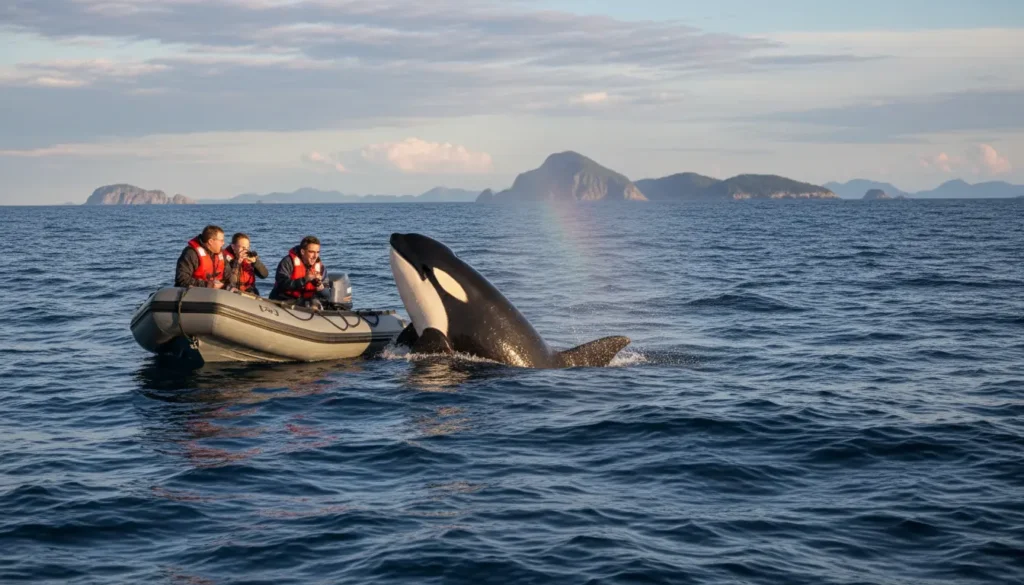
Reports of orcas interacting aggressively with boats have grown in recent years. Understanding why this happens helps boaters reduce risk and supports scientists trying to stop the behavior from spreading.
Why are orcas targeting human boats?
Orcas are intelligent, social predators with a wide range of behaviors. When they start interacting with boats, it can be due to several overlapping causes rather than a single reason.

Scientists and authorities studying recent incidents point to social learning, curiosity, and possible play that escalates into damage. Environmental stressors and accidental encounters also appear to contribute.
Key reasons behind the attacks
- Social learning: One or a few individuals may start a new behavior that spreads through a pod or between pods.
- Curiosity and play: Young orcas often explore unusual objects, which can include the stern or propeller area of a boat.
- Misdirected predation or hunting practice: Rudders and propellers can mimic the shape or movement of prey, triggering interaction.
- Response to noise and disturbance: High-speed vessels and unusual engine sounds may provoke contact or defensive behavior.
Where and when orcas strike boats
Most documented incidents have taken place in coastal chokepoints and busy waterways where boat and orca paths cross. The Strait of Gibraltar has been a notable hotspot since 2020.
Attacks often focus on the stern of sailing yachts, where rudders and keels are exposed. Night and low-visibility times are not required; many interactions occur in daylight.

Marine researchers have documented behavior patterns indicating orcas can pass new tactics between family groups, meaning one learned habit can spread quickly across a region.
How scientists study these incidents
Researchers combine direct observation, boat tracking, and acoustic monitoring to understand orca interactions with vessels. Authorities also collect reports from skippers and marinas.
Analysis looks at time of day, vessel type, damage patterns, and orca identification to determine whether the same individuals are involved and how behaviors spread.
What the evidence suggests
- Repeated damage patterns (rudder and propeller focus) point to learned targeting rather than random collisions.
- Multiple pods showing similar tactics implies social transmission of behavior.
- Not all encounters are aggressive—many interactions are investigatory and short-lived.
Practical steps boaters can take when orcas strike

Boaters cannot control wild animal behavior, but they can reduce risk and the chance of escalation. Follow these practical, precautionary steps to protect your boat and crew.
Immediate actions if an orca approaches
- Slow down: Reduce speed and avoid sudden maneuvers that may provoke pursuit.
- Keep distance: If possible, move away slowly and put distance between the animal and your stern.
- Avoid chasing or blocking: Do not attempt to chase the orca or block its path; that can heighten curiosity or aggression.
- Turn off engines if safe: In some cases, stopping engines may reduce noise and vibration that attract attention.
Preventive measures before you go out
- Check local advisories: Authorities may issue alerts for areas with recent orca activity.
- Avoid high-risk areas during known incidents: If a region is experiencing repeated interactions, choose alternate routes.
- Secure exposed appendages: Where practical, protect rudders, keels, and propellers with temporary guards.
- Report interactions: Notify local marine authorities to help tracking and research efforts.
Case study: Strait of Gibraltar incidents
Since 2020, dozens of reports from the Strait of Gibraltar described orcas repeatedly approaching and damaging the sterns of recreational yachts. Owners reported bent or broken rudders and lost steering capability.
Spanish and Portuguese authorities formed response groups and issued warnings to sailors. Researchers noted the behavior focused on the rear of boats and concluded it showed signs of social learning across pods.
Outcomes included increased monitoring, temporary route recommendations, and more rapid incident reporting so researchers could analyze which animals were involved.
What authorities and mariners can do together
Coordination between scientists, coast guards, and the boating community is essential. Clear reporting, rapid alerts, and guidance for boaters reduce risk and help stop the behavior from spreading.
Recommended community actions include centralized reporting systems, public guidance on safe responses, and research funding for long-term behavioral studies.
Simple checklist for mariners
- Before departure: Check orca activity notices and brief the crew on response steps.
- During transit: Maintain watch, avoid sudden speed changes, and keep a safe distance.
- After any contact: Report the incident, record GPS positions, and document damage for authorities.
Final practical advice
Orca interactions with boats are a complex mix of animal learning and human activity. You cannot eliminate risk, but you can reduce it by staying informed and following cautious procedures.
If you encounter orcas, prioritize safety for people first and property second. Timely reporting and cooperation with local authorities help protect both boaters and the whales in the long term.
For ongoing updates, subscribe to regional marine advisories and follow guidance from local coast guard or wildlife agencies.