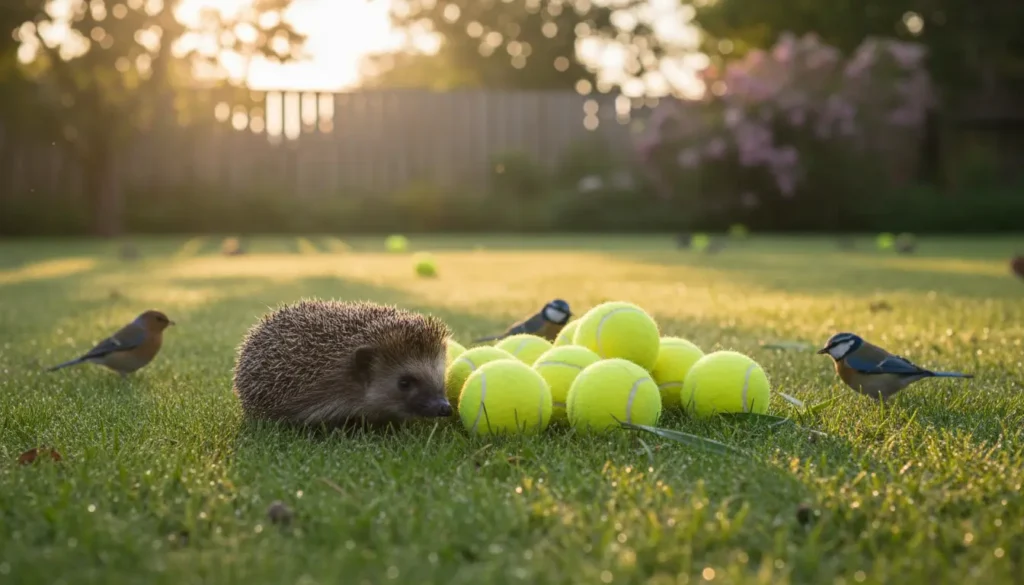
Small, cheap items can make a big difference for wildlife. Tennis balls are bright, light and easy to adapt. Used correctly, they help reduce common garden risks to birds and hedgehogs.
Why placing tennis balls in your garden helps protect birds and hedgehogs
Tennis balls work as simple visual markers and soft protective covers. They increase visibility of hazards such as netting, stakes and gaps where animals can get trapped.

The approach is low cost and uses items many people already have. It does not rely on chemicals or invasive measures, so it fits well with wildlife-friendly gardening.
Key ways placing tennis balls in your garden helps protect birds and hedgehogs
- Make netting and mesh visible so birds do not fly into it or get entangled.
- Cover sharp ends of stakes or metal rods to prevent injury to wandering hedgehogs or curious birds.
- Mark danger spots on the lawn before using mowers or strimmers, helping humans check for nesting animals first.
- Temporarily block small gaps under sheds or decking where a hedgehog might enter a hazardous space overnight.
Each use is straightforward and safe when done with care. Below are step-by-step instructions and safety advice.
How to use tennis balls to mark netting and reduce bird entanglement
Garden fruit and vegetable netting can be nearly invisible to birds and cause fatal entanglement. Tennis balls make the edges and spans visible.
- Thread a length of twine through or around a tennis ball, or make a small hole and push the twine through the ball core.
- Space balls every 30 to 50 cm along the line of netting, especially on the outer edges and across large spans.
- Make sure balls are secure but can be removed easily when nets need to be taken down.

Visible markers reduce collisions and give birds a clear cue to avoid the netting. Check the markers weekly and after storms.
How to use tennis balls to cover sharp stakes and garden pegs
Sharp metal or wood can injure ground-level wildlife. A simple cut and fit protects animals without altering the tool.
- Take an old or spare tennis ball and make a 2 cm slit across one side with scissors.
- Push the slit over the top of the stake, post or peg so the ball sits snugly over the point.
- Replace or secure with tape if the ball might slide down the stake.
This soft cap reduces the risk of puncture injuries to hedgehogs and prevents small birds from landing on exposed sharp points.

Many bird entanglements in gardens happen with lightweight netting and mesh that birds cannot see. Simple visual markers significantly lower the risk.
How to mark mower areas and protect hedgehogs
Hedgehogs often nest in long grass or under garden clutter. Marking areas helps you pause and check before mowing.
- Place a few tennis balls on top of a short stake or on visible pegs around suspected nests or piles of leaves.
- Before mowing, walk the marked area and gently check for hedgehogs and young that may be hidden.
- Delay mowing if you suspect active nests and return later in the evening when hedgehogs are out foraging.
These checks are a simple habit that prevents accidental harm during the breeding season.
Materials, cleaning and safety tips
Use old or clean tennis balls rather than brand-new ones that may carry fragrances or coatings. Follow basic hygiene and safety steps.
- Wash balls with warm water and mild detergent, then rinse thoroughly and air dry.
- Do not leave balls where small children might swallow pieces if they become damaged.
- Avoid using balls treated with strong chemicals or dyes.
- When cutting balls, wear gloves and dispose of scraps responsibly so wildlife cannot ingest them.
Small real-world example
A community garden in a suburban area noticed repeated bird entanglements in light fruit nets. Volunteers threaded tennis balls onto the outer lines of netting and added caps to exposed stakes.
Over the next two months the garden recorded zero new entanglement incidents. Gardeners also reported feeling more confident checking the beds and mowers, and they adopted the practice as a regular safety routine.
Alternatives and complementary measures
Tennis balls are one part of practical wildlife protection. Combine them with these measures for better results.
- Use wildlife-friendly netting with visible bands or larger mesh sizes where possible.
- Provide hedgehog-friendly passages in fences to avoid trapping animals in risky areas.
- Keep ponds shallow or add sloped exit points so hedgehogs and birds can climb out if they fall in.
These actions together create a safer garden environment for a range of species.
Quick checklist before you start
- Choose old, clean tennis balls and basic hand tools.
- Inspect netting, stakes and likely hedgehog spots in the garden.
- Attach balls to netting, cover stakes and mark mower zones.
- Check and maintain these protections weekly and after storms.
Simple, low-cost actions like placing tennis balls in your garden help reduce everyday hazards for birds and hedgehogs. With a few minutes of work you can make your outdoor space safer this season.



