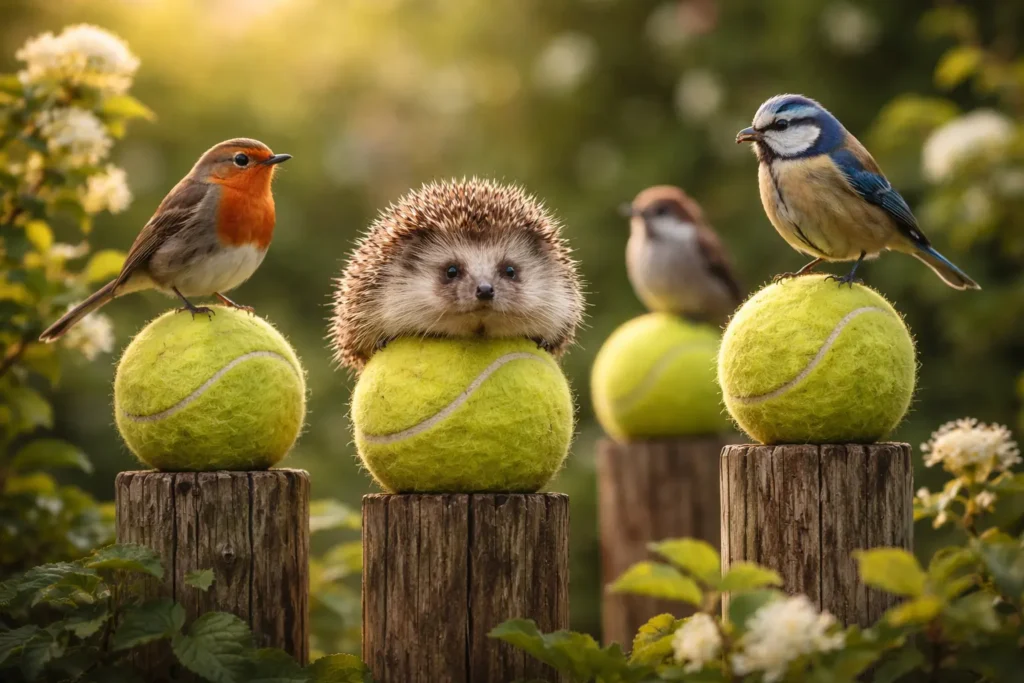
Placing tennis balls in your garden: a simple winter measure to protect wildlife
Small changes in a garden can cut the number of accidental injuries to wildlife. Placing tennis balls in carefully chosen spots is an inexpensive, low-effort step that helps protect birds and hedgehogs during the winter months.
This guide explains why the idea works, how to do it safely, and where it makes the most difference.
Why protecting birds and hedgehogs matters in winter

Winter brings cold, reduced food, and fewer safe hiding places. Hedgehogs are preparing for or in hibernation and can be injured by sharp garden items or fall into uncovered drains. Birds face collisions or entanglement in netting and can be hurt by exposed posts or wire.
By reducing common garden hazards you improve survival chances and keep local populations healthier.
How placing tennis balls in your garden helps wildlife
Tennis balls act as simple, visible caps and buffers on items that could injure or trap animals. They are bright, soft, and easy to attach. When fitted over sharp ends of stakes, poles, or exposed rebar, they cushion impacts and prevent piercing injuries to small mammals.

They also make holes, gaps, and low hazards easier for nocturnal animals such as hedgehogs to see or avoid, and can reduce the chances of birds becoming entangled around low garden obstacles.
How to place tennis balls in your garden safely
Use the following practical steps to apply this method effectively and responsibly.
- Inspect the garden for hazards: check fence posts, exposed wire, garden stakes, open drains, and low netting.
- Choose durable tennis balls: use whole balls in good condition, not crumbly or fragmented pieces that wildlife could ingest.
- Fit as caps or markers: cut a small slit or a cross-shaped cut to slide over a post, or drill a hole to push onto an exposed spike. Ensure a snug fit so balls cannot be pulled off by animals.
- Secure where needed: use cable ties, tape, or a dab of outdoor adhesive to keep balls in place on windy days.
- Mark hazards visually: tie or hang balls where they make gaps or drop-offs more visible at night, such as beside ponds or steep steps.
Materials and tools you might need
- Tennis balls (clean and intact)
- Sharp knife or utility blade (for controlled slits)
- Small drill bit (for making a snug hole when needed)
- Cable ties or outdoor tape
- Gloves and scissors
Do’s and don’ts when placing tennis balls in your garden
- Do check balls regularly to ensure they remain secure and intact.
- Do clean balls if they sit in mud or near chemicals to avoid contaminating animals.
- Don’t leave loose or shredded balls that small animals could chew or swallow.
- Don’t use balls on moving machinery, heaters, or where they could interfere with equipment.
Hedgehogs can travel up to one mile a night when foraging. Simple garden changes that reduce injuries and block dangerous gaps can make a big difference to their survival over winter.
Places in the garden where tennis balls help most

Not every garden hazard needs a tennis ball, but certain spots benefit particularly well from this treatment. Focus on areas where animals move at ground level or where birds sit and land.
- Exposed fence posts and screw-top rebar
- Low netting edges that birds might fly into or animals could get tangled on
- Open drainage holes, pipe ends, and steep drop-offs
- Garden stakes left in pots or ground after planting
Small real-world example
A community garden in a small town fitted tennis-ball caps to the ends of several bamboo stakes and garden posts. Volunteers also marked three open drains and one shallow pond edge with bright balls tied to stakes.
Over the following winter, volunteers noticed fewer signs of hedgehog scrapes near the exposed posts and no reports of birds becoming trapped in the marked netting. The garden team described the measure as low-cost and easy to maintain.
Alternatives and complementary steps
Tennis balls are a practical addition, not a replacement for broader wildlife-friendly gardening. Combine them with these measures for better results.
- Provide safe nesting and hibernation sites: leave a log pile, dense hedge, or a dedicated hedgehog house in a quiet corner.
- Check nets and coverings: use wildlife-safe netting or remove drapes when not needed.
- Cover or protect drains and deep openings with purpose-made grates if possible.
- Keep pets supervised at night to reduce disturbance to hedgehogs and feeding birds.
Final practical tips
Keep a seasonal checklist: inspect hazard points in autumn and again in spring. Replace any worn balls and tighten fittings after storms.
Record what you change and observe wildlife responses; small local records help judge which measures are most effective for your garden.
Placing tennis balls in your garden is a low-cost, low-effort gesture that reduces physical hazards for birds and hedgehogs. Used thoughtfully, it is a valuable part of a wildlife-friendly winter routine.



