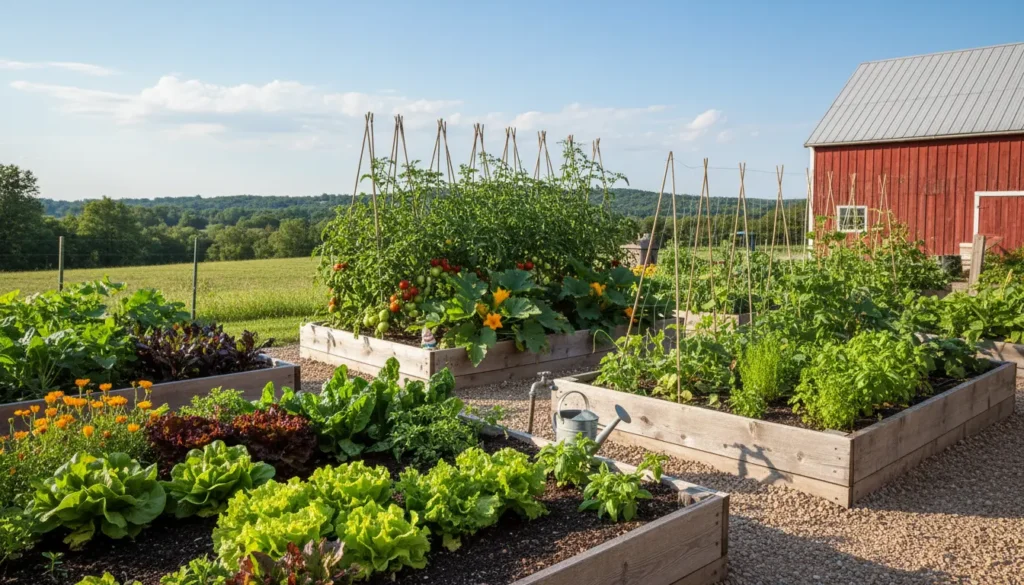
Why choose a raised bed vegetable garden
Raised bed vegetable gardens are compact, productive, and easier to manage than in-ground plots. They improve drainage, warm sooner in spring, and allow you to control soil quality.
Planning your raised bed vegetable garden
Start by deciding how many beds you need and the best location. Think about sunlight, water access, and how you will reach the center of the bed for planting and harvesting.
Choose the right location for a raised bed vegetable garden

Pick a spot that gets at least six hours of direct sun for most vegetables. Avoid low areas where water pools, and stay close to a water source to simplify irrigation.
Decide bed size and layout
Common bed widths are 3 to 4 feet so you can reach the center from either side. Length can be any size, but 4×8 feet is a standard. Keep paths between beds wide enough for a wheelbarrow.
- Width: 3–4 feet
- Length: 4–8 feet (modular is easier)
- Depth: 12–18 inches minimum for most vegetables
Materials and building a raised bed vegetable garden
Choose materials that are safe for food production and durable. Untreated cedar, redwood, and recycled composite boards are popular choices. Avoid pressure-treated wood with harmful chemicals.
Simple steps to build a raised bed
- Measure and mark the layout on the ground.
- Assemble the frame using screws and corner brackets.
- Place the frame, level it, and remove sod if needed.
- Fill with a good soil mix (see next section).
Soil mix for a raised bed vegetable garden

Soil is the most important element. A balanced mix gives roots oxygen, nutrients, and drainage. Aim for a light, loamy texture that holds moisture but drains well.
Best soil recipe for raised beds
A simple, effective mix is:
- 40% topsoil or screened garden soil
- 40% high-quality compost
- 20% coarse sand or perlite for drainage
Adjust amounts based on your local soil quality. Incorporate a slow-release organic fertilizer if the compost is not well balanced.
Planting and crop choices for a raised bed vegetable garden

Select vegetables suited to your climate and season. Group plants by water and sunlight needs. Use companion planting to maximize space and deter pests.
- Leafy greens: lettuce, spinach, kale — quick and continuous harvest
- Root crops: carrots, radishes, beets — need deeper beds
- Fruit crops: tomatoes, peppers, beans — stake or trellis to save space
Succession planting in raised beds
To get continuous harvest, practice succession planting. Sow fast-maturing crops between slower ones or replace finished crops with a new round each month in spring and fall.
Watering and irrigation for raised bed vegetable garden
Raised beds dry faster than ground soil, so regular watering is important. Aim for consistent moisture rather than frequent shallow watering.
Practical watering methods
- Drip irrigation or soaker hoses deliver water at the root zone efficiently.
- Mulch with straw or shredded leaves to retain moisture and suppress weeds.
- Water early in the morning to reduce evaporation and disease risk.
Pest control and maintenance for raised bed vegetable garden
Raised beds reduce some pest pressure but don’t eliminate it. Use integrated pest management: monitor, identify, and apply targeted controls.
- Use row covers to protect seedlings from insects and birds.
- Encourage beneficial insects by planting flowers such as calendula or borage nearby.
- Hand-pick larger pests and use organic traps or soaps when needed.
Seasonal care and crop rotation
Rotate plant families between beds each year to reduce disease and nutrient depletion. In fall, remove spent plants and add compost to refresh soil.
Winterizing your raised beds
Cover beds with mulch or a cover crop like clover to protect soil structure and add organic matter. This also reduces spring cleanup time.
Small real-world example: A 4×8 raised bed case study
Maria, a first-time gardener, built two 4×8 cedar beds in her backyard in April. She filled them with a 40/40/20 mix of topsoil, compost, and perlite. She planted lettuce and radishes in early spring, followed by tomatoes and basil after the last frost.
By midsummer she harvested continuous greens and six tomato plants producing fresh fruit. Using drip irrigation and weekly compost tea, Maria reported reduced pest damage and healthier plants compared to a neighbor’s in-ground patch.
Quick checklist before you start a raised bed vegetable garden
- Site gets 6+ hours sun and has easy water access.
- Choose safe materials for beds.
- Prepare a balanced soil mix and plan crop rotation.
- Set up efficient watering and add mulch.
- Monitor pests and repair beds each season.
Conclusion: Keep it simple and learn by doing
Raised bed vegetable gardens are ideal for beginners who want control over soil and easier maintenance. Start with one or two beds, track what works, and expand as you gain experience.
Small investments in quality soil and a good watering system usually pay off in higher yields and less hassle.



