Launching a podcast is achievable with clear steps and steady practice. This guide explains what you need to know to start a podcast, from planning to promotion, using practical, actionable advice.
How to start a podcast: Plan your show
Begin by defining the show’s purpose and target audience. Know the topic, episode length, and release schedule before recording your first episode.
Sketch a simple format: intro, main content, guest segment, and outro. Keep formats consistent so listeners know what to expect each episode.
Choose a niche and name
Narrow topics attract loyal listeners. Pick a clear name that matches your content and is easy to search for. Check that the name is available on major platforms and as a domain if you plan a website.
Plan your first 6 episodes
Create brief outlines for the first six episodes. Outlines reduce recording time and keep conversations on track. Aim for 20–45 minutes per episode depending on your audience.
Equipment to start a podcast
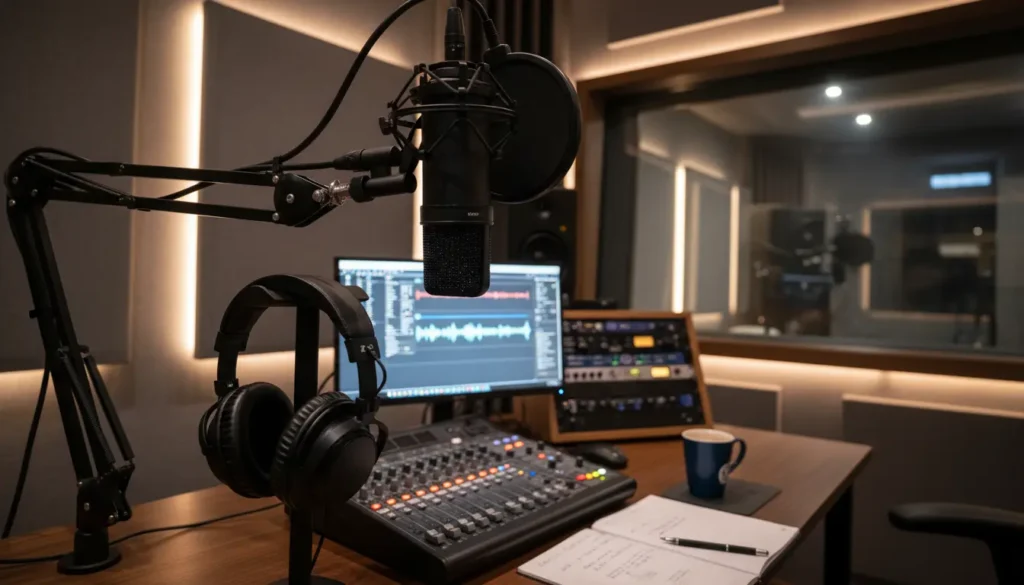
You don’t need studio gear to start a podcast. A basic, reliable setup will deliver good results and keep costs low.
Focus on three areas: microphone quality, headphones, and a quiet recording space.
- Microphone: A USB condenser or dynamic mic (e.g., Audio-Technica ATR2100x, Samson Q2U) works well for beginners.
- Headphones: Closed-back headphones help you monitor audio and catch issues in real time.
- Computer and recording software: Free tools like Audacity or GarageBand are sufficient to edit and export episodes.
Optional accessories
Pop filters, shock mounts, and a simple mic stand improve audio quality. If you plan interviews, consider an audio interface or a mixer for multiple XLR inputs.
Many successful podcasts started with just a USB microphone and free editing software. Consistency and good topics often matter more than expensive gear.
Recording and editing when you start a podcast
Choose a quiet room with soft furnishings to reduce echo. Test audio before full takes and fix levels to avoid clipping or too-low volume.
Edit for clarity: remove long pauses, ums, and mistakes. Use simple fade-ins and outs and keep intro music to a consistent level across episodes.
Editing workflow
- Import raw audio and listen through once for issues.
- Trim long silences, remove major mistakes, and adjust levels.
- Normalize or compress audio lightly so voice levels are consistent.
- Export in MP3 or AAC at 128–192 kbps for spoken word content.
Publish and host your episodes
Select a podcast hosting provider to store audio files and generate an RSS feed. Popular services include Libsyn, Podbean, Anchor, and Transistor.
Submit the RSS feed to major directories: Apple Podcasts, Spotify, Google Podcasts, and Stitcher. Each directory has simple submission steps and review times.
Metadata and artwork
Write a clear podcast description and episode titles including relevant keywords. Create square cover art (3000 x 3000 px recommended) that reads well at small sizes.
Keep cover art simple: show title, a clear visual, and consistent colors. Avoid tiny text and clutter.
Promote and grow after you start a podcast
Promotion starts with consistency. Release episodes on schedule and link them to a short website page or a landing page with show notes.
Use social media, email newsletters, and guest swaps with other podcasters to expand reach. Request reviews on Apple Podcasts to help with discoverability.
- Create shareable audiograms or short clips for social platforms.
- Transcribe episodes or add show notes to improve SEO and accessibility.
- Invite guests who bring an audience and promote cross-promotion opportunities.
Monetization options
Monetize once you have steady downloads: sponsorships, listener memberships, affiliate links, and paid episodes are common approaches. Choose one that fits your audience and content style.
Small case study: How one hobbyist started a podcast
Jared, a gardening enthusiast, launched a weekly 30-minute show using a USB mic and free editing software. He planned 12 episodes before launch and reached out to local garden stores for guest interviews.
Within six months, Jared grew to 1,200 monthly downloads by publishing consistently, posting short clips on social media, and sharing show notes with step-by-step plant care tips. Sponsorship interest followed after he hit steady downloads.
Quick checklist to start a podcast
- Define niche and episode format.
- Plan and script first six episodes.
- Choose microphone, headphones, and recording software.
- Record, edit, and export consistent audio files.
- Select a hosting provider and submit your RSS feed to directories.
- Promote episodes, request reviews, and track listener metrics.
Starting a podcast is a step-by-step process that rewards planning and consistency. Use this guide to build a simple workflow, iterate based on listener feedback, and scale production when you find a consistent audience.