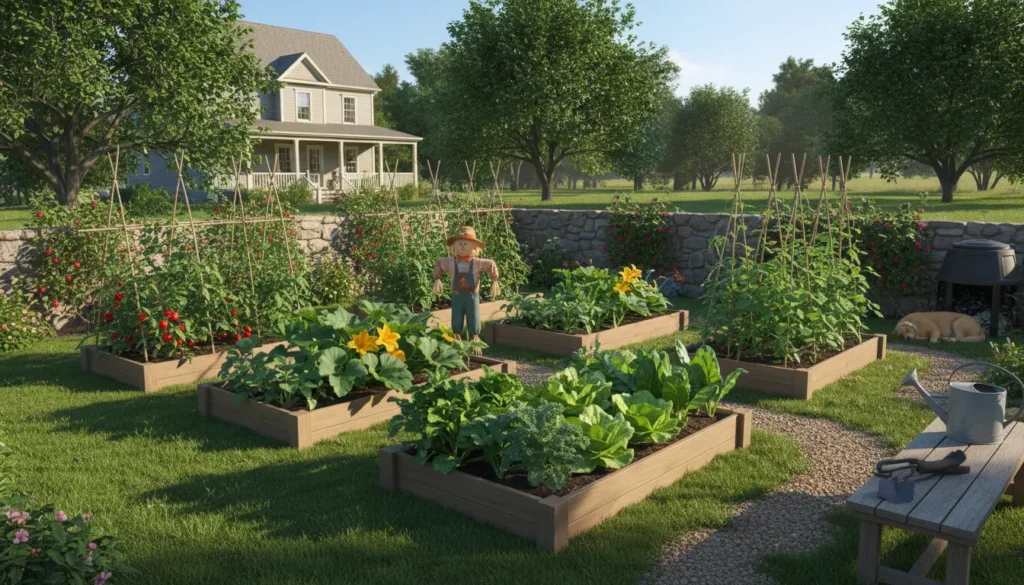
Growing your own food in a backyard vegetable garden is practical and rewarding. This guide explains how to plan, prepare, plant, and maintain a productive garden in a clear, step-by-step way.
Plan Your Backyard Vegetable Garden
Good planning saves time and effort later. Start with site selection, garden size, and a basic layout before buying supplies.
Choose the Right Spot for a Backyard Vegetable Garden

Pick a spot that gets at least 6 hours of direct sun per day. Most vegetables need full sun to produce well.
Ensure the area has good drainage and is close to a water source to make daily care easier.
Decide on Size and Layout for a Backyard Vegetable Garden
Begin small. A 100 to 200 square foot area is manageable for new gardeners. Use simple rows, square beds, or raised beds based on your space.

Consider paths of 18 to 24 inches to reach plants without compacting the soil. Sketch a layout and list desired crops.
Prepare Soil for a Backyard Vegetable Garden
Soil quality is the foundation of a productive backyard vegetable garden. Test, amend, and structure soil before planting.
Test and Amend Soil
Buy a basic soil test kit or send a sample to a local extension service. Test reveals pH and nutrient levels you can correct.

Add compost to improve texture and fertility. Use lime or sulfur to adjust pH if needed, following test recommendations.
Raised Beds vs In-Ground Garden
Raised beds warm faster and have better drainage, making them ideal for small yards. In-ground beds work well if soil is deep and healthy.
Materials for raised beds include untreated wood, concrete blocks, or metal. Keep bed height at least 8–12 inches for most vegetables.
Select Vegetables and Planting Schedule for a Backyard Vegetable Garden
Choose crops that match your climate, season, and skill level. Plant a mix of quick harvests and longer-season staples.
Easy Starter Vegetables
- Lettuce and leafy greens — fast and continuous harvests.
- Radishes — ready in 3–4 weeks for quick satisfaction.
- Bush beans — low maintenance and high yield.
- Tomatoes (container or bed) — rewarding but need staking and consistent water.
- Zucchini and summer squash — productive for small effort.
Watering, Fertilizing, and Maintenance in a Backyard Vegetable Garden
Regular care keeps plants healthy and productive. Set routines for watering, feeding, and trimming.
Practical Watering Tips
Water deeply at the base of plants rather than frequent shallow sprinkling. Aim for 1″ of water per week from rain and irrigation combined.
Use soaker hoses or drip irrigation to save water and reduce leaf wetness that encourages disease.
Pest and Weed Control
Manage pests with prevention: healthy soil, crop rotation, and physical barriers like row covers. Handpick larger pests when possible.
Mulch helps suppress weeds and keeps soil moisture steady. Pull weeds when small to prevent seed spreading.
Adding 1–2 inches of compost annually can increase vegetable yields by improving soil structure and nutrient availability.
Small Case Study: A 100-Sq-Ft Backyard Vegetable Garden
Example: A 10 x 10 foot garden started by a first-time gardener produced steady harvests and practical lessons.
Setup: Two 4 x 10 raised beds and a 2 x 10 path. Soil: mixed topsoil and 3 bags of compost. Crops: 3 tomato plants, 8 lettuce heads, 12 bush beans, 4 zucchini plants, and a row of carrots.
Results (first season): Tomatoes yielded about 40 pounds total, lettuce provided weekly harvests for 3 months, and beans produced several pickings. The grower reported saving on grocery spending and learning consistent watering as the most important habit.
Planting Calendar and Seasonal Notes for a Backyard Vegetable Garden
Use a local planting calendar to time seeds and transplants. Cool-season crops go in early spring or fall, while warm-season crops follow the last frost.
Succession planting (staggered sowings) keeps the harvest steady rather than all at once.
Practical Checklist Before You Start a Backyard Vegetable Garden
- Choose a sunny spot and sketch the layout.
- Test soil and add compost or amendments.
- Decide on raised beds or in-ground and build if needed.
- Select easy vegetables suited to your climate.
- Set up a simple watering system like soaker hoses.
- Plan for mulch, supports, and basic tools.
Starting a backyard vegetable garden is a manageable project with clear steps: plan smart, prepare soil, pick the right crops, and maintain a simple care routine. Small, consistent efforts usually yield the best results and make gardening an enjoyable, productive habit.



