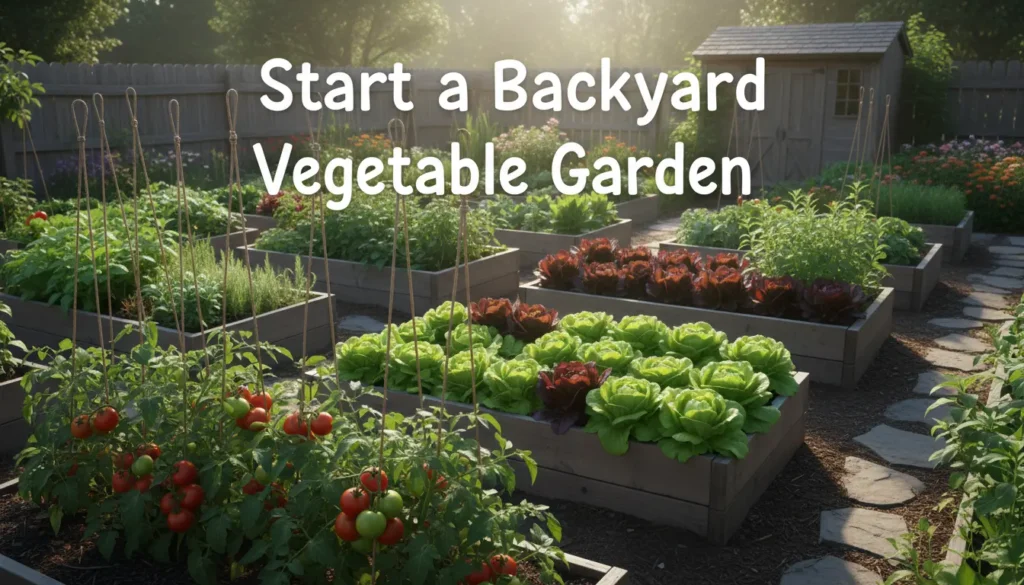
Starting a backyard vegetable garden is a practical way to grow fresh produce, save money, and enjoy outdoor activity. This guide explains clear steps to plan, plant, and maintain a productive garden even if you are a complete beginner.
Plan Your Backyard Vegetable Garden
Good planning reduces common mistakes. Begin by assessing sunlight, space, and water access for your backyard vegetable garden.
Choose a Location for Your Backyard Vegetable Garden
Pick a spot that gets at least 6 hours of direct sun for most vegetables. Avoid low areas that collect cold air or stay soggy after rain.
Consider proximity to a water source. Carrying water long distances makes regular care harder and reduces success.
Decide Between Beds, Rows, or Containers
Raised beds warm faster in spring and provide controlled soil. In-ground rows work well for larger spaces. Containers suit patios and small yards.
- Raised beds: good drainage and defined space.
- In-ground: cheaper for large plots.
- Containers: flexible and low-effort for beginners.
Prepare Soil and Beds for the Backyard Vegetable Garden
Soil quality is the most important factor for long-term productivity. Test soil pH with a simple kit and aim for pH 6.0–7.0 for most vegetables.
Improve soil by adding organic matter. Compost adds nutrients and improves texture in both heavy clay and sandy soils.
Steps to Prepare Soil
- Clear grass and weeds from the planting area.
- Loosen soil to 8–12 inches with a fork or tiller.
- Mix in 2–4 inches of compost and a balanced organic fertilizer if needed.
- Rake to level and form beds or rows.
Choose Vegetables for Beginners
Select vegetables that are forgiving and produce reliably. Start with a few easy crops and expand as you gain experience.
Beginner-friendly vegetables include:
- Tomatoes (determinate types for containers)
- Lettuce and salad greens
- Radishes and carrots
- Beans and peas
- Zucchini and summer squash
Plan succession planting for continuous harvest. Sow lettuce every 2–3 weeks and stagger tomato or pepper plantings where space allows.
Planting and Maintenance in Your Backyard Vegetable Garden
Follow seed packet and plant tag instructions for depth and spacing. Crowding reduces airflow and increases disease risk.
Watering and Mulching
Water deeply and infrequently to encourage strong roots. Aim for 1–1.5 inches per week from rain or irrigation, adjusting for weather.
Apply mulch after soil warms to retain moisture and suppress weeds. Use straw, shredded leaves, or compost as organic mulch.
Feeding and Fertilizing
Use a balanced organic fertilizer at planting, then feed high-producing crops (tomatoes, squash) every 4–6 weeks during the season.
Too much nitrogen promotes leafy growth at the expense of fruit. Follow product rates and observe plant responses.
Pest and Disease Basics
Check plants weekly for issues. Handpick larger pests, use row covers early in the season, and choose resistant varieties when possible.
- Use insecticidal soap for soft-bodied insects.
- Crop rotation reduces soil-borne diseases.
- Remove diseased plant material immediately.
Interplanting fast-growing crops like radishes between slower starters like broccoli can boost early yields and reduce weeds.
Harvesting and Rotation for a Healthy Backyard Vegetable Garden
Harvest crops at peak maturity for best flavor. Regular picking encourages more production in many vegetables, such as beans and zucchini.
Practice crop rotation each year to prevent nutrient depletion and disease buildup. Avoid planting the same family in the same spot two years in a row.
Simple Crop Rotation Plan
- Year 1: Leafy greens and brassicas (lettuce, broccoli)
- Year 2: Fruit-bearing crops (tomatoes, peppers)
- Year 3: Root crops and legumes (carrots, beans)
Small Real-World Case Study
Case Study: A 10×10 raised bed transformed a small suburban yard. Sarah planted determinate tomatoes, bush beans, lettuce, and carrots. She used a simple compost mix and drip irrigation.
Results: In the first season she harvested tomatoes weekly for two months and continuous lettuce for salads. The bed produced enough to reduce grocery produce purchases by one trip per week.
Key actions that worked: choosing compact varieties, mulching to keep moisture, and scheduling a short weekly check for pests.
Quick Checklist to Start Your Backyard Vegetable Garden
- Assess sunlight and water access.
- Choose beds, rows, or containers.
- Test and improve soil with compost.
- Select 3–6 beginner-friendly vegetables.
- Plant, mulch, and set a watering routine.
- Monitor for pests and harvest regularly.
Starting a backyard vegetable garden is a step-by-step process. With planning and simple regular care, even small spaces can yield fresh vegetables through the season.
Use this guide as a checklist and adapt choices to your climate and available space. Over time you’ll refine planting dates, varieties, and care to suit your yard.