Why start composting at home
Composting at home reduces kitchen and yard waste while producing nutrient-rich soil for gardens and potted plants. It closes the organic loop and lowers household trash volume.
This guide shows simple, practical steps for beginners to start composting at home without expensive equipment.
Basic principles of home composting
Composting is the controlled decomposition of organic materials by microbes. Successful home composting balances carbon-rich “browns” and nitrogen-rich “greens” and keeps the pile moist and aerated.
Key factors are temperature, moisture, oxygen, and particle size. Managing these gives faster, odor-free results.
Balancing greens and browns for home composting
Use a mix of green materials (kitchen scraps, fresh grass) and brown materials (dry leaves, shredded paper). Aim for roughly 2 to 3 parts browns to 1 part greens by volume.
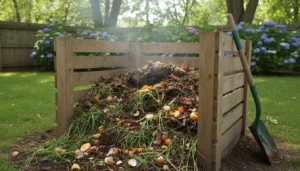
Too many greens cause odor. Too many browns slow decomposition. Adjust as you observe the pile.
How to start composting at home: step-by-step
Choose an accessible spot in your yard or a balcony corner for a container. Keep the location level and partially shaded if possible.
Follow these starter steps to set up a simple, effective system.
- Pick a bin: tumblers, plastic bins, or a simple open pile all work for home composting.
- Create a base: start with coarse material like small twigs to improve airflow.
- Add layers: alternate browns and greens in 4–6 inch layers.
- Moisture: keep the pile as damp as a wrung-out sponge.
- Turn: aerate weekly or every two weeks to speed decomposition.
Choosing a compost bin for home composting
Tumbler bins speed up decomposition and keep pests out. Stationary bins are cheaper and simple to use. For apartment balconies, a small worm bin (vermicompost) works well.
Consider capacity based on household waste: a family of four may need a 3–5 cubic foot bin or multiple small bins rotated in use.
What to compost at home
Many common kitchen and garden wastes are safe. Avoid meat, dairy, oily foods, and diseased plants to reduce pests and odors.
- Safe greens: fruit and vegetable scraps, coffee grounds, fresh grass clippings.
- Safe browns: dry leaves, straw, shredded cardboard, paper towels (unbleached).
- Avoid: meat, bones, dairy, pet feces, coal ash, diseased plants, invasive weeds with seeds.
Quick examples of good home compost mixes
Example A: 3 buckets of shredded leaves + 1 bucket of kitchen scraps + water. Turn weekly.
Example B (small worm bin): Bedding of shredded cardboard, handful of soil, weekly vegetable scraps. Keep out of direct sun and maintain moisture.
A properly maintained compost pile can reach temperatures of 130–160°F (55–70°C), which helps kill most weed seeds and pathogens while accelerating decomposition.
Troubleshooting common home composting problems
Most issues are easy to fix with small adjustments. Check moisture, aeration, and the greens/browns balance first.
- Bad smell: Add brown material and turn the pile to increase airflow.
- Too dry: Add water slowly and mix in greens to retain moisture.
- Not heating up: Add more greens or increase pile size to at least 1 cubic meter for heat retention.
- Pests: Bury food scraps under a layer of browns or use a closed bin/tumbler.
How long does home composting take?
Home composting can yield usable compost in 2–6 months depending on how actively you manage the pile. Hot composting is faster; passive piles take longer.
Small real-world example: Neighborhood compost starter
Case study: A three-family townhouse grouped food scraps into a shared 55-gallon tumbler. They rotated weekly, kept a supply of dry leaves, and recorded volume. Within four months they produced dark crumbly compost used in shared planters.
They reported 50% less kitchen waste to the curb and healthier balcony vegetables after two seasons.
Tips to make home composting easier
- Chop scraps into small pieces to speed decomposition.
- Store kitchen scraps in a small counter container with a lid or in the freezer to reduce flies.
- Use a garden fork or compost aerator to turn the pile efficiently.
- Keep a supply of dry browns near your collection area for quick layering.
Final checklist for starting home composting
- Choose the right bin for your space and volume.
- Balance greens and browns and maintain moisture.
- Turn or aerate regularly for faster, odor-free compost.
- Use finished compost to improve soil, potted plants, or as mulch.
With a basic setup and a little regular attention, composting at home becomes a low-effort way to reduce waste and nourish your plants. Start small, observe the pile, and adjust your mix over time for best results.