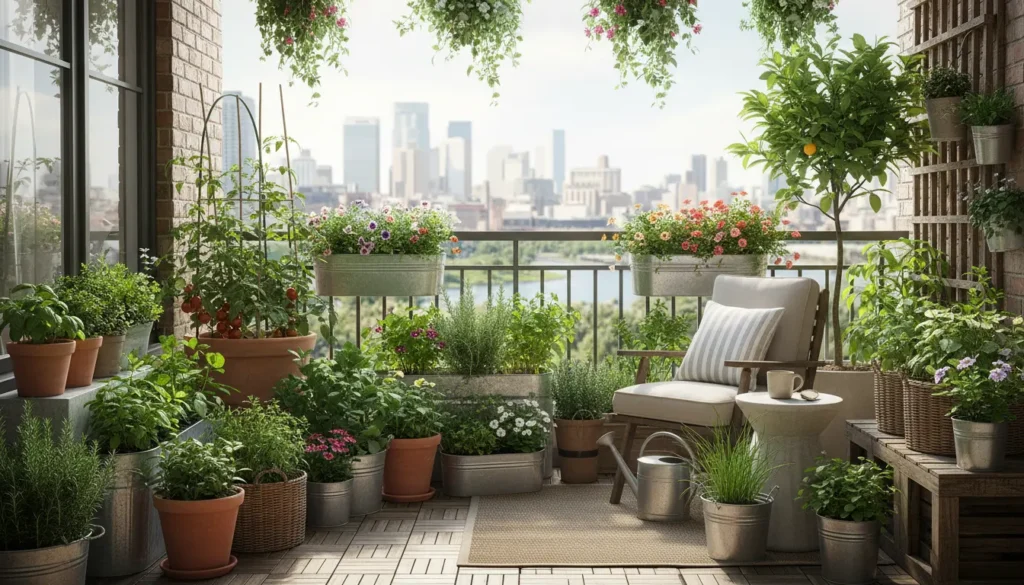
Why Choose a Container Vegetable Garden
Container vegetable gardening is a practical way to grow food when space is limited. It works on balconies, patios, rooftops, and small yards.
Containers are portable, easier to manage for soil quality and pests, and let you grow vegetables without a full plot.
Planning Your Container Vegetable Garden
Start with a simple plan that lists available space, sunlight, and how many hours of direct sun you get. Most vegetables need 6–8 hours of full sun.
Decide what you want to harvest. Focus on high-yield, compact, or fast-growing crops for containers.
Choose Vegetables for Containers
- Leafy greens: lettuce, spinach, Swiss chard
- Herbs: basil, parsley, cilantro
- Compact fruiting plants: cherry tomatoes, peppers, dwarf eggplant
- Root crops: baby carrots, radishes, small potatoes
Choosing Containers for a Container Vegetable Garden
Use containers with drainage holes to avoid waterlogging. Size matters: deeper containers suit root crops, while wider containers suit leaf and fruiting plants.
Common options include plastic pots, fabric grow bags, wooden planters, and half-barrels. Each has pros and cons for weight, insulation, and breathability.
Recommended Container Sizes
- Herbs and lettuce: 6–8 inch pots
- Peppers and small tomatoes: 5–7 gallon containers
- Large tomatoes and potatoes: 10–15 gallon containers
Soil and Fertilizer for a Container Vegetable Garden
Use a high-quality potting mix labeled for containers, not garden soil. Potting mixes retain moisture and provide air to roots.
Mix in slow-release organic fertilizer at planting, then follow with regular liquid feeds every 2–4 weeks during the season.
Soil Mix Tips
- Look for mixes with peat-free or coir bases for sustainability.
- Add perlite for drainage if the mix feels dense.
- Use compost or worm castings for slow nutrient release.
Planting and Spacing in a Container Vegetable Garden
Follow spacing recommendations for each crop. Overcrowding reduces airflow and raises disease risk.
Consider vertical supports for vining plants like tomatoes and cucumbers to save floor space and improve yield.
Watering and Care for a Container Vegetable Garden
Containers dry out faster than garden beds, so check soil moisture daily in hot weather. Water deeply until water drains from the bottom.
Mulch the top of containers with straw or shredded bark to slow evaporation and keep roots cool.
Watering Checklist
- Water in the morning to reduce fungal problems.
- Use a drip emitter or watering can for even moisture.
- Lift smaller containers to feel weight as a moisture guide.
Tomatoes in containers often need pruning of suckers to focus energy on fruit. Removing one or two suckers each week can improve yield in a small space.
Pest Management in a Container Vegetable Garden
Container gardens still face pests like aphids, slugs, and spider mites. Monitor plants regularly and act early at the first sign of damage.
Use these practical, low-toxicity controls:
- Handpick larger pests like caterpillars and slugs at night.
- Apply insecticidal soap or neem oil for soft-bodied insects.
- Encourage beneficial insects by adding a flowering herb or marigold.
Season Extension and Rotation
Use lightweight row covers or cloches to protect tender plants from cold snaps. Move containers to sheltered spots when frost threatens.
Rotate crops between seasons to reduce soil-borne disease buildup. Replace or refresh potting mix annually for best results.
Small Real-World Case Study
Case: Sarah, an apartment renter with a south-facing balcony, started a container vegetable garden in spring. She used four 10-inch containers for lettuce and herbs and two 5-gallon containers for cherry tomatoes and peppers.
By placing the tomato containers on the sunny corner and rotating the lettuce for shade during the hottest weeks, she harvested fresh salad greens twice a week and 15–20 cherry tomatoes per plant over the season.
Key lessons: choose crops suited to container size, monitor water closely, and place taller containers to avoid shading smaller plants.
Quick Start Checklist for Your Container Vegetable Garden
- Assess sunlight and available space.
- Choose suitable containers and ensure drainage.
- Buy quality potting mix and a slow-release fertilizer.
- Select compact varieties and plan vertical supports.
- Set a watering routine and inspect for pests weekly.
Final Tips for a Successful Container Vegetable Garden
Start small and scale up as you gain confidence. Consistent watering and good soil are more important than fancy containers.
Keep notes on what works—varieties, watering frequency, and placement—and refine your plan each season for better harvests.