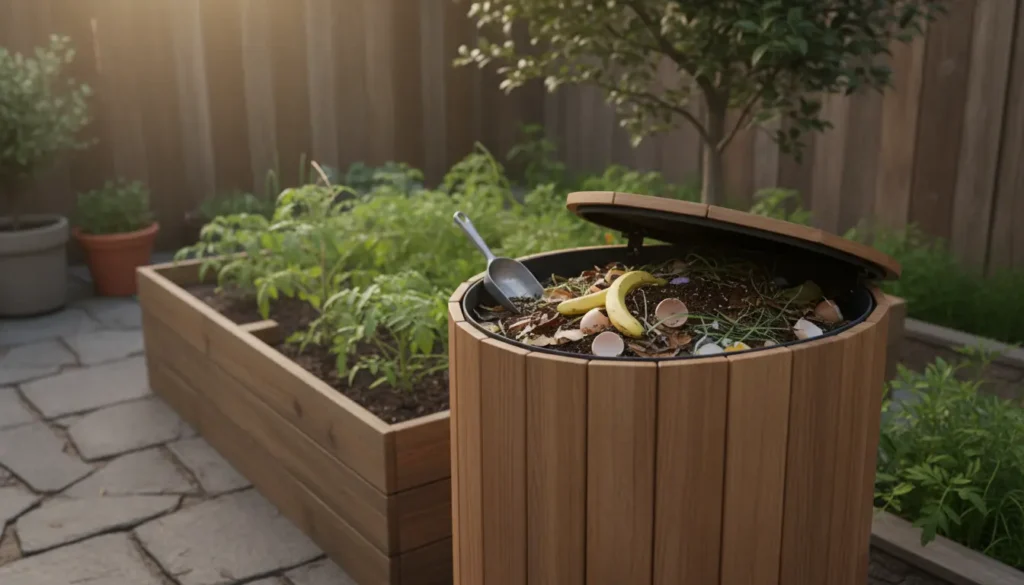
Start Home Composting Today
Home composting turns kitchen scraps and yard waste into a valuable soil amendment. This guide shows practical steps for setting up and maintaining a simple compost system at home.
Why Home Composting Matters
Composting reduces household waste and returns nutrients to soil. It lowers methane emissions from landfills and supports healthier plants.

For many households, a small compost bin can divert 20–30% of daily trash while producing free fertilizer for gardens or potted plants.
How to Start Home Composting
Follow these basic steps to create a reliable compost system. You can use a bin, tumbler, or a simple pile depending on space and preference.
Choose a Bin or Method
- Closed bin or tumbler: Good for small yards and keeps pests away.
- Open pile or wire bin: Works for larger gardens and is low cost.
- Indoor bokashi or vermicompost: Best for apartments or small kitchens.
Pick a Location
Place your compost bin on soil if possible to allow worms and microbes to access the pile. Choose a shady spot to maintain moisture and avoid drying out.

Ensure easy access so you add scraps regularly and turn the pile when needed.
What to Put In
Balance ‘greens’ and ‘browns’ to maintain good decomposition. Aim for roughly a 1:2 ratio by volume (greens to browns).
- Greens (nitrogen): kitchen scraps, fruit and vegetable peels, coffee grounds, fresh grass clippings.
- Browns (carbon): dry leaves, shredded paper, cardboard, straw, sawdust (untreated).
Avoid meat, bones, dairy, oily foods, and diseased plants in most home systems unless you use an enclosed, hot composting method.
Maintaining Your Home Composting System
Maintenance is straightforward: keep the pile moist like a wrung-out sponge, and turn it occasionally to add oxygen.
Turning and Aeration
Turning speeds up decomposition and prevents odors. For a small bin, stir the contents with a garden fork every 2–3 weeks.
Tumblers may require less effort; rotate them on a schedule to mix materials and introduce air.
Moisture and Temperature
Compost needs moisture to support microbial life. Add water during dry spells and cover the pile if heavy rain would oversaturate it.
Temperature indicates activity. Active hot piles reach 120–160°F (49–71°C) and break down material faster. Cold piles take longer but still work.
Troubleshooting Common Problems in Home Composting
Bad Odor
Smelly compost usually means too many greens or poor aeration. Add browns and turn the pile to introduce oxygen.
Pests
Pests are attracted by meat, dairy, or large uncovered scraps. Remove these items and use a closed bin or cover layers with browns.
Slow Decomposition
If decomposition is slow, check moisture, chop large pieces, and increase surface area. More frequent turning and a better greens-to-browns balance will help.
Practical Tips for Successful Home Composting
- Chop or shred bulky items to speed breakdown.
- Keep a small countertop container for scraps to make collection easy.
- Use finished compost as a top dressing for lawns or a mix-in for potting soil.
- Label layers and keep a simple log to track turning and moisture checks.
Adding small amounts of garden soil to a new compost bin introduces microbes that speed decomposition. A handful of soil from a healthy garden is enough to jump-start activity.
Case Study: Small Apartment Compost Success
Emma lives in a two-bedroom apartment and started composting with a compact bokashi system. She collected kitchen scraps for six months and then buried the fermented output in a community garden bed.
Results: Emma cut her weekly trash by half and supplied one raised bed with rich compost that improved water retention and tomato yields by about 20% the next season.
Using Finished Compost
Finished compost looks dark, crumbly, and smells earthy. Mix it into garden beds at a 10–30% ratio or use it as a top dressing for potted plants.
Store excess compost in a dry, covered container to use throughout the year.
Quick Starter Checklist for Home Composting
- Choose a bin type and location.
- Collect greens and browns and maintain a rough 1:2 ratio.
- Keep the pile moist and turn every 2–3 weeks.
- Fix odors by adding browns and aerating.
- Harvest finished compost when it is dark and crumbly.
Final Notes on Home Composting
Home composting is scalable and flexible. Start small, learn from experience, and adjust methods to fit your space and waste stream.
With regular attention and simple adjustments, most households can produce nutrient-rich compost and significantly reduce organic waste.



