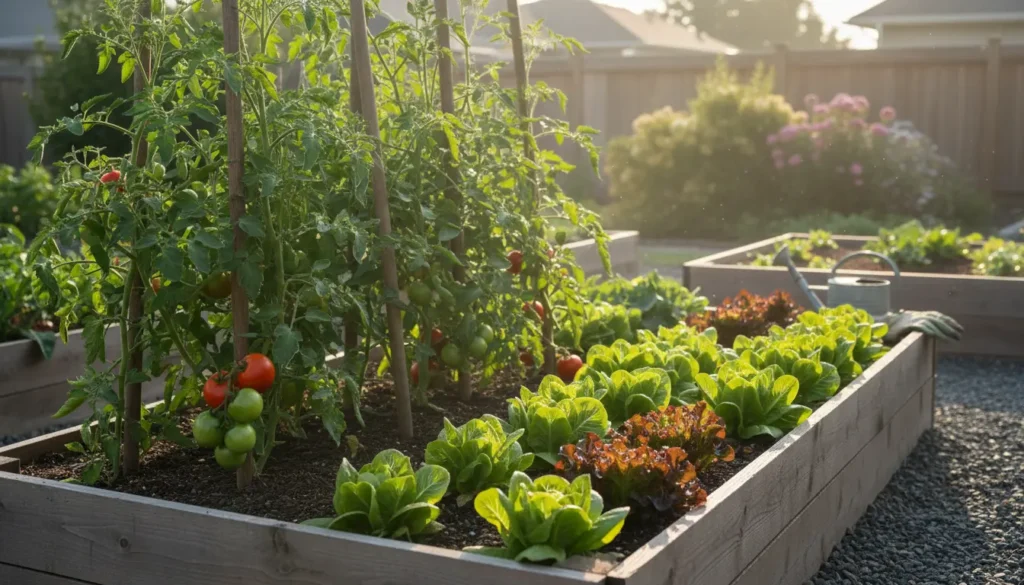
Starting a home vegetable garden is manageable with a clear plan and basic tools. This guide gives practical steps you can follow to move from an empty patch of soil to a productive, low-maintenance garden.
Plan Your Home Vegetable Garden
Good planning reduces wasted time and money. Decide what you want to grow based on available space, climate, and how much effort you can commit.
Choose a Location for Your Garden

Select a spot that gets at least 6 hours of sunlight daily for most vegetables. Ensure it has good drainage and is convenient for watering and harvesting.
Pick Vegetables That Fit Your Needs
Start with easy, high-yield vegetables like tomatoes, lettuce, radishes, green beans, and zucchini. Choose varieties labeled “easy” or “beginner” for faster success.
Decide on Garden Type
Choose between in-ground beds, raised beds, or containers depending on soil quality and space. Raised beds warm earlier in spring and reduce soil compaction.
Prepare Soil and Beds

Healthy soil is the foundation of a productive home vegetable garden. Test soil pH if possible and amend it based on results.
Improve Soil Structure
Add organic matter such as compost or well-rotted manure to improve nutrient content and drainage. Mix at least 2–4 inches of compost into the top 6–8 inches of soil.
Soil Nutrients and pH
Most vegetables prefer a slightly acidic to neutral pH (6.0–7.0). Use a simple home test kit and add lime to raise pH or sulfur to lower pH when needed.
Planting: Seeds vs. Seedlings

Decide whether to start from seeds or buy seedlings. Seeds are cheaper and offer more variety, while seedlings give faster results.
Timing and Spacing
Check your local frost dates and plant cool-season crops (lettuce, peas) before the last frost and warm-season crops (tomatoes, peppers) after. Follow seed packet spacing instructions to avoid overcrowding.
Watering and Mulching
Consistent moisture is critical. Water deeply and less frequently to encourage deep roots rather than shallow, frequent sprinkling.
- Watering tips: Early morning watering reduces evaporation and disease risk.
- Mulching: Apply 2–3 inches of organic mulch to retain moisture and suppress weeds.
- Drip irrigation or soaker hoses: Efficient options for small home gardens.
Pest and Disease Management
Control pests and diseases with preventive practices before reaching for chemical solutions. Good hygiene and physical barriers are often enough.
Integrated Pest Practices
Use crop rotation, row covers, hand-picking, and companion planting to reduce pest pressure. Inspect plants weekly for early signs of problems.
When to Use Organic Treatments
Apply neem oil, insecticidal soap, or Bacillus thuringiensis (Bt) only when necessary and follow label instructions. Targeted treatments protect beneficial insects.
Harvesting and Ongoing Care
Harvest vegetables when they are ripe to encourage continued production. Regularly remove dead leaves and spent plants to reduce disease spread.
- Stagger planting: Sow small amounts every 2–3 weeks for continuous harvest.
- Fertilize lightly mid-season if growth slows, using a balanced organic fertilizer.
- Save seeds from heirloom varieties if you want to expand next season.
Small Real-World Case Study
Case Study: A 10×10 backyard plot in Portland was converted to a raised bed layout with three 4×2 foot beds. The gardener planted lettuce, radishes, cherry tomatoes, beans, and basil.
In the first year, the beds required 2 hours per week of maintenance including watering, weeding, and harvesting. The garden produced continuous salad greens, 10–12 pounds of cherry tomatoes, and multiple harvests of beans and basil.
Lessons: Start small, focus on high-yield crops, and spend a little time each week to maintain steady production.
Common Mistakes and Quick Fixes
New gardeners often overwater, overcrowd plants, or plant too early. These mistakes lead to poor growth and disease.
- Overwatering: Water less often but deeper; improve drainage if soggy.
- Overcrowding: Thin seedlings to recommended spacing to improve air flow.
- Wrong planting time: Use local frost dates and seed packet timing to avoid losses.
Simple Starter Shopping List
- Quality compost or potting mix
- Hand trowel and garden fork
- Watering can or soaker hose
- Mulch (straw, wood chips, or shredded leaves)
- Row cover fabric and basic organic pest treatments
Final Steps to Get Growing
Map your beds, buy seeds or starts, and set a planting calendar based on your local climate. Spend the first season learning what works in your space and adjust next year.
With basic planning and weekly attention, a home vegetable garden can produce fresh vegetables, cut grocery costs, and provide satisfying, hands-on learning.



