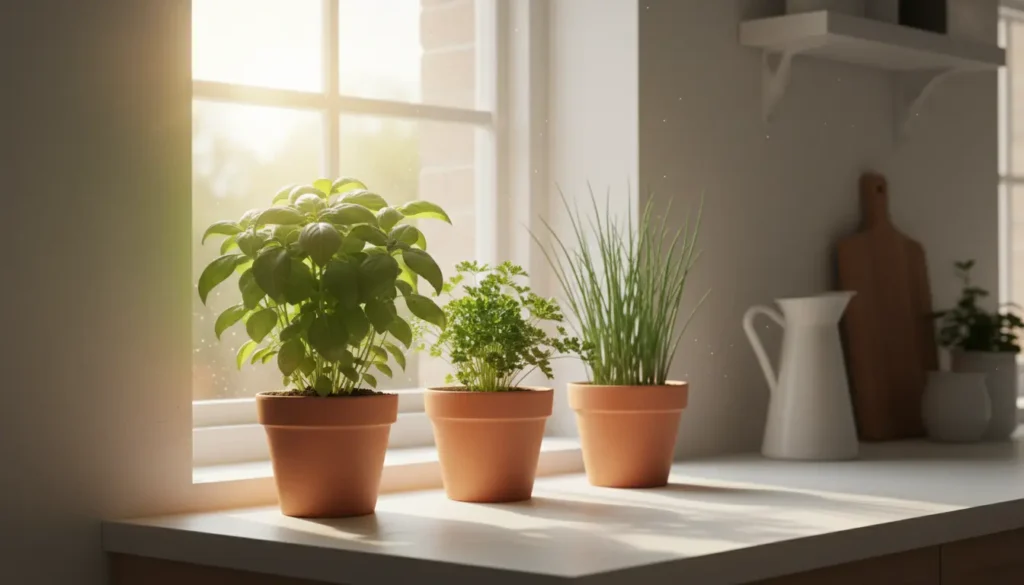
Why Start an Indoor Herb Garden
An indoor herb garden provides fresh flavor, saves money, and adds greenery to small spaces. It is suitable for apartments, kitchens, and seasonal gaps in outdoor growing.
This guide explains how to start an indoor herb garden with minimal cost and time, using common supplies and clear steps.
What You Need to Start an Indoor Herb Garden

Before planting, gather a few basic items to avoid delays. Having the right containers and soil improves success rates.
- Containers with drainage holes (pots or repurposed jars with drainage layer)
- Quality potting mix formulated for containers (not garden soil)
- Herb seedlings or seeds (basil, parsley, chives, mint are beginner-friendly)
- Tray or saucer to catch excess water
- Basic tools: small trowel, watering can, labels
Choose the Best Spot for Your Indoor Herb Garden
Light is the most important factor for herbs grown indoors. Choose a bright, south- or west-facing windowsill when possible.
If natural light is limited, use a full-spectrum LED grow light placed 6–12 inches above the plants. Maintain 12–16 hours of light per day for most herbs.
Temperature and Airflow

Most culinary herbs prefer 65–75°F (18–24°C) during the day and slightly cooler at night. Avoid placing pots above radiators or near cold drafts.
Good airflow helps prevent fungal issues. A gentle fan running occasionally can reduce humidity buildup on foliage.
Selecting Herbs: Best Choices to Grow Indoors
Start with herbs that adapt well to containers and indoor light. Here are reliable options for beginners.
- Basil: Warm-loving, great for windows with strong light.
- Parsley: Tolerates moderate light and is slow to establish.
- Chives: Compact and hardy, ideal for small pots.
- Mint: Vigorous grower; keep in its own container to prevent spreading.
- Thyme and oregano: Drier-medium herbs that prefer good drainage.
Planting Steps for an Indoor Herb Garden

Follow a consistent planting routine to encourage healthy roots and steady growth. Use seedlings for quicker results or seeds to save money.
- Fill containers with potting mix, leaving 1 inch from the rim.
- Plant seedlings at the same depth as their nursery pot, firming soil gently around roots.
- Water thoroughly until excess drains from the bottom. Empty saucers after 30 minutes.
- Label each pot with the herb name and planting date.
Soil and Fertilizer
Use a light, well-draining potting mix. Avoid heavy garden soil that compacts and limits root oxygen.
Fertilize lightly every 4–6 weeks with a balanced, water-soluble fertilizer at half strength. Over-fertilizing can reduce flavor intensity.
Watering and Maintenance
Proper watering prevents root rot and dry stress. Check soil moisture with your finger: water when the top inch feels dry for most herbs.
- Water deeply so excess runs from drainage holes, then allow the surface to dry.
- Reduce watering for thyme, oregano, and rosemary which tolerate drier conditions.
- Rotate pots weekly to promote even growth from limited light sources.
Pruning and Harvesting for Healthy Growth
Regular pruning keeps herbs productive and prevents legginess. Harvest herbs in the morning when oils (and flavor) are strongest.
- Pinch back the tips of basil and mint to encourage branching.
- Harvest no more than one-third of the plant at a time.
- Remove flowering stems for leafy herbs to maintain flavor.
Pest and Disease Management
Indoor pests are usually manageable with early detection. Common issues include aphids, spider mites, and powdery mildew.
- Inspect leaves weekly, especially undersides.
- Rinse small pest populations with a gentle spray of water.
- Use insecticidal soap or neem oil as a safe, plant-friendly treatment when needed.
Small Case Study: Apartments to Fresh Pesto in Eight Weeks
Case: A two-person household in a city apartment started an indoor herb garden on a south-facing sill.
They planted three basil seedlings, a container of chives, and a pot of parsley. With morning light and a simple LED supplement, basil produced large leaves within six weeks.
At eight weeks, they harvested enough basil to make fresh pesto for four meals. Cost: about $30 for pots, soil, and seedlings. Benefit: fresh herbs and reduced grocery trips.
Troubleshooting Common Problems
If herbs are yellowing, check for overwatering and poor drainage. If stems are long and sparse, increase light exposure or add a grow light.
Slow growth in winter often results from shorter daylight; extend light hours to maintain steady growth through colder months.
Tips for Long-Term Success with an Indoor Herb Garden
- Start small and scale up as you learn which herbs perform best in your space.
- Keep a simple log of watering and feeding to identify patterns if issues arise.
- Share cuttings with friends to expand variety without extra cost.
With a modest investment of time and supplies, an indoor herb garden offers fresh flavors, aesthetic benefits, and a satisfying connection to food preparation. Follow these practical steps, observe your plants, and adjust care to your home’s conditions for reliable results.



