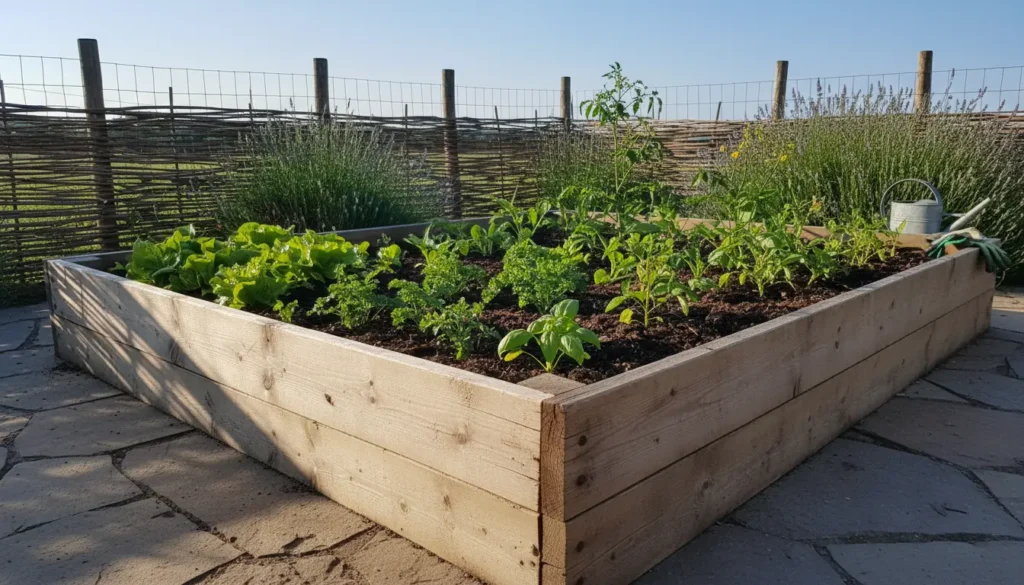
Plan Your Small Vegetable Garden
Decide why you want a small vegetable garden: fresh food, learning, or saving money. Clear goals help you choose the right crops and layout.
Measure the available space and note sun exposure for several days. Most vegetables need at least six hours of direct sun each day.
Choose a Location for Your Small Vegetable Garden

Pick a spot close to water and easy to access. Proximity reduces time spent carrying hoses and makes maintenance simpler.
Avoid low areas that stay wet, and steer clear of places shaded by trees. If sun is limited, select shade-tolerant vegetables or use containers that can be moved.
Sun and Wind Considerations
South- or west-facing areas typically get the most sun. Observe the site in morning and afternoon to identify hours of direct light.

Provide a windbreak if the site is gusty; high winds stress plants and dry the soil quickly.
Decide Between Containers, Raised Beds, or In-Ground
Choose the planting method that fits your space, budget, and soil quality. Containers are flexible; raised beds give better control over soil; in-ground is low-cost if soil is healthy.
For very small spaces, vertical planters and hanging baskets extend growing area without expanding the footprint.
Pros and Cons at a Glance
- Containers: portable, limited root space, good for small patios.
- Raised beds: better drainage, fewer weeds, need filling with quality soil.
- In-ground: cost-effective, deeper rooting, may need soil amendments.
Prepare Soil and Choose Plants
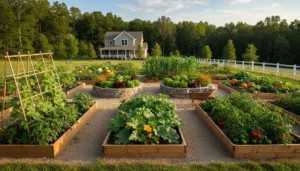
Good soil is the most important factor for a thriving small vegetable garden. Aim for loose, well-draining soil rich in organic matter.
Test or assess the soil. If it is heavy clay or too sandy, improve it with compost and aged manure to reach a balanced texture.
Selecting Vegetables for a Small Garden
Pick high-yield, space-efficient varieties. Consider these easy choices:
- Leafy greens: lettuce, spinach, kale (quick harvests).
- Tomatoes and peppers: grow vertically to save space.
- Bush beans and dwarf peas: compact and productive.
- Herbs: basil, parsley, chives for constant use.
Planting, Watering, and Mulching
Follow seed packet or plant label spacing to avoid overcrowding. Thinning seedlings early improves airflow and yields.
Water consistently to keep soil evenly moist. Small gardens dry out faster, so check soil moisture daily in warm weather.
Watering Tips for a Small Vegetable Garden
- Water at the base of plants to minimize leaf wetness and disease risk.
- Use drip irrigation or a soaker hose for efficient delivery.
- Mulch with straw, wood chips, or compost to retain moisture and suppress weeds.
Pest and Disease Management
Monitor plants regularly for pests and signs of disease. Early detection keeps problems from spreading in a small garden where issues affect a large share of crops.
Use integrated pest management: hand-pick pests, use row covers, encourage beneficial insects, and apply organic controls when needed.
Common Small Garden Problems
- Aphids and caterpillars: wash off with a strong water spray or use insecticidal soap.
- Fungal diseases: improve airflow, avoid overhead watering, and remove infected leaves.
- Slugs: set traps or remove at night; keep mulch off stems to reduce hiding spots.
Harvesting and Ongoing Care
Harvest vegetables when they reach recommended size for best flavor and continued production. Regular picking encourages many plants to produce more.
Rotate crops seasonally and add compost each season to maintain soil fertility. Even small gardens benefit from a simple feeding routine.
Planting marigolds near vegetables can reduce some soil nematodes and attract pollinators, improving overall garden health.
Simple Case Study: 120 Square Feet Suburban Garden
Maria, a homeowner with a 120 sq ft backyard plot, converted an unused lawn area into three raised beds (4×10 ft each). She filled them with a mix of compost and topsoil and planted determinate tomatoes, bush beans, lettuce, and basil.
By mulching, using a soaker hose twice weekly, and rotating where she planted beans and brassicas each season, Maria harvested tomatoes for 10 weeks and had enough greens to supply her family of four most meals during summer.
Quick Checklist to Start Your Small Vegetable Garden
- Measure and map your space and sun exposure.
- Choose containers, raised beds, or in-ground planting.
- Improve soil with compost and test drainage.
- Select compact, high-yield varieties and stagger planting times.
- Set up efficient watering and add mulch.
- Monitor pests, rotate crops, and add compost seasonally.
Final Tips for Small Garden Success
Start small and expand as you gain experience. Keeping the garden manageable reduces chores and increases enjoyment.
Track planting dates and varieties so you can repeat what worked and avoid mistakes next season. Small, consistent care produces reliable harvests.



