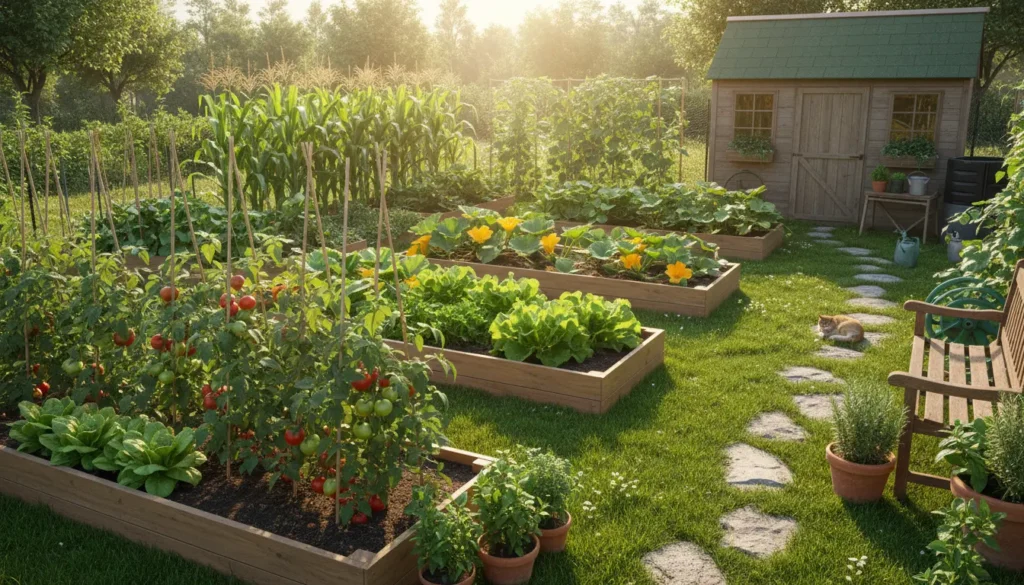
How to Start a Small Vegetable Garden: Quick Overview
Starting a small vegetable garden is an achievable project for most homes and apartments with some outdoor space. This guide covers site choice, soil, plant selection, care, and harvest tips in clear steps.
Why Start a Small Vegetable Garden
Growing your own vegetables saves money and gives you fresher food than store-bought produce. A small garden can fit in a backyard, balcony, or patio with containers or raised beds.
Benefits of a Small Garden

Homegrown vegetables often taste better and are available at peak ripeness. Gardening also provides light exercise and reduces food miles.
Start a Small Vegetable Garden: Choosing the Right Spot
Pick a spot that gets 6 to 8 hours of direct sunlight for most vegetable crops. Good light improves yields and reduces disease pressure.
Consider access to water and ease of reach for daily checks and harvesting. Level ground or sturdy containers make planting and maintenance easier.
Sunlight and Wind

Observe the site across a full day to confirm sun patterns. Protect gardens from strong winds with fences or hedges if needed.
Start a Small Vegetable Garden: Soil and Containers
Soil quality is the foundation of success. Healthy soil drains well, holds moisture, and has plenty of organic matter.
If ground soil is poor, use raised beds or containers filled with a quality mix. Containers warm faster and reduce weed competition.
Soil Preparation Steps
- Test soil pH with a kit; aim for pH 6.0–7.0 for most vegetables.
- Amend with compost or well-rotted manure to add nutrients and structure.
- Work the top 8–12 inches; avoid compacting soil when wet.
Planning What to Grow in a Small Vegetable Garden
Select vegetables that match your climate, taste, and available space. Focus on high-yield, space-efficient crops for the best return.
Consider staggered planting and succession sowing to keep harvests steady throughout the season.
Easy Vegetables for Beginners
- Leafy greens: lettuce, spinach, arugula — quick and space-saving.
- Tomatoes and peppers: productive in containers or small beds.
- Radishes and carrots: fast-growing root crops for shallow soil.
- Herbs: basil, parsley, chives — useful and compact.
Planting and Care: How to Start a Small Vegetable Garden
Follow planting depth and spacing on seed packets and plant tags. Proper spacing reduces competition and disease.
Mulch around plants to retain moisture and suppress weeds. Mulch also moderates soil temperature.
Watering, Mulching, and Feeding
Water deeply and less often instead of shallow daily sprays. Deep watering encourages stronger root systems.
Use organic mulch like straw or shredded leaves and fertilize with balanced organic fertilizer during active growth periods.
Pest Control and Disease Management
Inspect plants weekly for pests and signs of disease. Early detection limits spread and damage.
Use physical barriers, handpicking, and organic controls like insecticidal soap when possible. Rotate crops each season to reduce soil-borne problems.
Companion planting can boost yields and reduce pests. For example, planting basil near tomatoes can improve flavor and may deter some insects.
Harvesting and Long-Term Care
Harvest vegetables when they are ripe for best flavor and to encourage continued production. Regular picking prevents overripening and waste.
At season end, remove spent plants, add compost, and plan crop rotation. Clean tools and tidy beds to reduce overwintering pests.
Small Garden Maintenance Checklist
- Water deeply 1–3 times weekly depending on weather.
- Mulch and weed regularly to conserve moisture.
- Pinch or prune to guide plant energy into fruit production.
- Record planting dates and variety performance for next season.
Real-World Example: A Small Backyard Success
Case study: Maria converted a 10-foot by 6-foot strip of her backyard into two raised beds. She chose cherry tomatoes, bush beans, lettuce, and basil for compactness.
By using compost, drip irrigation, and weekly checks, Maria harvested fresh salad greens every week and a steady supply of tomatoes for eight weeks. Her initial investment in soil and seeds paid off in reduced grocery bills and better-tasting produce.
Common Mistakes to Avoid When You Start a Small Vegetable Garden
Many beginners overplant or use poor soil. Crowded plants look lush but produce less and invite pests.
Avoid too much fertilizer early on; start with compost and add balanced feeds as plants grow. Also, don’t ignore drainage — soggy roots fail quickly.
Simple Example Planting Plan
- Bed A (4×6 ft): two tomato cages at the back, basil between plants, lettuce in front rows.
- Bed B (4×6 ft): carrots and radishes rows with bush beans at the center for vertical space.
Final Tips for Ongoing Success
Keep plant choices realistic for your available time and space. A few productive plants are better than many neglected ones.
Track what works and adjust each season. Small, steady improvements produce reliable yields and more enjoyment from your garden.



