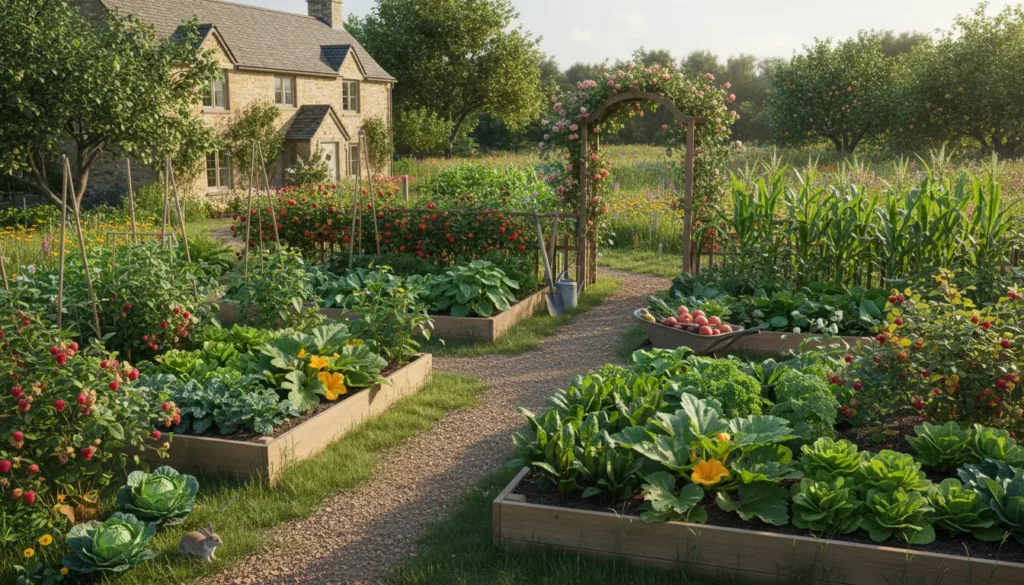
Start a Vegetable Garden: Quick Overview
Starting a vegetable garden is achievable with basic planning and a small time commitment. This guide gives clear steps to choose a site, prepare soil, plant crops, and maintain a productive garden.
Start a Vegetable Garden: Decide Why and Where
Ask what you want to grow and how much time you can spend. Decide between containers, raised beds, or in-ground rows based on space and mobility.
Start a Vegetable Garden: Choose the Right Location

Vegetables need 6–8 hours of sun a day. Observe potential sites for a full day to ensure consistent sunlight.
Look for good drainage and easy access to water. Avoid low spots that collect cold air or standing water after rain.
Start a Vegetable Garden: Assess Soil and Space
Test soil texture and fertility with a simple kit or send a sample to a local extension. Healthy soil reduces work later.
- Raised beds: better control, warms fast in spring.
- Containers: good for patios and small spaces.
- In-ground plots: best for larger gardens and deep-rooted crops.
Start a Vegetable Garden: Prepare Soil and Beds

Healthy soil is the foundation. Aim for loose, well-draining soil rich in organic matter.
To prepare:
- Clear grass and weeds from the area.
- Loosen soil to 8–12 inches for in-ground or fill raised beds with a mix of topsoil and compost.
- Incorporate 2–3 inches of compost or well-rotted manure to improve structure and nutrients.
Start a Vegetable Garden: Soil Tips and Tests
pH affects nutrient availability. Most vegetables prefer pH 6.0–7.0. Amend soil based on test results.

Mulch after planting to conserve moisture and suppress weeds. Use straw, shredded leaves, or wood chips around established plants.
Start a Vegetable Garden: Choose Crops and a Planting Schedule
Begin with easy, high-reward vegetables like lettuce, radishes, tomatoes, beans, and zucchini. Match crops to your climate and season length.
Create a simple planting schedule:
- Cool-season crops: lettuce, peas, kale — plant early spring or fall.
- Warm-season crops: tomatoes, peppers, squash — plant after last frost.
- Succession planting keeps harvests steady: sow small seeds like radishes or greens every 2–3 weeks.
Start a Vegetable Garden: Seedlings vs. Seeds
Seeds are cheaper and offer many varieties, while seedlings save time for slower crops like tomatoes. Start seeds indoors 6–8 weeks before transplanting if needed.
Start a Vegetable Garden: Watering and Fertilizing
Consistent moisture is critical. Water deeply and less often to encourage deep roots. Aim for 1–1.5 inches of water per week in most climates.
Use drip irrigation or soaker hoses for efficiency and to keep foliage dry, reducing disease risk.
- Fertilize based on soil test; a balanced organic fertilizer is a safe general choice.
- Side-dress with compost or a low-dose fertilizer during peak growth for heavy feeders like tomatoes.
Start a Vegetable Garden: Common Watering Mistakes
Overwatering causes root rot and poor growth. Underwatering leads to bolting and blossom drop. Check soil moisture by hand an inch below the surface.
Start a Vegetable Garden: Pest and Disease Basics
Use integrated pest management: monitor, identify, and respond early. Most problems are easier to fix when spotted quickly.
- Encourage beneficial insects with diverse plantings and flowers.
- Use physical controls like row covers for young plants and hand-picking for larger pests.
- Rotate crop families each year to reduce soil-borne diseases.
Start a Vegetable Garden: Safe Organic Controls
Neem oil, insecticidal soap, and copper or sulfur (for fungi) are common organic options. Follow product labels and local regulations.
Start a Vegetable Garden: Harvesting and Scaling Up
Harvest regularly to encourage production. Pick tomatoes, beans, and zucchinis when ripe to keep plants productive.
As you gain experience, expand by adding new crops, building more raised beds, or testing season-extension techniques like row covers and cold frames.
One raised bed (4 x 8 feet) can grow enough vegetables for a family of four during the growing season when intensively planted.
Real-World Example: 10×10 Raised Bed Case Study
Sarah started a 10 x 10 raised bed with a 6-inch mix of topsoil and compost. In her first season she planted tomatoes, beans, lettuce, and herbs.
She used drip irrigation and staggered plantings of lettuce every 3 weeks. By midsummer she harvested weekly salads and several bushels of tomatoes, reporting less than three hours weekly maintenance after setup.
Start a Vegetable Garden: Quick Checklist
- Choose a sunny site with good drainage.
- Decide on container, raised bed, or in-ground planting.
- Test and amend soil; add compost.
- Select easy crops matched to your season.
- Water deeply, mulch, and monitor for pests.
- Harvest regularly and plan for succession plantings.
Follow these steps and adapt to your climate and space. Start small, learn from each season, and increase your garden as confidence grows.



