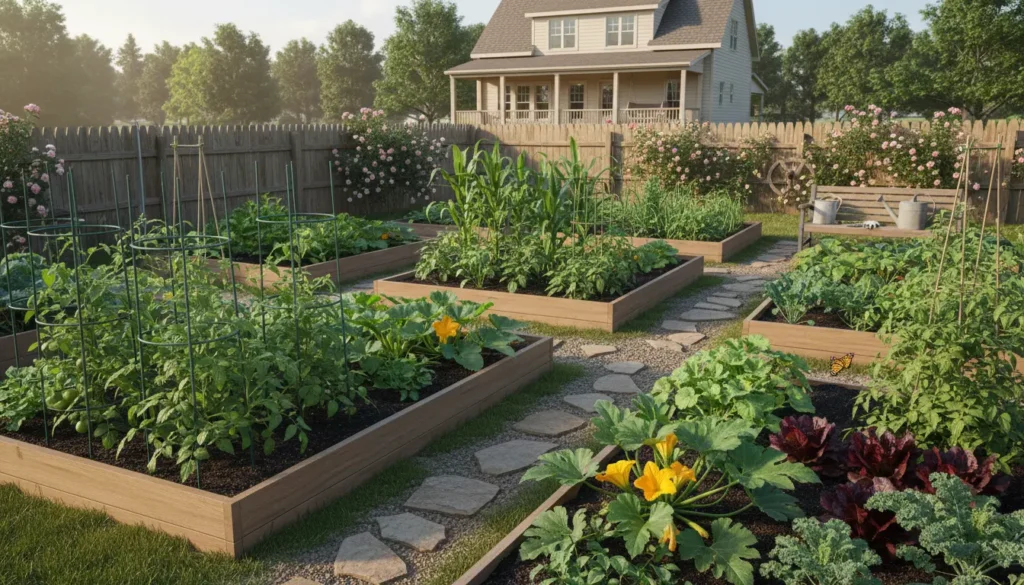
Starting a vegetable garden is a practical way to grow fresh food, save money, and enjoy time outdoors. This guide walks you through simple, actionable steps to plan, prepare, plant, and maintain a productive vegetable garden.
Plan Your Vegetable Garden Location and Size
Start by assessing sunlight, space, and access to water. Most vegetables need at least 6 hours of direct sun each day. Choose a location with well-drained soil and convenient access to a hose.
Choose the Right Spot to Start a Vegetable Garden

Look for a flat or gently sloped area that gets morning sun and some afternoon light. Avoid low spots that collect water. If you have limited space, consider containers or raised beds.
Decide What to Grow
Select vegetables that match your climate and season. For beginners, pick a few reliable crops such as tomatoes, lettuce, radishes, beans, and zucchini. Focus on plants you will eat often.
- Start small: 4 to 10 square feet per person is enough for first crops.
- Mix fast-growing (lettuce, radishes) with longer-season crops (tomatoes).
- Group plants by water needs to simplify care.
Prepare Soil and Beds Before You Plant
Good soil is the foundation of a successful vegetable garden. Test soil texture and drainage, then improve it with organic matter. Healthy soil supports strong roots and reduces pests.

Steps to prepare soil:
- Clear weeds and debris from the area.
- Loosen soil to about 8 to 12 inches deep for most vegetables.
- Mix in 2 to 4 inches of compost or well-rotted manure to improve fertility and structure.
- If soil is heavy clay, add coarse sand and more organic matter; for sandy soil, add compost to increase water retention.
Planting Schedule and How to Plant
Create a simple planting calendar based on your local last frost date. Use seed packets and plant tags for timing and depth. Stagger plantings to extend harvests.
Direct Sow vs Transplants When You Start a Vegetable Garden
Understand which crops to seed directly and which to transplant. Root vegetables like carrots and beets do best when sown directly. Tomatoes, peppers, and some herbs are easier to start indoors and transplant after frost risk.
Succession Planting Example

Succession planting keeps beds productive. For example:
- Week 1: Sow radishes and lettuce in a bed.
- Week 4: Harvest radishes; sow beans in that space.
- Week 6: Harvest lettuce; sow fall spinach or kale.
This approach maximizes yield from limited space.
Watering, Fertilizing, and Ongoing Care
Consistent water and proper feeding are critical. Most vegetables need about 1 inch of water per week, depending on weather. Water deeply and less often to develop strong roots.
- Water early in the day to limit evaporation and reduce disease risk.
- Apply a balanced organic fertilizer at planting and as a mid-season boost for heavy feeders like tomatoes.
- Mulch with straw, leaves, or wood chips to retain moisture and suppress weeds.
Pest Management and Common Problems in a Vegetable Garden
Monitor plants regularly for pests and diseases. Early detection keeps problems small and manageable. Use integrated pest management (IPM) methods: cultural, mechanical, biological, and as a last resort, organic treatments.
- Handpick large pests like cabbage worms and slugs.
- Use row covers to protect young plants from insects and birds.
- Encourage beneficial insects with flowering plants like calendula and dill.
- Rotate crops each season to reduce soil-borne disease buildup.
Small Real World Example: A City Backyard Case Study
Case study: Maria, a city renter, started a 6 x 8 foot raised bed on a sunny balcony. She filled the bed with a mix of compost and topsoil, planted tomatoes, basil, and lettuce, and used drip irrigation on a timer.
In her first season she harvested enough salad greens for her household and fresh tomatoes weekly. Key factors were location with 7 hours of sun, weekly compost tea feedings, and using trellises for vertical growth.
Lessons from Maria’s case:
- Raised beds work well in small urban spaces.
- Drip irrigation saves time and conserves water.
- Focus on a few crops you will use to stay motivated.
Simple Tips to Keep Your Vegetable Garden Productive
- Keep records: note planting dates, varieties, and results.
- Start seeds indoors to get an early start in spring.
- Prune and trellis to improve air circulation and reduce disease.
- Harvest regularly to encourage more production.
Starting a vegetable garden is a step-by-step process. Plan your space, build healthy soil, plant at the right time, and maintain simple care routines. Begin small, learn from each season, and expand as you gain confidence. With steady attention, you can enjoy fresh vegetables grown at home.



