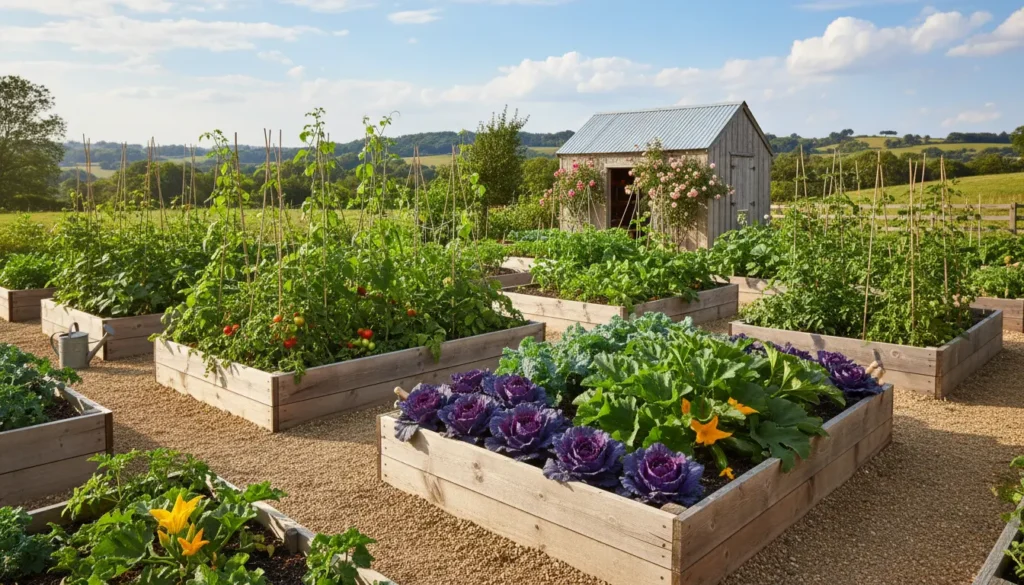
Starting a vegetable garden is practical and rewarding when you follow simple steps. This guide walks you through planning, soil prep, planting, and routine care so you can grow vegetables successfully, even with limited space.
Plan Your Garden: Where and What to Grow
Choose a location with at least six hours of direct sunlight per day for most vegetables. Consider proximity to water and convenience for regular care.

Decide whether you’ll use in-ground rows, raised beds, or containers. Each option has pros and cons depending on soil quality, space, and budget.
- Raised beds: better drainage and soil control, good for beginners.
- In-ground: less material cost, best if native soil is healthy.
- Containers: ideal for patios and balconies, require more frequent watering.
Choose Vegetables for Your Climate
Select crops suited to your USDA hardiness zone or local climate. Start with easy-to-grow vegetables like lettuce, radishes, tomatoes, and beans.
Plan successive plantings to extend harvests: sow quick crops (radishes, salad greens) between slower ones (tomatoes, peppers).
Prepare Soil to Start a Vegetable Garden

Soil quality determines most garden results. Test soil pH with a simple kit to learn if you need lime or sulfur adjustments.
Improve soil structure with organic matter. Compost and well-rotted manure increase fertility and water retention.
Steps to Prepare Soil
- Clear weeds and debris from the chosen area.
- Loosen soil 8–12 inches deep for beds or 4–6 inches for containers.
- Spread 2–3 inches of compost and mix it into the topsoil.
- Adjust pH if test indicates: lime to raise pH, sulfur to lower pH.
Planting: Seeds vs. Seedlings
Decide between direct seeding and transplanting seedlings. Root vegetables and many greens do well from seed, while tomatoes and peppers are usually transplanted.

Follow seed packet or plant tag instructions for spacing and planting depth. Proper spacing reduces disease and improves airflow.
Planting Tips
- Water seeds gently after sowing to establish good soil contact.
- Harden off seedlings by exposing them gradually to outdoor conditions before planting.
- Use mulch to conserve moisture and suppress weeds around new plants.
Watering and Fertilizing Your Vegetable Garden
Consistent watering is essential. Most vegetables need about 1 inch of water per week, but this varies by weather and soil type.
Water at the base of plants to keep leaves dry and reduce disease risk. Drip irrigation or soaker hoses are efficient options.
Fertilizer Basics
Start with a balanced organic fertilizer or compost tea. Heavy feeders like tomatoes may benefit from additional phosphorus and potassium during flowering and fruiting.
- Apply a balanced fertilizer at planting time.
- Side-dress with compost or a low-release organic fertilizer mid-season for continuous nutrients.
Pest and Disease Management
Monitor plants regularly for pests and early disease signs. Remove affected leaves and use targeted controls when necessary.
Use integrated pest management: encourage beneficial insects, rotate crops each season, and avoid overhead watering.
Nonchemical Controls
- Floating row covers to protect seedlings from insects.
- Hand-picking slugs and beetles early in the day.
- Companion planting to deter pests.
Harvesting and Season Extension
Harvest vegetables at their peak for best flavor and to encourage continued production. Regular picking often increases yields.
Use season-extension tools like cold frames, row covers, or a small greenhouse to start earlier and finish later in the year.
Planting marigolds near tomatoes can reduce some nematode problems in the soil and attract pollinators for better fruit set.
Simple Maintenance Checklist
Keep a short weekly routine to maintain your garden. Consistent small efforts prevent larger problems later.
- Water deeply once or twice a week, depending on weather.
- Weed and add mulch as needed to retain moisture.
- Inspect for pests and diseases; act promptly when issues appear.
- Record planting dates and successes for next season.
Real-World Example: Small Raised Bed Case Study
Maria, a city renter, built two 4×4 raised beds on her balcony. She used a mix of purchased topsoil and compost and planted tomatoes, basil, lettuce, and bush beans.
By starting seeds indoors in early spring, hardening them off, and using drip irrigation, Maria harvested fresh salad greens within six weeks and tomatoes by mid-summer. Regular mulching reduced watering needs and limited weeds.
Common Mistakes and How to Avoid Them
- Planting too closely — follow spacing to avoid poor airflow and disease.
- Overwatering — check soil moisture before watering; soggy soil suffocates roots.
- Ignoring soil tests — poor pH or depleted nutrients limit plant growth.
Next Steps to Start a Vegetable Garden
Start small and expand as you gain confidence. Keep notes about what worked and what didn’t to improve each season.
With planning, soil care, and regular maintenance, anyone can grow a productive vegetable garden and enjoy fresher food at home.



