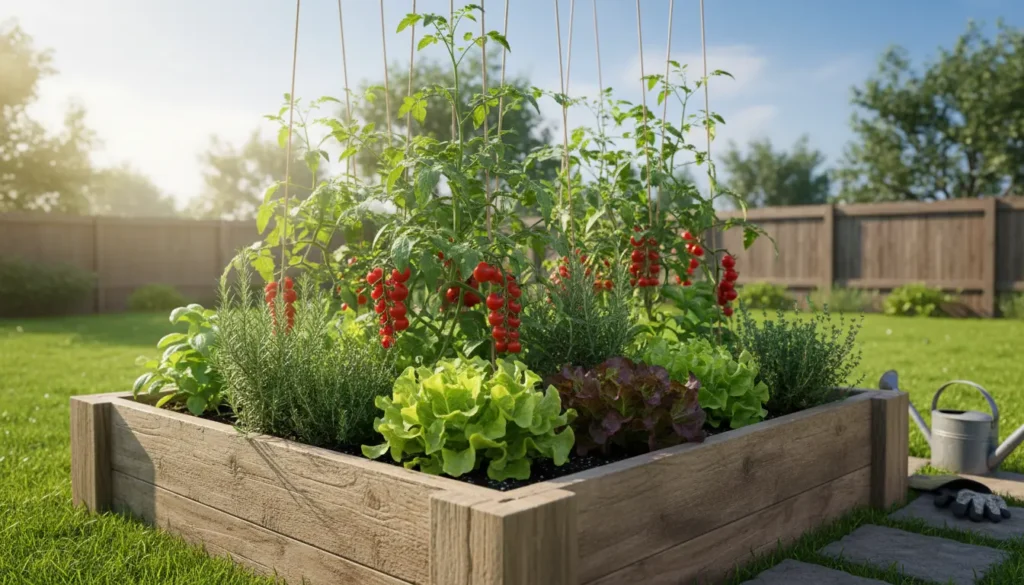
Why Start a Vegetable Garden
Starting a vegetable garden gives you fresh produce, saves money, and connects you to your food. It also helps you control how food is grown and reduces food miles.
This guide explains step-by-step how to start a vegetable garden, from planning to harvest. Follow practical tips that work for small yards, containers, and raised beds.
Choose Where to Start a Vegetable Garden

Location matters. Pick a spot that gets at least 6 hours of direct sunlight for most vegetable crops.
Consider access to water, wind protection, and visibility from your home for easy daily checks.
Best Options for Different Spaces
- Small yards: Use raised beds or rows along a sunny fence.
- Balconies and patios: Choose containers or fabric grow bags.
- Limited sun: Grow leafy greens and herbs that tolerate partial shade.
Plan What to Grow
Start with a short list of easy vegetables that suit your climate and cooking habits. Growing what you eat increases satisfaction and reduces waste.

For beginners, choose fast-growing and forgiving crops.
Easy Starter Vegetables
- Leafy greens: Lettuce, spinach, Swiss chard
- Root crops: Radishes, carrots
- Fruit-bearing: Tomatoes, peppers (in warmer climates)
- Herbs: Basil, parsley, cilantro
Prepare Soil and Beds
Good soil is the foundation of a productive garden. Aim for loose, well-draining soil rich in organic matter.
Test your soil if possible to check pH and nutrient levels. Most vegetables prefer a pH between 6.0 and 7.0.
Steps to Improve Soil Quickly
- Add 2–4 inches of compost to the surface and mix it into the top 6–8 inches.
- Use well-rotted manure or composted leaf mold for structure and nutrients.
- For heavy clay, mix in coarse sand and organic matter to improve drainage.
Planting: Timing and Techniques

Follow planting dates for your region. Check frost dates and use seed packets or plant tags for guidance.
Sow seeds at the depth and spacing recommended. Overcrowding causes disease and weak plants.
Simple Planting Tips
- Start some seeds indoors if you have a short season (tomatoes, peppers).
- Direct sow cold-tolerant crops early (peas, radishes).
- Use succession planting to extend harvests (plant lettuce every 2–3 weeks).
Watering and Mulching
Consistent moisture supports even growth. Water deeply and less frequently rather than shallow daily watering.
Mulch conserves water, reduces weeds, and moderates soil temperature.
Practical Watering Advice
- Water at the base of plants to keep foliage dry and reduce disease risk.
- Use drip irrigation or soaker hoses for efficiency.
- Apply 2–3 inches of organic mulch like straw, wood chips, or shredded leaves.
Pest and Disease Management
Observe plants regularly for pests and symptoms of disease. Early detection keeps problems small.
Use cultural controls first: proper spacing, crop rotation, and healthy soil reduce issues.
Nonchemical Strategies
- Handpick large pests like caterpillars and beetles.
- Introduce beneficial insects or plant flowers that attract pollinators and predators.
- Remove and dispose of diseased plant material promptly.
Harvesting and Ongoing Care
Harvest when crops reach recommended size and flavor. Regular picking encourages more production from many plants.
Keep beds tidy, replenish mulch, and add compost between seasons to maintain soil fertility.
Tips for Long-Term Success
- Rotate crop families to new beds each year to reduce pests.
- Keep a garden notebook with planting dates, varieties, and results.
- Start small and expand as you gain experience.
Radishes can be ready to harvest in as little as 21 days, making them a great quick-win for new gardeners.
Real-World Example: A Small Raised Bed Case Study
Case study: A 10×4 foot raised bed in a suburban backyard produced a reliable summer harvest for one family of four.
The gardener planted tomatoes, peppers, basil, lettuce, and carrots in alternating rows. They used compost, drip irrigation, and 3 inches of mulch.
Results: Six indeterminate tomato plants yielded about 40–60 pounds of tomatoes over the season. Lettuce was successional and provided fresh leaves for six weeks. The gardener spent about 30 minutes per day on average for maintenance.
Quick Starter Checklist
- Choose a sunny location with water access.
- Pick a few easy crops you like to eat.
- Improve soil with compost and test pH if possible.
- Plant at the right time and use proper spacing.
- Water deeply, mulch, and monitor pests.
Starting a vegetable garden is a practical, enjoyable project with tangible rewards. With basic planning and consistent care, even small spaces can produce meaningful harvests.



