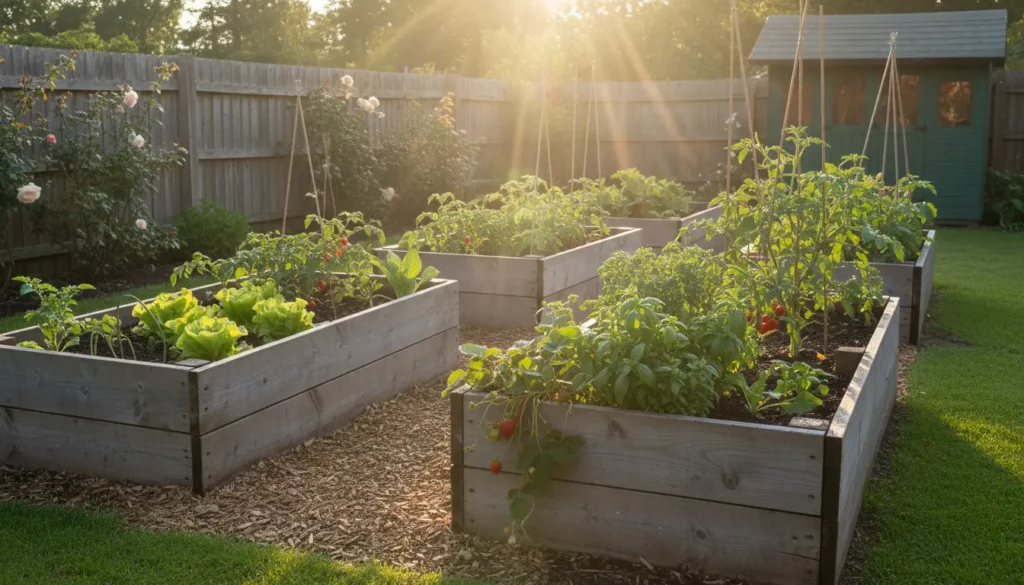
Starting a vegetable garden at home is practical and rewarding. This guide walks you through clear steps to plan, plant, and maintain a productive garden using simple methods.
How to Start a Vegetable Garden: Plan Your Space
Good planning makes the difference between a struggle and steady harvests. Choose a spot with at least 6 hours of sunlight and good drainage.
Consider the scale of your garden. Beginners do well with a few raised beds or a small plot near the kitchen for easy access.
Decide What to Grow
Select vegetables you and your family like to eat. Choose reliable, easy-to-grow crops first.
- Fast results: lettuce, radishes, spinach
- High yield: tomatoes, peppers, bush beans
- Low maintenance: carrots, beets, chard
Soil and Bed Preparation to Start a Vegetable Garden
Healthy soil is the foundation. Test or inspect your soil to know if it needs improvements.
Raised beds are ideal for beginners because they allow control over soil quality and drainage.
Improve Soil Quickly
Mix in organic matter such as compost to improve texture and fertility. Aim for a loamy mix that drains but holds moisture.
Simple steps:
- Clear weeds and debris from the area.
- Add 2–4 inches of compost over the soil.
- Work the compost into the top 6–8 inches, or fill raised beds with a good mix.
Planting: Seeds vs Seedlings
Decide whether to start from seed or buy seedlings. Seeds are cheaper and offer more variety, while seedlings give faster results.
Follow spacing recommendations on seed packets or plant tags to avoid overcrowding and disease.
Planting Tips to Start a Vegetable Garden
- Stagger plantings of lettuce and spinach every 2–3 weeks for a continuous harvest.
- Plant sun-loving crops like tomatoes in the sunniest spot and leafy greens in slightly sheltered areas if heat is intense.
- Use stakes or cages for vining crops early to reduce transplant shock later.
Watering and Fertilizing
Consistent watering is crucial for young plants. Deep, infrequent water encourages strong roots.
Use a soaker hose or drip irrigation when possible to reduce evaporation and leaf wetness.
Simple Fertilizing Routine
Feed your garden with a balanced organic fertilizer at planting and again mid-season for heavy feeders like tomatoes.
- Light feeders: beans, peas — minimal added fertilizer
- Heavy feeders: tomatoes, corn, squash — regular feeding
Pest and Weed Management
Prevent problems with good garden hygiene and regular checks. Remove weeds early and inspect plants weekly for pests.
Use row covers to protect young plants and encourage beneficial insects by planting flowers like marigolds or herbs near beds.
Nonchemical Control Options
- Handpick larger pests like slugs and caterpillars.
- Use insecticidal soap for soft-bodied insects if needed.
- Rotate crops each season to reduce soil-borne diseases.
Harvesting and Ongoing Care
Harvest regularly to encourage more production. Pick vegetables when they are ripe, not overripe, for best flavor.
Keep records of successes and failures to improve next season. Note planting dates, varieties, and yields.
Raised beds warm earlier in spring, allowing you to start planting weeks before you could in bare ground. They also reduce soil compaction and improve yields.
Case Study: Small Raised Bed Success
Sarah, a busy teacher, started a 4×6 foot raised bed and focused on easy crops. She planted tomatoes, bush beans, lettuce, and herbs.
By following a simple watering schedule and adding compost once, her first season yielded enough salad greens weekly and three large harvests of beans.
Key takeaways from Sarah’s experience:
- Start small and expand after one season
- Choose compact varieties suited to your space
- Consistent care beats perfect soil
Quick Checklist to Start a Vegetable Garden
- Pick a sunny location with good drainage
- Decide raised beds or in-ground plots
- Amend soil with compost and test pH if unsure
- Choose beginner-friendly crops and plant at recommended spacing
- Establish a watering plan and simple fertilizing schedule
- Monitor pests and rotate crops annually
Final Notes on How to Start a Vegetable Garden
Starting a vegetable garden at home is a step-by-step process. Focus on planning, soil health, and steady care for reliable results.
Keep learning each season and adapt plant choices to your local climate. Small successes will build confidence and produce fresh food for your table.