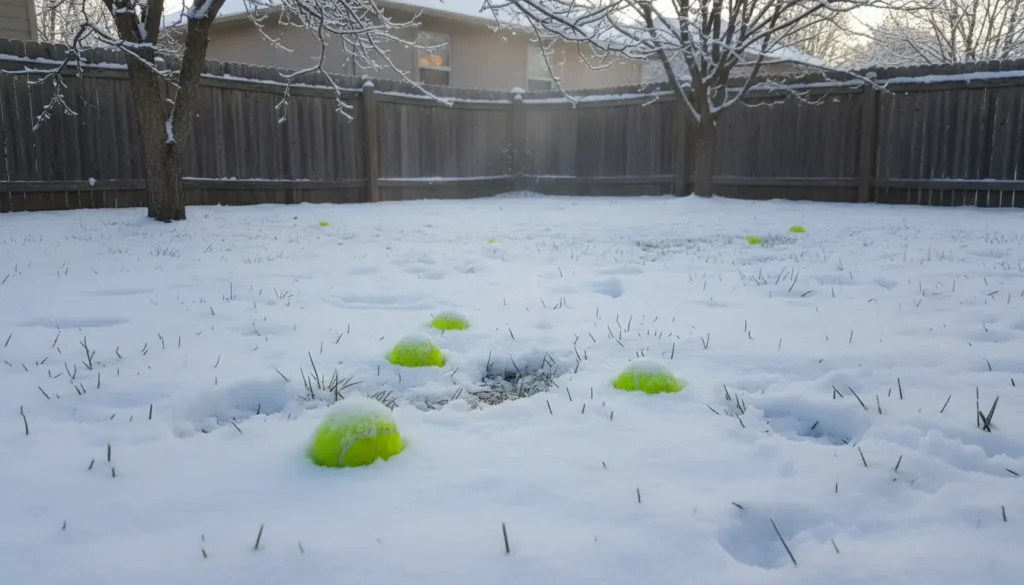
Small, inexpensive items can make a big difference to garden wildlife in winter. Tennis balls are durable, weather-resistant, and easy to modify, so they work well for a few practical tasks that help birds and hedgehogs when temperatures drop.
Tennis Ball Magic: How tennis balls help wildlife this winter
Using tennis balls in the garden is a low-cost way to solve common winter problems: swinging feeders, hidden holes, and accidental damage to shelters. The ideas below are simple to build, check, and maintain.
Why tennis balls are useful

Tennis balls are soft, resilient, and water resistant. They can be cut, stacked, or hung without breaking, and they won’t rot like wood or paper. This makes them handy for lightweight protective uses rather than structural tasks.
Tennis Ball Ideas for Keeping Birds Steady
Birds need stable perches to feed safely, especially in wet, icy, or windy conditions. Tennis balls can reduce unwanted movement and give birds a firmer platform in cold weather.
1. Stabilize pole-mounted feeders
Slide a tennis ball (or two) onto the pole under a feeder to act as a spacer and reduce wobble. If the ball slides on too loosely, add a short length of pipe or a cable tie to keep it in place.
- Materials: clean tennis balls, sharp knife, optional small length of PVC or sturdy cable tie.
- Method: Cut a narrow slit in each ball, spread and fit around the pole, then push the ball up under the feeder base.
- Check: Inspect weekly for wear and to clear droppings.
2. Add perch padding for icy grips

Cut tennis balls into halves or quarters and attach them to perches where small birds land. The rubbery surface provides extra traction in icy conditions and can help reduce slipping for fledglings.
- How to attach: Use cable ties or stainless screws with washers if the perch is wooden. Avoid small parts birds could swallow.
- Maintenance: Replace pieces showing deep cuts or loose fibres.
3. Weighted feeder base for trays
If a hanging tray swings, create small weights by cutting a ball, filling it with sand or pebbles, and resealing with weatherproof tape. Attach these near the tray edges to dampen motion.
Note: Keep weights secure and check they do not leak sand into feeding areas.
Tennis Ball Tips for Keeping Hedgehogs Safe

Hedgehogs use gardens for hibernation and travel. Proper marking and gentle barriers can reduce accidents from mowers, strimmers, and curious pets.
1. Mark entrances to hedgehog shelters
Hang whole tennis balls on short stakes near known hedgehog holes and shelter entrances. The bright, round shape is visible to humans and machines, which reduces the risk of accidental disturbance during winter garden work.
- Placement: Put markers 1–2 metres from the entrance so machinery operators see them before reaching the shelter.
- Attachment: Thread a short cord through the ball or use a drilled hole; keep the cord short to avoid entanglement.
2. Create a soft guard for shelter lids
If a hedgehog box has a tight-fitting lid, glue soft half-balls to corners to prevent slipping when you open it for checks. This protects the box and you, and avoids sudden jolts that could disturb a hibernating animal.
3. Use tennis balls as gentle bumpers
Put trimmed tennis balls on the ends of stakes or posts near hedgehog runways to reduce injury if an animal brushes past during low-light hours. The rounded rubber provides a forgiving surface compared with raw metal or wood.
Safety and hygiene checklist
Before you start any tennis ball hack, follow a safety checklist to protect wildlife.
- Use clean, pesticide-free balls; disinfect used balls in hot soapy water and rinse thoroughly.
- Avoid small loose pieces that hedgehogs or birds might swallow.
- Check modifications every 1–2 weeks for sharp edges, mould, or loose fittings.
- Do not seal airtight any shelter openings; hedgehogs need ventilation and escape routes.
Hedgehogs hibernate for several months in colder climates. A shallow nest of leaves and dry grass keeps them insulated, but nearby garden checks and marked entrances help avoid accidental disturbances.
Tools, materials and a simple project list
Keep these items on hand to convert tennis balls into practical wildlife aids.
- Tennis balls (new or cleaned used ones)
- Sharp knife or box cutter and a cutting mat
- Cable ties, weatherproof tape, and a short length of PVC pipe
- Sand or small pebbles (for weighted uses only)
- Drill with a small bit (for hanging markers)
Real-world example: Community garden case study
In a suburban community garden, volunteers started using tennis balls to mark five hedgehog entrances and to stabilise two communal bird feeders. They hung marked balls on short stakes and slit balls onto feeder poles.
Outcome: Garden volunteers reported fewer instances of mower near-misses and noticed birds feeding more confidently in bad weather. A seasonal check showed no damage to hedgehog boxes and no signs of animals chewing the tennis ball fittings.
Final checks and seasonal advice
Fit modifications before the cold weather settles, and schedule brief inspections every two weeks during winter. Remove or replace any components that show mould, sharp edges, or loosened fixings.
Tennis balls are not a complete wildlife solution, but they are a cheap, adaptable tool to reduce harm and improve stability around feeders and shelters. With sensible use and regular checks, this small bit of garden kit can make winter safer for birds and hedgehogs alike.



